Last updated: August 18, 2026
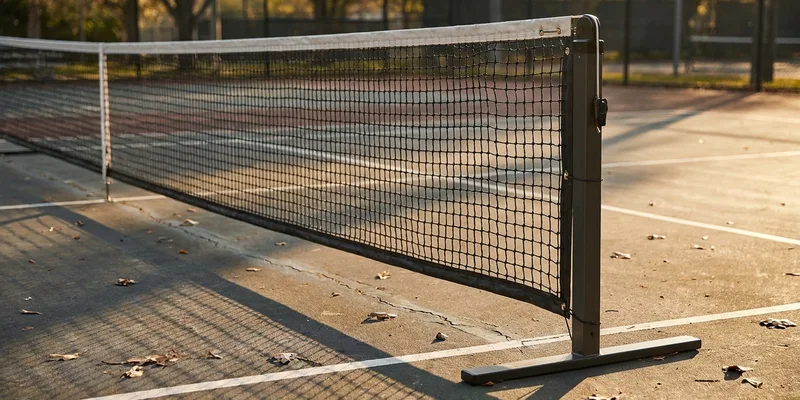
Almost every net sold to a home player is technically portable, which is exactly why the category is confusing. A five pound travel net that packs into a shoulder bag and a thirty pound steel system that rolls out on a wheeled case both get listed under the same search term, and they behave nothing alike once a real game starts and the ball starts hitting the tape.
This guide is about the portable end of the category specifically: what separates a net you can genuinely carry to a park from one that is portable only in the sense that it is not bolted into concrete, and which of those two you actually want for your driveway, gym, or backyard.
Quick Answer
Which portable pickleball net should you buy?
- Buy a lightweight travel net if you carry it in a car trunk and set it up somewhere different most weeks.
- Buy a heavier steel frame net if it lives in one driveway or backyard and only gets folded away seasonally.
- Check that the net measures 22 feet post to post and includes a center strap before anything else on the spec sheet.
- Skip the miniature training nets unless you are buying them for a child or for drill work rather than full games.
Bottom line: portability and stability trade against each other directly, so choose based on how often the net actually moves.
What Actually Makes a Net Portable
A portable pickleball net is a freestanding system: a folding metal frame, a weighted or staked base, and a net that tensions across it without needing in-ground posts. Setup is tool free on most models and takes somewhere between one and ten minutes depending on how the frame is engineered.
The meaningful split inside the category is weight. Travel oriented nets built around aluminum or composite tubing often land in the single digit pounds and pack into a shoulder bag. Steel frame systems run several times heavier, hold tension better, and come with a wheeled case precisely because carrying them any distance is unpleasant.
Why the Weight Difference Matters More Than the Spec Sheet
A lighter frame flexes more when a ball hits the tape hard, and it shifts more in wind on an exposed outdoor court. That is not a defect, it is the cost of a net you can carry one handed. If the net stays in one place, there is no reason to pay that cost, and a heavier system will hold its height far more consistently across a season.
Frame, Base, and What Keeps a Net Steady
Stability comes from three things: frame material, base design, and how the net tensions. Steel frames resist flex better than aluminum. Bases that accept sand, water, or ground stakes anchor better than plain feet. And a net that tensions through a proper ratchet or turnbuckle holds shape longer than one relying only on hook tension.
Outdoor play raises the stakes on all three. Wind is the main enemy of a light portable net, and a net that drifts sideways or leans mid game is more irritating than any spec difference between two models. Buyers setting up on an open driveway or a park court almost always end up wanting more base weight than they first thought.
The Center Strap Is Not Optional
A pickleball net is meant to sit lower in the middle than at the posts, and that difference is created by a center strap pulling the net down. Portable nets that omit the strap sag to whatever height the frame tension happens to produce, which drifts as the mesh stretches. Our pickleball net height guide covers the exact measurements and how to check them.
Portable Pickleball Nets by Situation
Carrying It to a Park or Gym Every Week
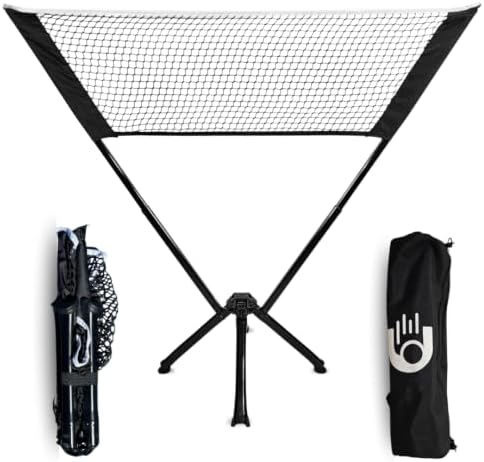
If the net genuinely travels, prioritize packed size and carry weight over frame rigidity. Lightweight travel nets built for tournament practice and pop up play are designed around exactly this, and players who move between venues consistently rate portability as the thing they would not give up.
A Driveway Court That Stays Up All Season
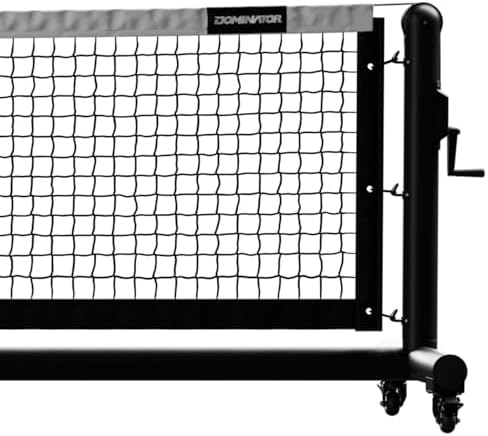
For a net that lives in one spot and only comes down for winter, a steel frame system with a weighted base is the better match. It costs you carry convenience and buys back height consistency, wind resistance, and a frame that tolerates repeated ball contact without loosening.

Buyers Who Want a Named Brand With a Track Record
SwiftNet is one of the more frequently searched specific names in portable nets, built around a lighter frame aimed at players who move the net regularly. Selkirk also fields a net line, which appeals to players already invested in the brand’s paddles and bags.

Setting Up a Full Regulation Court at Home
If the goal is a court that matches sanctioned specifications rather than a casual driveway setup, look specifically for a regulation sized portable net: 22 feet between posts, a full center strap, and a frame that reaches proper post height without propping.
Drills, Kids, and Small Spaces
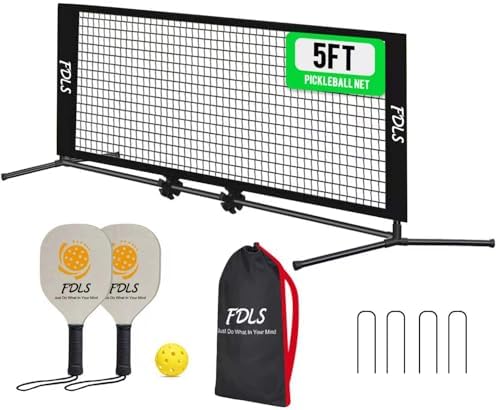
Mini and adjustable multi sport nets exist for training and for younger players, and they are genuinely useful for dinking practice in a garage. They are not a substitute for a full width net in real games, so treat them as a second purchase rather than a first one.
Comparing Portable Net Styles
| Style | Setup | Wind stability | Best for |
|---|---|---|---|
| Lightweight travel | Fastest, tool free | Lowest | Park courts, frequent transport |
| Steel frame portable | Moderate | Highest of the portables | Driveway or backyard, season long |
| Regulation portable | Moderate to slow | Good | Home courts matching official specs |
| Mini training net | Very fast | Not relevant indoors | Drills, children, garage practice |
Setup Time and Storage in Real Use
Advertised setup times assume you have done it before. The first assembly of any portable net takes longer than the box promises, and it is worth doing once at home before the day you actually need it, especially if a piece is missing or a stake is bent in transit.
Storage is the quieter consideration. A wheeled case rolls neatly into a garage corner, while a shoulder bag disappears into a closet. Players who eventually stop using a net usually stop because putting it away became a chore, not because the net failed.
Mistakes to Avoid When Buying a Portable Net
The most common mistake is buying the lightest net available for a setup that never moves. Portability has a real cost in stability, and paying it for a net that lives permanently in one driveway means putting up with wind drift and sag for no benefit at all.
The second is ignoring width. Some budget nets are noticeably narrower than the 22 foot post spacing used in real play, which quietly changes how the sidelines work. Check the stated post to post measurement rather than assuming every net in the category is the same size.
Two Smaller Traps Worth Knowing
Nets sold as multi sport bundles often adjust to badminton or tennis heights, which sounds like value but usually means a frame compromised for all three. And a net without a replaceable mesh means the whole system is disposable once the netting frays, which happens faster on sun exposed outdoor courts than most buyers expect.
Does a Portable Net Meet Official Specifications?
Many do, but not all, and the category does not police itself. USA Pickleball’s rulebook specifies 36 inches at the posts, 34 inches at the center held by a center strap, and posts set 22 feet apart. A portable net that hits those numbers when fully tensioned is functionally regulation for casual and club play.
Because USA Pickleball revises its rulebook annually, confirm current equipment measurements on usapickleball.org if exact compliance matters for your court. Our full pickleball net guide compares portable and permanent systems side by side if you are still deciding between the two.
Frequently Asked Questions
Is a portable pickleball net regulation size? Some are and some are not. Look for a stated 22 foot post to post span and a center strap that pulls the middle to 34 inches, and treat anything narrower as a recreational net.
How long does a portable pickleball net take to set up? Lightweight travel nets typically go up in a couple of minutes once you know the sequence, while steel frame systems take longer because there are more sections and more base weight to position.
Can I leave a portable net outside all season? A steel frame model with a weighted base handles it better than a travel net, but sun and wind still degrade mesh and tension over time, so most owners bring the net in over winter.
Do portable nets work on grass? They stand up on grass, but the ball does not bounce properly on it, so grass setups suit casual play only. Driveways, sport courts, and gym floors are the surfaces these nets are designed around.
What holds a portable net down in wind? Base weight and anchoring. Sand or water fillable bases and ground stakes both help, and adding weight at the frame feet is the usual fix when a light net keeps shifting.
Do I need a net if I already have a pickleball set? Many sets include one, though bundled nets skew toward the lighter end. Our pickleball set guide covers what is typically included and where the compromises usually sit.
The Bottom Line
Choosing a portable pickleball net is a straight trade between carry weight and on court stability, and the right answer follows entirely from how often the net moves. Travel nets win for players hopping between venues, steel frame systems win for a fixed driveway court, and both should include a center strap and a genuine 22 foot span. Once the net is settled, our net height guide covers measuring it correctly.