Last updated: August 18, 2026
Paddle marketing works hard to make the entry level feel like a compromise you will regret. In reality, the gap between a well chosen budget pickleball paddle and a premium one is smaller than the gap between a paddle that fits your hand and one that does not. Plenty of players spend heavily on their first paddle, discover the grip is wrong, and get less out of it than someone who spent far less and measured properly.
What follows is an honest account of what actually changes as you move up the range, what stays the same, and where cutting cost genuinely costs you something on court. We have not tested these paddles ourselves; the comparisons below are based on how manufacturers describe their own construction across their entry and premium lines.
Quick Answer
What do you give up with a budget pickleball paddle?
- Mostly face texture and spin bite, thinner core options, and finish quality; entry level paddles usually use composite faces rather than textured raw carbon.
- Rarely fit. Grip circumference options, forgiving shapes and sensible weights exist throughout the range, and those are the specs that decide whether a paddle suits you.
- Sometimes consistency. Value lines vary more from unit to unit, and warranty terms are typically shorter than on flagship models.
Bottom line: an entry level paddle that fits your hand beats a premium paddle that does not, and the upgrade is worth making only once your technique can feel the difference.
What Actually Changes as You Move Up the Range
Three things reliably improve as paddles get more expensive: face material sophistication, core options, and build finish. Entry level paddles typically use composite or fiberglass faces, mid range models introduce carbon, and premium models add textured raw carbon surfaces, thermoformed edges and thicker core choices marketed around control.
What does not change much is the basic physics. Every paddle in every tier is bound by the same equipment limits, uses a similar honeycomb core concept, and comes in the same broad shape families. A budget paddle is not playing a different sport, it is playing the same one with less refinement at the surface.
What You Genuinely Give Up
The clearest sacrifice is spin. Textured raw carbon faces are designed to grip the ball, and smoother composite faces on entry level paddles do not bite the same way. If your game already depends on shaping shots with heavy spin, that is a real loss rather than a marketing one.
Face Texture and Its Lifespan
Premium faces start grittier, though that texture also wears down with use. Entry level faces start smoother and therefore have less to lose, which is a small consolation but a genuine one over a season of regular play.
Build Consistency and Support
Value lines tend to vary more between individual units, and warranty coverage is usually shorter or narrower than on flagship models. Read the warranty terms before buying, since that is where the difference is stated plainly rather than implied.
What You Keep No Matter What You Spend
Grip circumference options, forgiving shapes, sensible weight ranges and a polymer core are available across every tier. Those four things determine whether a paddle suits your hand and swing, and none of them is reserved for premium models, which is why fit deserves your attention before budget does.
Legality is also independent of price. Approval is granted per model on the official USA Pickleball list at usapickleball.org, and inexpensive paddles appear on that list alongside flagship models. Our guide to what the approved label means explains how to check.
Entry Level Paddles by Situation
Value means different things depending on why you are buying, so the situations below cover the most common reasons players deliberately shop the accessible end of the market. In every case, verify weight and grip circumference on the manufacturer’s product page before ordering.
You Are Not Sure the Sport Will Stick
If you have played twice and got invited to a third session, buying at the accessible end is the rational move. Vatic Pro built much of its reputation on models positioned as an affordable route into carbon faced construction without dropping the core specs that matter.

You Need Paddles for a Whole Group
Outfitting a household or a work group multiplies the cost decision by four, which is exactly where sets earn their place. Expect middle of the road weights and grip sizes, and treat the set as a way to get everyone playing rather than as a fit for any one player.

You Want a Familiar Retail Brand
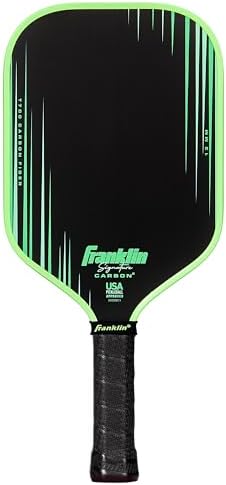
Franklin’s entry oriented paddles are widely stocked in mainstream retail and frequently sold alongside starter sets, which makes them a low friction first purchase when you would rather hold a paddle in person than order blind.
You Want the Best Fit Rather Than the Best Spec
Onix offers paddles across a range of grip sizes and shapes at accessible positions in its lineup, which matters more than face technology if your hands are larger or smaller than average. Grip fit is the one spec no amount of spending fixes for you.

You Are Buying a Backup or a Loaner
Regular players often keep a second paddle for guests, for practice against a wall, or for court surfaces that chew up equipment. That is a job an entry level paddle does perfectly well, since none of what you paid extra for on your main paddle is doing anything in that role.
Where the Tiers Actually Differ
The table below maps what typically separates the tiers according to how manufacturers describe their own lines. Treat it as a guide to reading product pages rather than as a promise about any individual model, since brands draw their tier boundaries in different places.
| Aspect | Entry level | Premium |
|---|---|---|
| Face material | Composite or fiberglass, sometimes basic carbon | Textured raw carbon or branded carbon weaves |
| Spin bite | Lower, smoother surface | Higher, deliberately textured |
| Core options | Fewer thickness choices | Multiple thicknesses per model |
| Build finish | More unit to unit variation | Tighter tolerances, longer warranty terms |
| Grip size options | Available across the range | Available across the range |
| Approval eligibility | Per model, same process | Per model, same process |
When Upgrading Is Actually Worth It
Upgrade when you can name the specific shot the paddle is costing you. If you can say that your third shot drops sit up, that your slice does not bite, or that you cannot feel where on the face you made contact, a better paddle addresses something real. Until then, coaching and court time deliver more improvement.
The other legitimate trigger is wear. Faces lose texture, cores soften, and edge guards loosen, all of which are covered in our guide to how long paddles last. Replacing a worn paddle is a different decision from upgrading a working one, and it is worth being clear which one you are making.
Frequently Asked Questions
Are budget pickleball paddles any good? Yes, for most recreational players. Entry level paddles use the same core concept and shape families as premium ones, and the specs that determine fit, grip circumference, weight and shape, are available throughout the range.
What is the main difference between a cheap and an expensive paddle? Face material and surface texture, which mostly affect spin generation, plus build consistency and warranty terms. The structural concept underneath is broadly similar across tiers.
Can you use an entry level paddle in a tournament? Yes, provided the specific model appears on the USA Pickleball Approved Paddle List with a passing result. Approval is assigned per model, not per price tier, and inexpensive paddles do appear on the list.
Should a beginner buy an expensive paddle? Usually not. Newer players benefit far more from a forgiving shape and a correctly sized grip than from a textured premium face, and technique is the limiting factor early on.
Are paddle sets a good way to save money? They are efficient for getting several people playing at once, since they bundle paddles with balls and often a bag. The trade off is that weights and grip sizes are chosen to suit an average player rather than you.
When should I upgrade from an entry level paddle? When you can identify the specific shot your paddle is limiting, or when the face texture and core have worn to the point that the paddle plays differently than it did new.
The Bottom Line
A budget pickleball paddle costs you face texture, spin bite and some build consistency, and it costs you almost nothing on the specs that actually decide fit. Buy at the accessible end while you are still learning what you want, measure your grip properly, check the model on usapickleball.org if sanctioned play is possible, and upgrade only when you can name the shot your current paddle is limiting. If this is your first paddle at all, the framework in our beginner paddle guide comes first.