Last updated: August 18, 2026
“Carbon fiber” shows up on more paddle product pages every season, usually next to language like premium, pro-level, or tournament-grade. None of that tells you what the material actually changes about how a shot feels off the face. A carbon fiber pickleball paddle is not automatically better than a fiberglass one, it just behaves differently, and knowing what that difference means for your own game matters more than the label itself.
This guide explains what carbon fiber does as a paddle face material, when it tends to suit a player and when it does not, and how to read a manufacturer’s spec sheet instead of relying on marketing copy. We have not tested these paddles ourselves; everything below reflects how brands describe the material’s properties and how that generally maps to playing style.
Quick Answer
What does a carbon fiber pickleball paddle actually change?
- Carbon fiber faces are generally described by manufacturers as favoring control and a consistent response across the face, rather than maximum pop.
- Raw carbon fiber and toray carbon fiber are not the same thing, and the specific weave and layup a brand uses affects stiffness more than the word “carbon” alone.
- Weight, core thickness, and shape still matter as much as face material; carbon fiber does not override a bad fit for your hand or swing.
Bottom line: choose a carbon fiber pickleball paddle because you want the control-leaning feel it tends to produce, not because the word carbon sounds premium.
What Carbon Fiber Actually Is on a Paddle Face
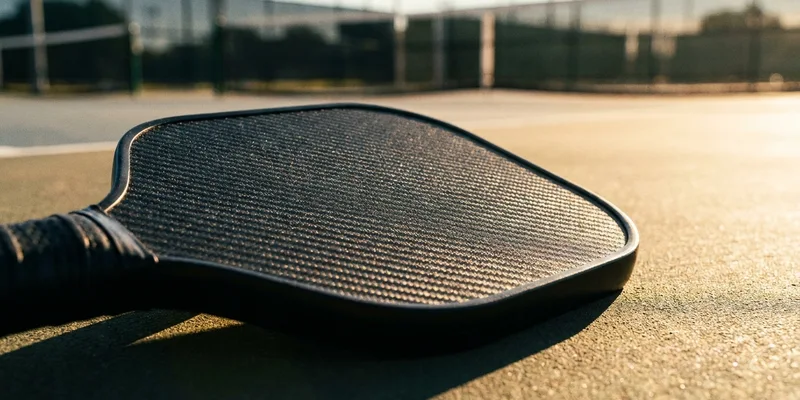
Carbon fiber pickleball paddles use a thin carbon fiber layer as the striking surface, bonded over a polymer honeycomb core. Manufacturers describe carbon fiber as stiffer and more textured than fiberglass, which they say produces more consistent spin and a more even response whether you hit the center of the face or slightly off it. That stiffness is also why carbon fiber paddles are frequently marketed toward control and touch shots rather than raw power.
Not all carbon fiber pickleball paddles use the same grade of material. Some brands specify raw carbon fiber, others use toray-branded carbon fiber, and layup (how many layers, at what angles) varies by model even within one manufacturer’s lineup. Two paddles both labeled carbon fiber can feel meaningfully different, so the material name alone is not enough information to buy from.
Carbon Fiber vs Fiberglass, in Practical Terms
Fiberglass faces are generally described as producing more pop and a slightly larger forgiving zone, at the cost of a bit less textured spin response compared to carbon fiber. Carbon fiber trades some of that pop for control, touch around the kitchen, and a face that many players describe as feeling more predictable on off-center contact, according to how brands position their own carbon lines.
Neither material is strictly better. A player who relies on drives and hard shots from the baseline may prefer the extra pop fiberglass tends to offer, while a player who wins points at the net with dinks and resets often gravitates toward carbon fiber’s control-oriented feel. If you are still deciding between the two as a newer player, our beginner paddle guide covers that broader decision before you narrow in on material.
Who Tends to Benefit Most From Carbon Fiber
Players who already have decent contact consistency and want more predictable spin tend to be the group that notices the biggest difference switching to carbon fiber. That includes intermediate and advanced players refining a third shot drop or working on dinks, where a face that behaves consistently across repeated soft contact matters more than maximum power on a drive.
Complete beginners do not always notice or benefit from carbon fiber’s specific properties right away, since early-stage mishits are usually about contact point and footwork rather than face material. That does not mean a beginner cannot use a carbon fiber paddle, only that the material is not the first lever worth pulling if you are brand new to the sport.
Carbon Fiber Paddles by Situation
Control-First Players Around the Kitchen
CRBN built its brand almost entirely around carbon fiber paddle faces, and the company’s product pages consistently emphasize control and spin consistency as the design priority. Players who spend a lot of time dinking and resetting at the non-volley line are the group CRBN’s marketing most directly targets.

Players Who Want a Named Pro Model
Selkirk’s Amped Pro Air Invikta line pairs a carbon fiber face with the brand’s own core construction, and it is one of the more searched specific carbon fiber models among players comparing named paddles rather than generic categories.

Tour-Level Branding and Player Endorsement
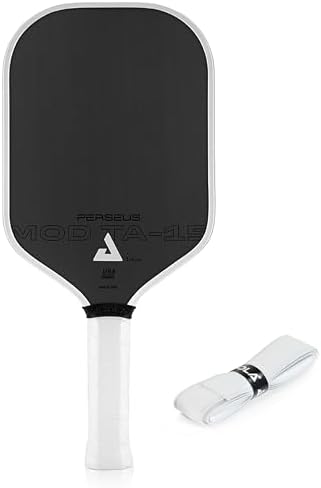
Joola’s Perseus and Hyperion lines, both associated with touring pros, use carbon fiber faces across several models, and the brand’s retail presence makes these among the easiest carbon fiber paddles to find in stores rather than only online.
Value-Focused Carbon Fiber
Vatic Pro’s carbon fiber models are frequently positioned as a lower-cost way into the material compared to some of the more heavily marketed pro-endorsed lines, without dropping the core carbon fiber face construction.

Reading a Carbon Fiber Spec Sheet
The table below lists the fields worth checking on any carbon fiber pickleball paddle’s product page before buying, and why each one matters. Treat every number here as the manufacturer’s own stated spec, not an independently tested result.
| Spec | Why it matters |
|---|---|
| Face material and layup | Determines stiffness and spin feel; raw vs toray carbon fiber differ by brand |
| Weight range | Affects swing speed and how much arm fatigue you take on over a long session |
| Core thickness | Thicker cores are usually marketed toward control, thinner toward power |
| Grip circumference | Wrong grip size limits wrist snap regardless of face material |
| USA Pickleball approval status | Only relevant if you plan to play sanctioned events |
Is Every Carbon Fiber Paddle Legal for Sanctioned Play?
Face material itself is not the deciding factor in whether a paddle is legal; USA Pickleball tests full paddle models, not materials in isolation, and publishes results on its official Approved Paddle List at usapickleball.org. A carbon fiber paddle can pass or fail that testing just like any other material, so check the specific model, not just the face type, before assuming it is tournament-legal.
Because USA Pickleball updates its rulebook and equipment standards at the start of each year, a model that was approved last season is not guaranteed to remain approved indefinitely, and new carbon fiber releases are added to the list on an ongoing basis as they pass testing. Always confirm current status directly on usapickleball.org rather than relying on packaging or an older review.
Frequently Asked Questions
Is a carbon fiber pickleball paddle better than fiberglass? Neither is objectively better; carbon fiber tends toward control and consistent spin, fiberglass tends toward pop and a slightly larger forgiving zone, and the right choice depends on your playing style.
Do carbon fiber pickleball paddles last longer than fiberglass ones? Durability depends more on construction quality and how the paddle is cared for than on face material alone; check the manufacturer’s own warranty terms for the specific model you are considering.
Are all carbon fiber paddles the same? No. Raw carbon fiber, toray carbon fiber, and different layup patterns all produce different stiffness and feel, even within paddles labeled the same material.
Do beginners need a carbon fiber pickleball paddle? Not necessarily. Newer players often benefit more from a forgiving shape and comfortable weight than from a specific face material; carbon fiber tends to matter more once contact consistency improves.
Does carbon fiber affect how loud a paddle is? Face material can influence sound characteristics, and some carbon fiber paddles are marketed with quieter profiles, but noise level depends on the full construction, not carbon fiber alone; check individual product listings if noise restrictions apply at your court.
Is a carbon fiber paddle automatically USA Pickleball approved? No. Approval is tested per model, not per material. Always check the specific paddle on the official Approved Paddle List at usapickleball.org.
The Bottom Line
A carbon fiber pickleball paddle generally trades some pop for control and a more consistent response across the face, which suits players focused on touch shots and dinks more than players chasing maximum power. Read the manufacturer’s spec sheet for layup, weight, and grip size rather than buying on the material name alone, and confirm sanctioned-play status on usapickleball.org if that matters to you. For players still deciding on a first paddle at all, start with our beginner paddle guide before narrowing in on face material.