Last updated: August 18, 2026
The backpack is the style most regular players end up with, and it is not really about capacity. It is about walking from a parking lot to court six with paddles, a change of shoes, two water bottles, and a jacket, without one shoulder taking all of it. Once you play more than twice a week, that difference stops being theoretical.
This guide covers what separates a pickleball backpack from a sling or a tote, which features are genuinely worth paying for, and how to avoid buying more bag than you will actually fill. If you are still deciding between styles in the first place, our pickleball bag guide compares all three.
Quick Answer
What should you look for in a pickleball backpack?
- A padded paddle compartment separate from the main body, so paddles are not rubbing against balls, keys, or shoes.
- A ventilated shoe pocket if you change shoes at the court, which is the main reason players move up from a sling.
- Stated paddle capacity, since that varies widely between models and is the spec most often assumed rather than checked.
- Strap and base stitching quality, because those are the two points where a loaded bag actually fails.
Bottom line: buy for the gear you carry every week, not for the tournament day you might play twice a year.
When a Backpack Beats a Sling or a Tote
A backpack makes sense once your regular load includes something beyond paddles, balls, and a bottle. Shoes, a spare shirt, a jacket, or gear for a partner all push past what a sling carries comfortably, and a backpack spreads that weight across both shoulders instead of loading one side.
The tote and duffel styles hold more still, but they are carried by hand or on one shoulder, which is fine for a short walk from a car and awkward for anything longer. The backpack sits in the middle, and that middle is where most regular recreational players actually live.
Where a Sling Still Wins
If you show up with one paddle, a couple of balls, and a bottle, a backpack is extra weight and bulk for no benefit. Slings are faster to grab, easier to swing off one shoulder between games, and take up less space in a car. The upgrade only makes sense when the gear list genuinely grows.
The Features That Actually Matter
The padded paddle compartment is the one non negotiable. A paddle face picks up scuffs quickly when it shares space with balls, keys, or a shoe sole, and edge guards take a beating from being knocked around in an open main compartment. A dedicated padded sleeve solves that for essentially no added cost.
After that, the ventilated shoe pocket is what most players are actually buying a backpack for. A sealed compartment with worn court shoes inside will put moisture and odor into everything around it, so mesh panels or vent holes are the difference between a useful feature and a problem.
Features You Can Usually Skip
Insulated bottle sleeves are pleasant but not essential unless you play long outdoor sessions in heat. Fence hooks are genuinely useful outdoors and irrelevant indoors. Very large multi paddle capacities matter to tournament players and coaches, and almost nobody else fills them. Be honest about which group you are in before paying for capacity you will carry empty.
Pickleball Backpacks by Situation
The Standard Regular Player Setup
Two paddle sleeve, ventilated shoe pocket, insulated bottle pocket, and a main compartment big enough for a towel and a layer. That combination covers the majority of players who show up to open play a few times a week without carrying anything unusual.

Players Who Want a Well Known Brand Build
JOOLA’s bag lineup is widely stocked and built around the same padded paddle sleeve and shoe compartment layout most regular players want, which makes it an easy default if you would rather not evaluate a dozen unfamiliar options.

Players Carrying Three or More Paddles
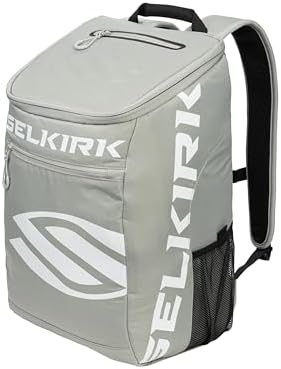
Selkirk builds larger capacity bags aimed at players who rotate paddles or carry gear for a partner. Check the stated paddle sleeve capacity rather than the overall bag volume, since those two numbers do not track together as closely as you would expect.
Budget Conscious Buyers
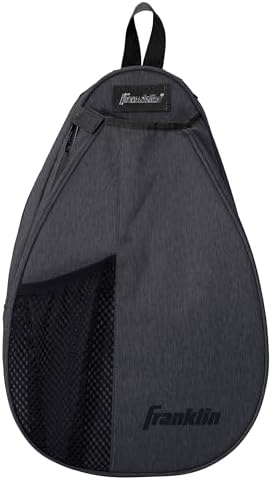
Franklin’s bags are widely available in general sporting goods retail and cover the core features without the specialty brand positioning, which suits players who want a functional backpack rather than a statement piece.
Women Shopping by Fit and Proportion
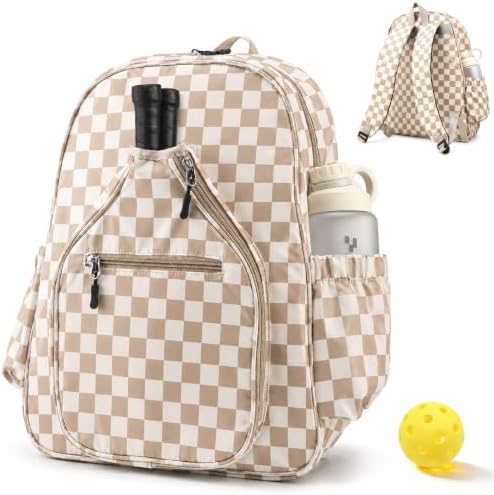
Strap length, torso fit, and overall proportions differ enough that many players look specifically within women’s bag lines rather than buying a unisex model. The core features stay the same, so this is a fit decision rather than a functional one.
Minimalists Who Still Want Both Straps
A compact backpack with a single paddle sleeve and no shoe compartment splits the difference between a sling and a full size bag, for players who want balanced weight without the extra volume they would never fill.
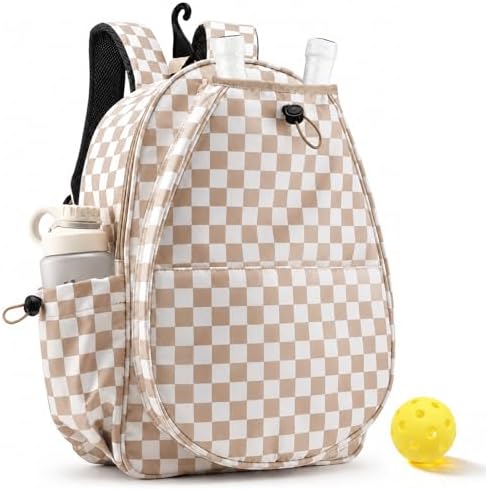
Matching Bag Size to How You Play
| How you play | Paddle capacity | Shoe pocket | What to prioritize |
|---|---|---|---|
| Once or twice a week, social | One to two | Optional | Low weight, padded paddle sleeve |
| Several times a week | Two to three | Yes, ventilated | Strap comfort, durable base |
| Leagues and tournaments | Three or more | Yes | Organization, fence hook, spare capacity |
| Carrying gear for a partner | Four or more | Yes | Overall volume, reinforced stitching |
Build Quality and What Actually Fails
Backpacks fail at two places: the strap attachment points and the base. A loaded bag puts steady stress on the seams where the shoulder straps meet the body, and the base takes repeated abrasion from being set down on asphalt, concrete, and gym floors. Reinforced stitching at both points is worth more than an extra pocket.
Zippers are the other common weak spot, especially on the paddle compartment that gets opened and closed several times a session. Coated or water resistant zippers help outdoor players, and a chunkier zipper pull is generally a sign the manufacturer did not cut corners on hardware.
Mistakes That Waste Money on a Backpack
Buying tournament capacity for recreational play is the most common one. A six paddle bag carried half empty is heavier, bulkier, and no more useful than a properly sized two or three paddle backpack, and the padded sleeves stop protecting anything once paddles slide around inside an oversized compartment.
The second mistake is skipping ventilation on the shoe compartment. A sealed shoe pocket next to a paddle sleeve and a towel turns into a problem within a few sessions, particularly for outdoor players in summer. Check for mesh panels or vent holes before assuming a compartment labeled for shoes is designed to breathe.
Not Checking Bottle Pocket Diameter
The smallest annoyance with the biggest repeat rate is a side pocket that will not hold the water bottle you actually own. Insulated bottles run considerably wider than a standard sports bottle, and plenty of otherwise good bags size their side pockets for the narrower version. It is a thirty second check that saves a return.
Frequently Asked Questions
What is the difference between a pickleball backpack and a regular backpack? The padded paddle compartment and, on most models, a ventilated shoe pocket. Everything else is a fairly standard backpack layout adapted around those two features.
How many paddles should a pickleball backpack hold? Two to three covers most regular players. Check the manufacturer’s stated paddle sleeve capacity rather than judging by overall bag size, since those do not correlate reliably.
Do I need a shoe compartment in a pickleball backpack? Only if you change shoes at the court or do not want worn shoes touching clean gear. If you do want one, make sure it is ventilated rather than sealed.
Can I use a tennis backpack for pickleball? Yes, though tennis bags are built around longer racquet compartments, so the padded sleeve may not hold a shorter, wider pickleball paddle as securely as a purpose built one.
Is a pickleball backpack better than a sling bag? Only if you carry enough gear to justify it. A backpack distributes weight across both shoulders, which matters with shoes and extra layers, but a sling is faster and lighter for a minimal kit.
Are pickleball backpacks waterproof? Most are water resistant rather than waterproof. Coated fabric and zippers handle a light shower or a damp car trunk, but no standard court bag is designed to be submerged or left out in sustained rain.
What should I keep in a pickleball backpack? Paddles, a few balls, a water bottle, a towel, a spare shirt, an extra overgrip, and a shoe change if you play both indoors and outdoors. Anything beyond that is personal preference.
The Bottom Line
A pickleball backpack is the right call once your regular load includes shoes or layers beyond the basics, and the two features worth insisting on are a padded paddle compartment and a ventilated shoe pocket. Size it to the weekly session rather than the occasional tournament, and check strap and base stitching before pocket count. For the wider comparison against slings and totes see our pickleball bag guide, and keep a spare overgrip in a side pocket while you are at it.