Last updated: August 18, 2026
Outdoor pickleball balls are the one piece of equipment almost every player replaces regularly, and the one most players think about least. They are a consumable. A ball that plays beautifully for three sessions can crack on a cold morning in the fourth, and the difference between brands shows up in exactly that kind of detail rather than in anything visible on the shelf.
This guide covers what makes an outdoor ball different from an indoor one, how the main outdoor balls differ from each other in hardness, durability, and flight, and how to choose without overthinking a purchase you will repeat several times a year.
Quick Answer
Which outdoor pickleball balls should you buy?
- Buy an outdoor specific ball with 40 small holes and a harder shell, never an indoor ball, for asphalt or concrete courts.
- Franklin’s X-40 and the Dura Fast 40 are the two names most club and tournament players default to.
- If you play in cold weather, expect to replace balls more often and buy in multi packs rather than singles.
- Check the current USA Pickleball approved list if you plan to enter sanctioned events, since approvals change.
Bottom line: pick an outdoor rated ball first, then choose between a harder tournament ball and a softer, longer lasting recreational one.
What Makes a Ball an Outdoor Pickleball Ball
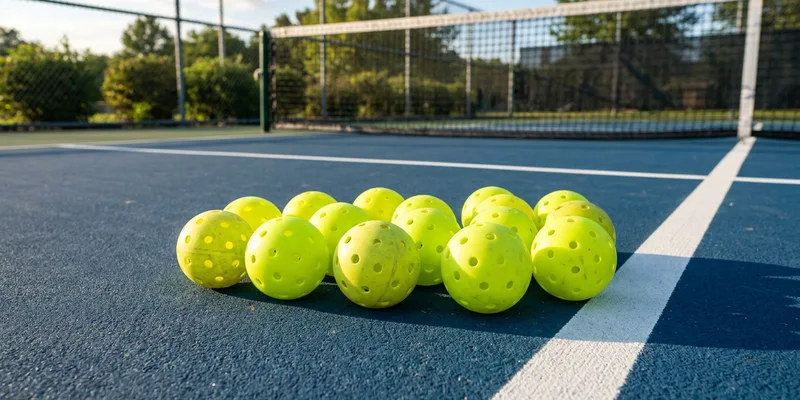
Outdoor balls are molded from a harder, denser plastic than indoor balls and carry 40 smaller holes rather than the larger, fewer holes used indoors. They are also slightly heavier. Those three differences exist for one reason: outdoor balls have to fly predictably through wind and survive abrasive asphalt.
The result is a ball that comes off the paddle faster and with a sharper, louder sound, and one that skids more on a rough surface. Players moving from a gym floor to an outdoor court usually notice the pace difference before they notice anything else. Our indoor vs outdoor pickleball balls comparison breaks down the full set of differences.
Hardness, Seams, and How Outdoor Balls Actually Differ
Within the outdoor category the meaningful variables are shell hardness, whether the ball is molded in one piece or fused from two halves, and how tightly the plastic is finished. Harder balls play faster and crack sooner. Softer balls last longer and feel duller off the face.
Two piece balls carry a seam, which can produce slightly less consistent flight than a seamless rotational molded ball once the ball takes some wear. Neither construction is universally better, and plenty of sanctioned play happens on both, but it is the detail that explains why two balls with identical hole counts do not feel identical.
Why Ball Choice Changes How a Game Feels
A harder, faster ball rewards power and punishes slow hands at the kitchen line. A softer ball gives more time on dinks and resets. Groups that play together regularly usually converge on one ball for exactly this reason, because switching mid season quietly changes everyone’s timing.
Outdoor Pickleball Balls by Situation
The Default Club and Tournament Choice
Franklin’s X-40 is the outdoor ball most widely stocked and most widely used in organized play in the United States, and it is the safe answer when a group needs one ball everyone already knows. Consistent flight and broad availability are the reasons it keeps showing up in club bins.

Players Who Want the Fastest, Hardest Ball
The Dura Fast 40 has a long history in competitive outdoor play and is known for a hard, fast character. Players who like it like it a lot. The recognized trade off is durability, since harder shells are the ones that crack first, particularly in cold conditions.

Recreational Play Where Longevity Matters Most
Onix’s outdoor line, including the Pure 2 Outdoor, is a common pick for groups that would rather replace balls less often than chase the last few percent of tournament feel. Seamless construction and a slightly more forgiving shell suit weekly recreational sessions well.

Buying for a Club, Family, or Ball Machine
Anyone feeding a pickleball ball machine or supplying a regular group is buying by the dozen rather than the sleeve. Bulk packs of a single model keep the group’s timing consistent and cost less per ball than repeat small purchases.

Winter and Low Light Play
Cold weather makes every outdoor ball more brittle, and dusk play makes color matter. High visibility yellow and optic green remain the most common choices for a reason, and buying a larger pack going into winter is simply realistic about breakage rates.

Comparing Outdoor Ball Characteristics
| Characteristic | Harder tournament ball | Softer recreational ball |
|---|---|---|
| Pace off the paddle | Faster, livelier | Slower, more controlled |
| Durability | Cracks sooner, especially in cold | Typically lasts longer |
| Sound | Louder, sharper | Duller |
| Best fit | Competitive and club play | Weekly recreational groups |
Cracking, Cold Weather, and Ball Lifespan
Outdoor balls do not wear out gradually, they crack. A hairline split near a hole is the usual failure, and the ball becomes unusable immediately rather than declining slowly. Cold air makes the plastic more brittle, which is why breakage rates jump in winter play even on the same court.
Lifespan varies enormously with temperature, surface roughness, and how hard the group hits. Treating balls as a recurring purchase rather than a one time buy is the practical mindset, and keeping a spare sleeve in your pickleball bag avoids ending a session early.
Signs a Ball Should Come Out of Rotation
Beyond visible cracks, watch for a ball that has gone soft or out of round, which shows up as an unpredictable bounce and a lower pitch on contact. Once a ball sounds different from a new one of the same model, its flight has usually changed enough to affect play.
USA Pickleball Approval and What It Actually Means
USA Pickleball maintains a list of balls approved for sanctioned tournament play, based on specifications for size, weight, bounce, hardness, and hole pattern. Approval is a compliance mark, not a quality ranking, and plenty of unapproved balls are perfectly good for recreational use.
The list is revised periodically and models come on and off it, so if you are entering sanctioned events, verify a ball’s current status on usapickleball.org rather than trusting packaging or an older article. For casual play the approval label matters far less than picking one ball and sticking with it.
Mistakes to Avoid When Buying Outdoor Balls
The biggest mistake is buying indoor balls for outdoor courts because the packaging looked similar. Indoor balls have larger holes and a softer shell, and on asphalt they scuff quickly and get pushed around by even mild wind. Our indoor pickleball balls guide covers where those actually belong.
The second mistake is mixing models within one session. Different outdoor balls have genuinely different pace, so rotating between two brands mid game makes everyone’s timing worse without anyone quite identifying why.
Frequently Asked Questions
How many holes does an outdoor pickleball ball have? Outdoor balls use 40 smaller holes, compared with the larger and fewer holes found on indoor balls, which is the quickest way to tell the two apart in hand.
Can I use outdoor pickleball balls indoors? You can, but they play faster and louder on a gym floor and wear differently than an indoor ball. Most indoor groups prefer a proper indoor ball for the softer feel.
How long do outdoor pickleball balls last? There is no fixed number. It depends on temperature, court surface, and how hard the group hits, and balls typically end their life by cracking rather than by wearing smooth.
Why do outdoor pickleball balls crack so easily in winter? The harder plastic used for outdoor play becomes more brittle in cold air, so the same ball that survives summer sessions can split within a game or two on a freezing morning.
What is the difference between the Franklin X-40 and the Dura Fast 40? Both are established outdoor tournament balls. The Dura is generally described as harder and faster, while the X-40 is the more widely stocked default in club play.
Do I need USA Pickleball approved balls for casual play? No. Approval matters for sanctioned tournaments. For recreational sessions, consistency across your group matters more than the certification on the box.
The Bottom Line
Outdoor pickleball balls come down to a single decision: a harder tournament ball with more pace and shorter life, or a softer recreational ball that survives longer. Franklin’s X-40 is the safe default, Dura Fast 40 suits players who want speed, and Onix covers groups prioritizing durability. Buy in packs, expect winter cracking, and keep one model consistent across your group. Our indoor versus outdoor comparison covers the technical differences in full.