Last updated: August 18, 2026
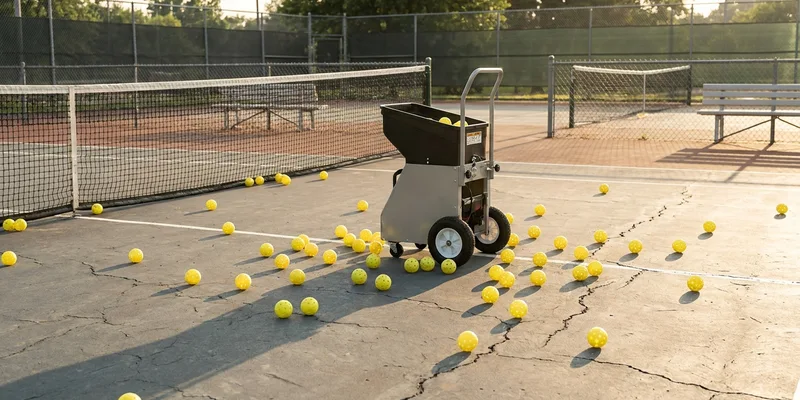
A pickleball ball machine sounds like a purchase reserved for coaches and dedicated facilities, but a growing number of individual players are buying one to get repetition without needing a partner available at the same time every day. Before spending on one, it is worth being honest about what a ball machine actually replaces in your practice and what it does not.
This guide covers who actually benefits from a pickleball ball machine, what features matter most, and where a machine fits alongside practicing with a partner rather than instead of it.
Quick Answer
Is a pickleball ball machine worth buying?
- A ball machine is most worth it for players who want repetition on a specific shot without waiting on a partner’s availability.
- Look at oscillation, ball capacity, and portability, since those three specs vary the most between entry-level and higher-end machines.
- A ball machine is a practice tool, not a substitute for live play; it will not replace the decision-making a real opponent forces on you.
Bottom line: buy a ball machine to build repetition on mechanics, not as a full replacement for practicing against another person.
What a Pickleball Ball Machine Actually Does
A pickleball ball machine feeds balls at a set speed and interval, either to a fixed spot or oscillating across a programmed pattern, so you can repeat a specific shot dozens of times in a row without a partner feeding balls by hand. That volume of repetition is difficult to replicate in a normal practice session with another person, since a human feeder tires and varies shot placement naturally.
Most machines let you adjust speed, spin, and feed interval, and better models add programmable oscillation that moves the feed point across the court rather than firing to a single spot. Entry-level machines tend to offer fewer of these adjustments, which is worth knowing before comparing price points.
Who Actually Benefits From One
Players working on a specific mechanical issue, a third shot drop that keeps sailing long, a dink that lacks control, benefit from a ball machine’s ability to deliver the same shot repeatedly so you can isolate what is going wrong without a partner’s shot placement varying each time. That kind of focused repetition is genuinely hard to get from live play alone.
A ball machine is less useful for players still learning basic rules and court awareness, since a machine cannot replicate the decision-making, positioning, and reaction to an opponent’s shot selection that live play requires. If you are brand new to the sport, time with a partner or in a group lesson generally teaches more than solo machine reps at this stage; see our how to play pickleball guide if you are still learning the fundamentals.
Ball Machines by Situation
Entry-Level, Occasional Solo Practice
Titan’s ball machine lineup is frequently searched by name among players comparing lower-cost entry machines rather than facility-grade equipment, and the brand’s models are positioned toward individual buyers rather than clubs.

Wants Portability for Different Courts
A compact, lighter machine with a smaller ball hopper suits a player who transports the machine between a home court and a public facility, trading some capacity for easier setup and breakdown each session.
Wants Programmable Oscillation for Drilling
Players working specifically on footwork and positioning benefit most from a machine with adjustable oscillation patterns, since a fixed single-spot feed does not replicate the varied placement a machine with oscillation can simulate.

Coaches or Households Sharing Across Multiple Players
A higher-capacity hopper and a sturdier frame matter more for a machine used by multiple players across longer sessions, since a small hopper requires refilling frequently when more than one person is drilling.

What to Compare Before Buying
| Spec | Why it matters |
|---|---|
| Ball capacity | Larger hoppers mean fewer refills during a session |
| Oscillation | Programmable feed patterns better simulate varied shot placement |
| Portability and weight | Matters if you move the machine between courts regularly |
| Speed and spin adjustment | Lets you match feed difficulty to the shot you are drilling |
| Power source | Battery-powered models trade some runtime for setup flexibility away from an outlet |
Storage, Charging, and Upkeep
A ball machine is a bigger piece of equipment to store than a paddle or a bag, and it is worth checking dimensions and weight before buying if garage or closet space is limited. Battery-powered models also need a regular charging routine, and a machine left uncharged for weeks between sessions is one of the more common reasons owners are frustrated the first time they try to use one after a break.
Balls cycle through a machine repeatedly during a drilling session, so keeping a dedicated supply of practice balls separate from the balls you use in actual games saves you from running short mid-session. Outdoor balls used heavily in a machine also wear down over time the same way they would in normal play, so replacing them periodically keeps feed consistency from drifting.
Common Mistakes When Buying a Ball Machine
Expecting a ball machine to replace practicing with a partner is the most common mistake. A machine is excellent for repetition on a known shot, but it cannot force you to read an opponent, adjust to unpredictable placement, or make the tactical decisions that live points require, all of which matter as much as raw stroke mechanics.
The second mistake is buying the largest, most expensive machine before knowing which specific shots you actually want to drill. A simpler, single-spot feed machine covers plenty of beginner-to-intermediate practice needs, and oscillation and programmability matter more once you already know exactly what you are working on.
Where a Ball Machine Fits Alongside Real Practice
The most effective use of a ball machine tends to be as a supplement to, not a replacement for, live play and partner drills. Use it to isolate and repeat a specific mechanical fix, a third shot drop, a dink pattern, a serve, and then take that repetition back into live points where an opponent forces you to apply it under real conditions. Our third shot drop guide and serve technique guide both cover shots that machine repetition tends to help with directly.
Frequently Asked Questions
Is a pickleball ball machine worth it for a beginner? It can help once you know the basic rules and shots, but a complete beginner usually learns faster from live play or lessons than from solo machine repetition early on.
How much does ball machine oscillation actually matter? It matters most for players drilling footwork and positioning across the court; for simple repetition on a single shot from one spot, a fixed feed works fine.
Can a ball machine be used indoors? Many models work indoors, but check the specific machine’s space requirements and power source, since some indoor facilities restrict battery or corded equipment.
Do I need a large ball capacity machine? Only if you are drilling for long sessions or sharing the machine across multiple players; casual solo practice works fine with a smaller hopper that gets refilled periodically.
Is a portable ball machine less durable than a stationary one? Not necessarily less durable, but portable models generally prioritize lighter weight over the largest hopper capacity, which is a trade-off rather than a durability issue on its own.
What is the highest-value feature on an entry-level ball machine? Consistent, adjustable feed speed tends to matter more for entry-level practice than advanced oscillation programming, which becomes more valuable as your drilling needs get more specific.
The Bottom Line
A pickleball ball machine is a genuinely useful tool for building repetition on a specific shot, but it works best as a supplement to live play rather than a replacement for it. Compare capacity, oscillation, and portability against how and where you actually plan to practice, and pair machine reps with real points against a partner to make the repetition transfer. For the shots most players drill first, see our third shot drop and dink guides next.