Last updated: August 18, 2026
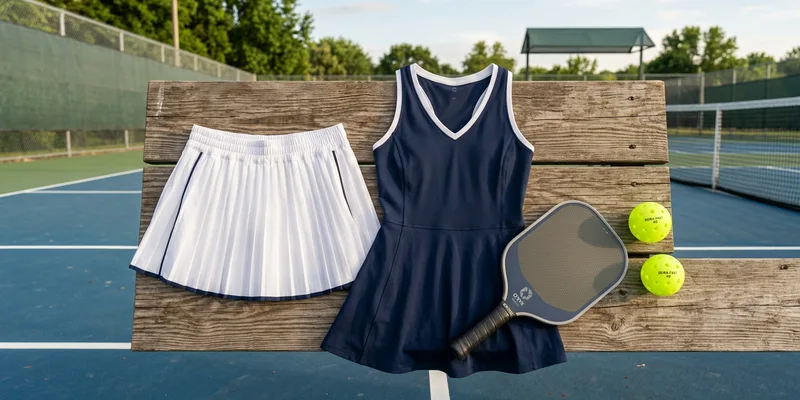
Walk onto any busy court and you will see the same two garments over and over, and there is a practical reason for it. A skort or a court dress solves the one problem that regular athletic shorts do not: where to keep the second ball so you are not holding it in your non paddle hand through an entire service game.
The category is also genuinely confusing to shop, because skirt, skort and dress get used interchangeably in product listings while describing three different garments. This guide sorts out which is which, what actually separates a good one from a frustrating one, and how to pick between them for the way you play.
Quick Answer
What should you look for in a pickleball skirt or dress?
- A built in liner short with a real ball pocket, which is the single feature that makes the garment work on court.
- A moisture wicking fabric with some stretch, rather than cotton, which stays wet once you sweat through it.
- Enough length that you are not adjusting the hem between points, and a liner that does not ride up during lunges.
- For a dress, check whether it includes a shelf bra and shorts, since that determines what you need to wear underneath.
Bottom line: the pocket and the liner decide whether you keep wearing it, not the print on the fabric.
Skirt, Skort or Dress: What the Terms Actually Mean
A skort is a skirt outer layer with compression shorts attached underneath, and it is by far the most common court bottom. A true skirt has no liner, which means you supply your own compression shorts. A court dress is a one piece garment that usually has the same built in shorts, sometimes along with a shelf bra.
Listings frequently label skorts as skirts, so the useful habit is ignoring the product name and looking at whether a liner is shown or described. If the description mentions built in shorts, a liner, or a ball pocket in the liner, you are looking at a skort regardless of what the title calls it.
Which One Suits Which Player
Skorts are the default because they solve pockets and coverage in one garment and pair with any top you already own. Dresses appeal to players who prefer a finished look without matching pieces and who like a single item that is ready to go. A liner free skirt makes sense mainly if you already wear compression shorts you like and want to keep them.
The Ball Pocket Is the Deciding Feature
The ball pocket is what separates court specific bottoms from generic athletic wear, and it is the feature players regret skipping. A pocket that holds a ball securely through lateral movement means you serve properly with both hands free instead of juggling a spare or walking back to the fence between points.
Not all pockets are equal. A shallow side pocket in the outer skirt layer lets a ball bounce out during a hard cut, while a deep pocket in the compression liner holds it against the leg where it stays put. If a listing shows only decorative side pockets, treat that as a garment for warm ups rather than for play.
Phone and Key Pockets
Many court bottoms now add a small zip or slip pocket sized for a phone or a car key. It is a genuine convenience at open play where there is no bench to leave things on, though a phone bouncing against your thigh during quick footwork annoys some players enough that they stop using it. Prioritize a zip closure over pocket size.
Pickleball Skirts and Dresses by Situation
The Default Choice for Regular Play
A skort with a compression liner and a liner ball pocket is the workhorse of this category. It handles coverage, storage and movement in one garment, and it works equally well for a rec center session and a league night, which is why most players end up owning several.

Players Who Want a One Piece Option
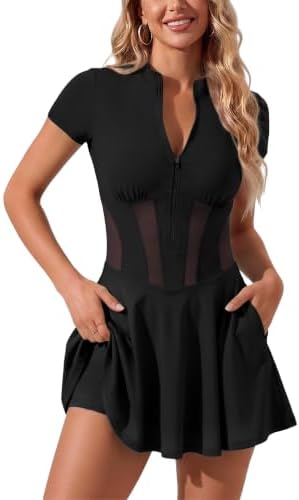
A court dress does the same job in a single garment and removes the question of what to pair with it. Check the description for built in shorts, since a dress without them requires you to add your own liner, which defeats much of the convenience.

Players Who Want More Coverage
Hemlines in this category range from very short tennis inspired cuts to longer, more relaxed lengths, and pickleball skews toward the longer end. If you have been put off by how short tennis skirts run, look specifically for a longer stated inseam on the liner and a longer skirt length rather than assuming they are all the same.

Dresses With a Built In Bra
Some court dresses include a shelf bra or a removable pad, which suits players who want to get dressed once and be done. Support levels vary considerably, so treat a shelf bra as light support rather than a replacement for a proper sports bra if you want more than that.
Hot Weather and Outdoor Sessions
For long outdoor sessions in direct sun, a lighter, faster drying fabric matters more than anything else in the garment, and a stated UPF rating adds genuine sun protection through the fabric itself. Lighter colors also stay noticeably cooler than dark ones on an exposed court.

Comparing the Three Styles
| Style | Best for | Pocket setup | Watch out for |
|---|---|---|---|
| Skort | Everyday play, most players | Ball pocket in the compression liner | Liner riding up if the fit is too loose |
| Skirt without liner | Players who own compression shorts they like | Depends entirely on your own shorts | Outer pockets that drop a ball mid point |
| Court dress | One piece convenience | Usually shorts underneath with a pocket | Some versions have no built in shorts at all |
Length, Liner and Movement
The liner does most of the work in a skort or dress, so its length and grip matter more than the outer layer. A liner that is too short or too loose rides up during lunges and split steps, which is the most common reason a garment gets worn once and abandoned. Silicone grip at the hem or a longer inseam both address it.
Outer length is a comfort and confidence question rather than a performance one. The practical test is whether you find yourself tugging at the hem between points, because that is a distraction that repeats itself hundreds of times per session and does not improve with familiarity.
Fabric and Sun Protection
Polyester, nylon and blends with a small percentage of elastane are the standard here for good reason: they move sweat to the surface where it evaporates and they stretch with a lunge instead of pulling against it. Cotton does neither, which is why it disappears from serious court wardrobes within a few months.
For outdoor play, a stated UPF rating on the fabric is a real functional feature rather than marketing language, and it is more reliable than reapplying sunscreen to the backs of your legs mid session. It is worth checking the label for, particularly if you play midday in summer.
Common Mistakes When Buying
The most common mistake is buying by print rather than by liner. A pattern you love in a garment whose shorts ride up is a garment you will not wear, while a plain skort with a well fitted liner and a deep pocket stays in rotation for years. Read the liner description before you look at the colorway.
The second is assuming pickleball branded apparel is functionally better than tennis apparel. The construction is generally the same, the tennis category is deeper and older, and the main difference tends to be hemline and styling. Buy the garment that fits, not the label on it, which is the same conclusion our pickleball clothing guide reaches across the whole category.
Sizing Across Brands
Court apparel sizing varies more than street clothing, and the liner is usually the piece that runs tight rather than the skirt. If you are between sizes and the liner is described as compression, most players do better sizing up in the garment than squeezing into a liner that will roll at the hem.
Frequently Asked Questions
What is the difference between a skirt and a skort? A skort has compression shorts built in underneath the skirt layer, usually with a ball pocket. A skirt has no liner, so you supply your own shorts.
Do pickleball skirts have ball pockets? Most court specific skorts do, typically in the compression liner rather than the outer layer, since a liner pocket holds the ball securely during lateral movement.
Can I wear a tennis skirt for pickleball? Yes. The garments are functionally identical, though tennis versions often run shorter, so check the length before ordering if coverage matters to you.
What do you wear under a pickleball dress? Many court dresses include built in shorts, in which case you need nothing extra beyond a sports bra. If the dress has no liner, add compression shorts with a pocket.
Are pickleball dresses good for beginners? They are as practical as anything else in the category. The only thing to confirm is that the version you buy has shorts underneath, since that determines whether you have somewhere to keep a ball.
How long should a pickleball skirt be? Long enough that you are not adjusting it between points. Pickleball hemlines generally run longer than tennis, and liner inseam length matters more than the outer skirt for comfort.
How do you wash court skirts and dresses? Cold wash and air drying preserve the elastane and any wicking finish. Fabric softener coats the fibers and reduces how well the fabric moves moisture, so it is worth skipping.
Do I need a UPF rating? Only if you play outdoors regularly. For indoor play it makes no difference, but for long sessions in direct sun it is a genuine advantage over relying on sunscreen alone.
The Bottom Line
Pickleball skirts and dresses come down to three checks: a liner with a real ball pocket, a fabric that moves sweat instead of holding it, and a length that stays where you put it during a lunge. A skort suits most players, a dress suits anyone who wants one garment and no decisions, and a liner free skirt only makes sense if you already own shorts you like. For the rest of the kit see our women’s pickleball clothing guide, and get your court shoes sorted first, since that is the one item where the wrong choice actually costs you.