Last updated: August 18, 2026
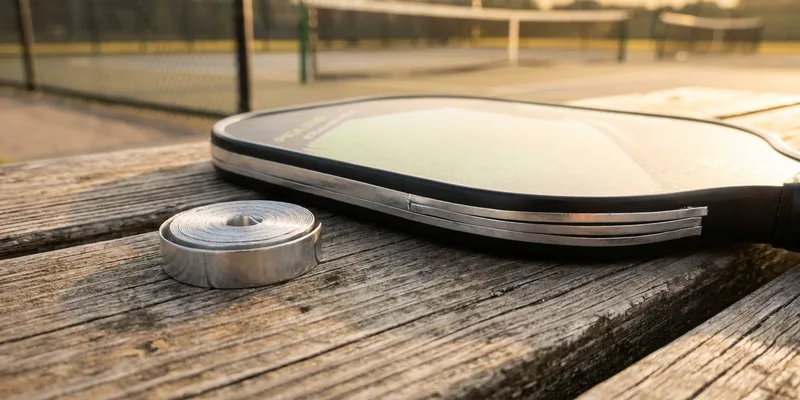
Watch the paddles at a competitive open play session and you will start noticing thin strips of tape running along the edge guards. That is weight tape, and it is the cheapest meaningful change you can make to a paddle you otherwise like. It is also the easiest thing to get wrong, because a few grams in the wrong place makes a good paddle feel sluggish.
This guide explains what added weight actually does, where players put it and why, how much is a sensible starting point, and how to work through it without turning your paddle into a science project. It also covers the part most tuning discussions skip, which is what the rulebook has to say if you play sanctioned events.
Quick Answer
Where should you put lead tape on a pickleball paddle?
- At the sides of the face, roughly the three and nine o’clock positions, for stability against twisting on off centre hits.
- Toward the top of the face for more mass behind the ball and a heavier, more powerful swing.
- At the butt of the handle to add heft without making the paddle feel head heavy.
- Start with a small amount, play with it for a few sessions, and change one position at a time.
Bottom line: weight low on the face or in the handle adds stability, weight high on the face adds power and swing effort.
What Adding Weight Actually Changes
Adding tape changes three separate things, and confusing them is the root of most bad tuning. Total weight is how heavy the paddle is on a scale. Balance is where that weight sits along the length. Swing effort is how heavy it feels to accelerate, which depends far more on how far the mass sits from your hand than on the number on the scale.
That last point is the one worth internalising. A few grams at the top of the face changes how the paddle feels to swing far more than the same few grams at the butt of the handle, because distance from the pivot multiplies the effect. This is why two paddles of identical total weight can feel completely different.
Stability and Twisting
The other property players chase is resistance to twisting. When the ball lands away from the centre of the face, the paddle tries to rotate in your hand, and the resulting shot comes off soft and off target. Mass placed out toward the sides of the face resists that rotation, which is why the three and nine o’clock positions are the most common first modification.
Where Players Put It and Why
Think of the paddle face as a clock, with twelve at the top edge and six at the throat. Each position produces a different result, and most players end up combining two of them rather than piling everything into one spot.
The sides, at three and nine o’clock, are the standard starting point for stability with a relatively modest increase in swing effort. The top, around eleven to one o’clock, adds the most power and the most swing effort per gram. The handle and butt add total mass with the least effect on how the paddle swings, and are often used to counterbalance weight added up top.
Counterweighting
If you like the extra plow through of weight at the top but find the paddle too head heavy at the net, adding weight in the handle brings the balance back toward your hand while keeping the extra mass. The paddle gets heavier overall but feels quicker in fast exchanges than the head weight alone would suggest.
Reading Your Own Symptoms
Match the fix to the complaint. Balls dying on off centre contact points at stability, so try the sides. Drives that feel like they lack weight behind them point at mass, so try the top. A paddle that feels flimsy or harsh but swings fine points at total weight, so try the handle. A paddle that feels slow at the net does not need more weight at all.
How Much to Add
Less than you think. Weight tape is sold by width and thickness, and a short strip already changes the feel of a paddle noticeably. The reliable method is to add a small, symmetrical amount, play several sessions with it, and only then decide whether to add more.
Symmetry matters. Whatever you put at three o’clock should be matched at nine o’clock, or the paddle will behave differently on forehand and backhand. Cut strips to the same length and keep a note of what you added so you can undo it.
Test Before You Commit
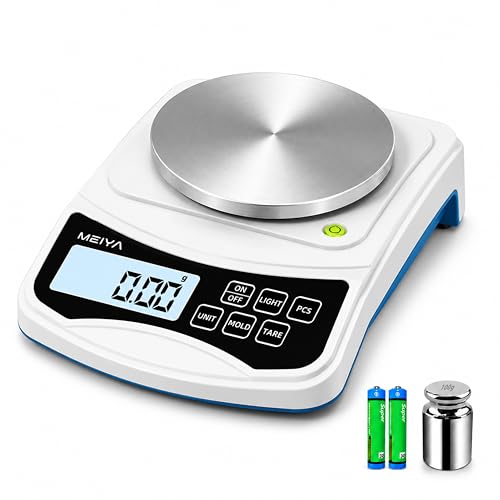
Because tape is adhesive, try positions before making them permanent. Many players stick strips lightly, play a session, then reposition. A small scale is genuinely useful here, since it turns a vague impression into a number you can repeat on another paddle.
Weight Placement Compared
| Position | Main effect | Feels like | Suits |
|---|---|---|---|
| Sides, three and nine | More resistance to twisting | Steadier on off centre contact | Most players, and the usual first change |
| Top, eleven to one | More mass behind the ball | Heavier swing, more plow through | Drivers who want power from the baseline |
| Throat, five to seven | Modest total weight, low on the face | Slightly more solid, little swing change | Players who want stability without lag |
| Handle and butt | Total weight with least swing effect | Denser but still quick at the net | Counterbalancing head weight |
Rules, Legality and Sanctioned Play
Adding weight to a paddle is common and widely done, but paddle alterations are covered by the equipment section of the rulebook, and the specifics change from time to time. We are not going to print limits here that might be out of date by the time you read this, because a wrong number is worse than no number.
If you play sanctioned tournaments, read the current equipment standards directly at usapickleball.org before modifying a paddle, and check with the tournament director if anything is ambiguous. Our explainer on what paddle approval actually means covers how the approval system works in general. For recreational open play, none of this is normally an issue.
Lead, Tungsten and Handling It Sensibly
Lead is a heavy metal, which is exactly why it is used: it packs a lot of mass into a small strip. It is also worth handling with basic care. Wash your hands after applying it, keep the roll away from children, and cover the strips with a layer of clear tape or run them under the edge guard so you are not gripping bare lead during play.
Lead free alternatives have become popular for this reason. Tungsten tape offers comparable density without the lead, and adhesive weight tapes in other metals are widely sold for the same purpose. If the material bothers you, there is no reason to use lead specifically.
Choosing Weight Tape
Standard Rolls for General Tuning
A roll of quarter inch tape is the most versatile format. It fits comfortably along an edge guard, cuts easily to length with scissors, and gives you enough material to experiment across several paddles before you run out.

Lead Free Options
Tungsten and other lead free weight tapes do the same job without the heavy metal. They are the sensible default if you would rather not have lead in your bag, and behave identically once applied.

Precut Strips for Repeatable Changes
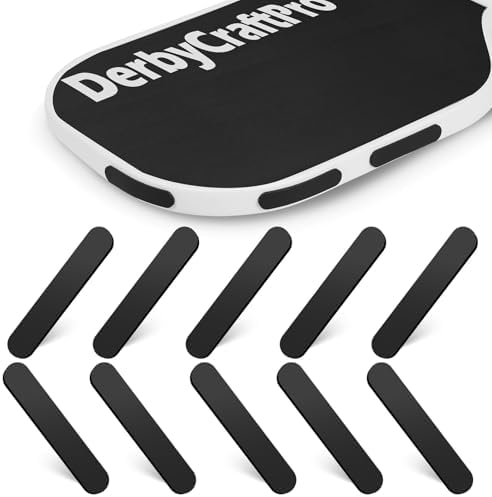
Precut strips take the cutting and weighing out of the process, which makes symmetrical placement easier and repeatable across paddles. They suit players who want to test placements quickly rather than fine tune to a fraction of a gram.
A Scale to Make It Measurable
A small digital scale turns tuning from guesswork into something you can record and repeat. Weigh the paddle before and after, note the placement, and you can reproduce a setup you liked on a future paddle instead of starting over.
Mistakes Worth Avoiding
The most common mistake is adding too much at once. A long strip along the whole edge guard turns a lively paddle into something you fight through fast hands exchanges, and because everything changed at once you have no idea which part helped. Add a little, play, then decide.
The second is asymmetry. Weight on one side only makes forehand and backhand behave differently and is almost impossible to diagnose by feel. Mirror every placement across the face unless you are deliberately correcting something specific.
Tuning a Paddle That Is Wrong for You
Tape adjusts a paddle. It does not transform one. If you are adding a lot of weight to make a light control paddle hit like a power paddle, the paddle is the wrong shape of tool and you will end up with something heavy that still does not do what you want. Our guides to power paddles and control paddles are the better place to start in that case.
Frequently Asked Questions
Is lead tape allowed on a pickleball paddle? Adding weight is common, but paddle alterations are covered by the equipment rules and those change over time. Check the current standards at usapickleball.org before competing, and ask the tournament director if in doubt.
How much lead tape should I add? Start with a small, symmetrical amount and play several sessions before adding more. Small changes are easier to judge and far easier to reverse.
Where does lead tape go for more power? Toward the top of the face. Mass further from your hand adds the most to swing weight and to the mass behind the ball, at the cost of a heavier feeling swing.
Where does it go for stability? At the sides of the face, around three and nine o’clock, which is what resists the paddle twisting on off centre contact.
Will lead tape make my paddle too heavy? It can, especially high on the face. If the paddle feels slow at the net, either remove some or counterbalance with weight in the handle.
Is there a lead free alternative? Yes. Tungsten and other lead free weight tapes are widely sold and do the same job, which is why many players prefer them.
Can I remove lead tape later? Usually, though adhesive residue is common. Peel it slowly and clean the area gently, keeping solvents away from the paddle face.
The Bottom Line
Weight tape is the cheapest real change you can make to a paddle you already like. Put it at the sides of the face for stability, toward the top for power and swing weight, and in the handle to add mass without slowing the paddle down. Add a small symmetrical amount, play several sessions, and change one thing at a time. Handle lead with basic care or use a tungsten alternative, and if you compete, read the current equipment standards at usapickleball.org rather than trusting a product listing.