Last updated: August 19, 2026
Most paddles ship with a perfectly adequate grip and most players never touch it. Then, a year or two in, the wrap under the palm compresses flat, the tacky finish polishes smooth, and the handle starts feeling like a broom stick with tape on it. That is the point at which you are shopping for a replacement grip, not another overgrip.
This guide is about the base layer: choosing a replacement wrap for the bare handle, getting the handle size right while you are at it, and doing the rewrap without ending up with ridges. If you are still unsure which of the two layers you need, our explainer on grip versus overgrip settles that first.
Quick Answer
How do you choose a pickleball paddle grip?
- Decide handle size first. The replacement grip is the layer that sets circumference, so this is your one chance to change it easily.
- Cushioned synthetic wraps suit players who want shock absorption and a plusher feel through the hand.
- Thin, tacky or perforated wraps suit players who want direct feedback and plan to run an overgrip on top anyway.
- Replace the base grip only when it is genuinely worn or the size is wrong. Otherwise an overgrip is the cheaper fix.
Bottom line: pick the grip that gives you the handle size you want, then adjust surface feel with an overgrip.
When a Replacement Grip Is the Right Fix
A replacement grip is the wrap applied directly to the bare handle. You change it rarely, and only for one of three reasons: the original is worn through and compressed, the handle is the wrong size for your hand, or you want a materially different amount of cushioning. Everything else is an overgrip job.
The tell for genuine wear is compression rather than appearance. Press the wrap with a thumb along the palm side of the handle. If it has gone hard and flat where your hand sits while the rest still has give, the cushioning is spent.
The Cheaper Fix First
If the handle simply feels slick, that is a surface problem and an overgrip solves it for a fraction of the effort. Stripping and rewrapping a base grip takes fifteen minutes and cannot be undone halfway through, so it is worth confirming that the problem really is underneath before you start peeling.
Handle Size Matters More Than Material
Grip circumference changes how much wrist you can use, how easily you can adjust your hand between shots, and how hard you unconsciously squeeze. It is the variable most players never deliberately choose, because they take whatever size the paddle came with and adapt around it.
Paddle handles are generally slimmer than tennis racquet handles, and manufacturers list circumference on the spec sheet. A thinner handle gives more wrist mobility and easier grip changes. A thicker handle feels more stable and resists the paddle twisting on off centre contact.
Working Out What Size You Want
There is no measurement that beats holding a few paddles, but the familiar racquet sport check is a reasonable starting point: with your normal grip, you should have roughly a finger’s width of space between your fingertips and the base of your thumb. Tight enough that you cannot fit anything is small, loose enough that the paddle rotates in your hand is large.
Building the Handle Up or Slimming It Down
Going thicker is easy. A cushioned replacement grip, or a replacement grip plus an overgrip, adds circumference in predictable steps. Going thinner is harder, because you are limited by the bare handle underneath. A thin, low profile replacement wrap is the slimmest practical option, and if that is still too thick for you the handle itself is the wrong shape for your hand.
Grip Materials and How They Feel
Replacement grips come in a handful of material families and they feel genuinely different in the hand. The main split is between cushioned polyurethane wraps, which dominate the category, and thinner tacky or perforated wraps aimed at players who want feedback rather than padding.
Cushioned polyurethane grips are soft, absorb some vibration, and add the most thickness. Tacky wraps are thinner with a slightly sticky surface. Perforated versions punch small holes through to help with sweat. Towelling grips are the most absorbent of all and the most acquired taste, since they wear quickly and feel rough to some hands.
What About Grip Tape
Grip tape is an ambiguous term worth pinning down. Finishing tape is the small strip that seals the end of a wrap and comes in the packet. Some players also use the phrase for thin adhesive backed wraps sold in rolls. Neither should be confused with lead tape, which is about paddle weight rather than grip, and which we cover in our guide to adding lead tape to a paddle.
Choosing a Grip by What You Want From It
Replacing a Worn Factory Grip Like for Like
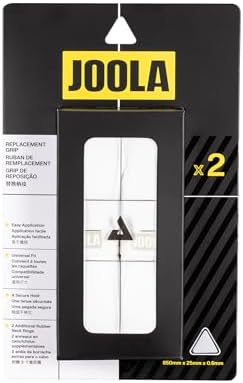
A standard cushioned replacement grip is the safe default and gets you back to the feel the paddle had when it was new. Pick a thickness close to the original if the handle size already suited you, since this is the layer where a change is hardest to reverse.
Players Who Want a Softer, Thicker Handle
A cushioned polyurethane wrap in a thicker profile builds up circumference and takes some sting out of hard contact. This is the usual answer for players who find a stock handle too slim, or whose hand tires over a long session of blocking drives.

Players Who Want Feedback Rather Than Padding
A thin, tacky replacement wrap keeps the handle close to its bare dimensions and gives a direct connection to the paddle. It is the sensible base for anyone who runs an overgrip on top permanently, because you are adding the comfort layer separately anyway.

Players With Sweaty Hands
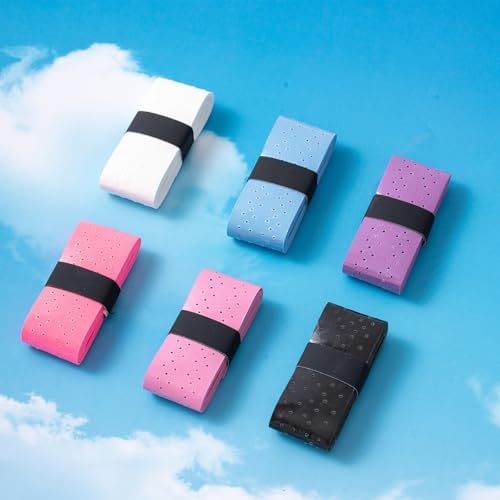
Perforated grips vent moisture through the surface rather than relying on tack alone, which helps in hot outdoor conditions where a plain tacky wrap goes slippery. Absorbent towelling wraps take that further at the cost of a rougher feel and faster wear.
The Best Overgrip for Sweaty Hands
The base grip is only half of that answer, because the layer your hand actually touches is the overgrip. The split there is between tacky and dry. Tacky overgrips hold well while the surface is dry and go slippery once sweat saturates them, which is why players who sweat heavily often dislike them despite the secure feel in the first twenty minutes. Dry or absorbent overgrips, including perforated and towel style wraps, take moisture off the surface instead of relying on stickiness, and they hold their grip better as the session goes on at the cost of a rougher, less plush feel.
The practical setup for a heavy sweater is an absorbent or perforated overgrip over a perforated base grip, plus a spare wrap in the bag so you can change mid session rather than playing the last hour on a saturated one. Some players skip the surface question altogether and wear a pickleball glove on the paddle hand, which moves the moisture problem to a washable item you can swap between games.

Restocking Finishing Tape and Consumables
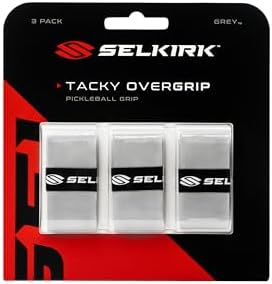
Finishing tape is the part people lose. It seals the top edge of the wrap, and a wrap without it unwinds within a couple of sessions. Multipacks of grip tape and wraps are worth keeping in the bag if you rewrap regularly or share a paddle with family.
Grip Types Compared
| Type | Feel | Effect on handle size | Best for |
|---|---|---|---|
| Cushioned polyurethane | Soft, plush, damped | Adds the most thickness | Thin handles, hand fatigue, general comfort |
| Thin tacky wrap | Sticky, direct | Adds very little | Feedback, and as a base under an overgrip |
| Perforated | Tacky with venting | Adds a small amount | Sweaty hands, warm outdoor play |
| Towelling | Rough, highly absorbent | Adds a noticeable amount | Heavy sweaters who dislike tacky surfaces |
| Finishing tape | Not a grip layer | None | Sealing the end of any wrap |
Stripping and Rewrapping the Handle
Peel the old wrap off from the top and work down, then remove any adhesive residue and the old staple or tape at the butt. Check the bare handle before you start wrapping, since this is the only time you will see it and any damage underneath is worth knowing about.
Start the new wrap at the butt end with the tapered edge, wrap upward toward the face, and overlap each turn slightly and consistently. Keep firm, even tension without stretching the material hard, because an overstretched wrap relaxes and loosens later. Finish below the throat, trim at an angle, and seal with the finishing tape.
If It Comes Out Lumpy
Redo it. A ridge or a gap is something you feel on every shot, and uneven overlap is almost always the cause. Our guide to how to grip a pickleball paddle covers the hand position side once the wrap is on.
Mistakes Worth Avoiding
The biggest mistake is replacing a base grip when the real problem was surface tack. That costs you a perfectly good cushioning layer and a rewrap you did not need. Diagnose first: slick surface means overgrip, flattened cushioning or wrong size means replacement grip.
The second is changing handle size and paddle at the same time. If you rewrap with a thicker grip and immediately feel the paddle is worse, you will not know which change caused it. Alter one variable, play a few sessions, then decide.
Forgetting the Overgrip Sits On Top
If you always run an overgrip, factor that thickness in when you pick the base grip. A thick cushioned replacement grip plus an overgrip can push the handle well beyond what you intended, which is a common reason a freshly rewrapped paddle feels bloated. Our overgrip guide explains what each type adds.
Frequently Asked Questions
How often should I replace a pickleball paddle grip? The base grip lasts far longer than an overgrip. Replace it when the cushioning has compressed flat under the palm or when you want a different handle size, not on a schedule.
Do I remove the old grip before fitting a new one? Yes, for a replacement grip. It goes directly on the bare handle. Overgrips are the layer that goes over an existing wrap.
Can I use a tennis replacement grip on a pickleball paddle? Yes. The wraps are the same product, though pickleball handles are shorter, so you will usually have some length left over to trim.
What is the difference between grip tape and an overgrip? Grip tape usually means the small finishing strip that seals the end of a wrap. An overgrip is the full thin wrap that goes over the base grip.
Will a new grip make the handle bigger? Almost always, unless you deliberately choose a thinner wrap than the original. Cushioned grips add the most, thin tacky wraps add the least.
Which grip is best for sweaty hands? Perforated or absorbent styles rather than plain tacky ones, since tack fades once the surface is saturated with sweat.
Does the grip affect how the paddle plays? It changes handle size, cushioning and weight slightly. That affects comfort, wrist mobility and how securely you hold the paddle rather than what the face does to the ball.
What is the best overgrip for sweaty hands? A dry or absorbent style rather than a tacky one. Tacky wraps grip well until sweat saturates the surface, while perforated and towel style overgrips keep working as the session goes on. Carry a spare so you can change mid session, or wear a glove on the paddle hand instead.
The Bottom Line
Choose a replacement grip on two questions: what handle size you want and how much cushioning you want under your palm. Cushioned polyurethane wraps add the most of both, thin tacky wraps add the least and make a better base if you run an overgrip permanently, and perforated styles are the compromise for sweaty hands. Rewrap from the butt upward with even overlap, seal it with finishing tape, and change one thing at a time so you know what caused the difference. For the layer above it, see our overgrip guide.