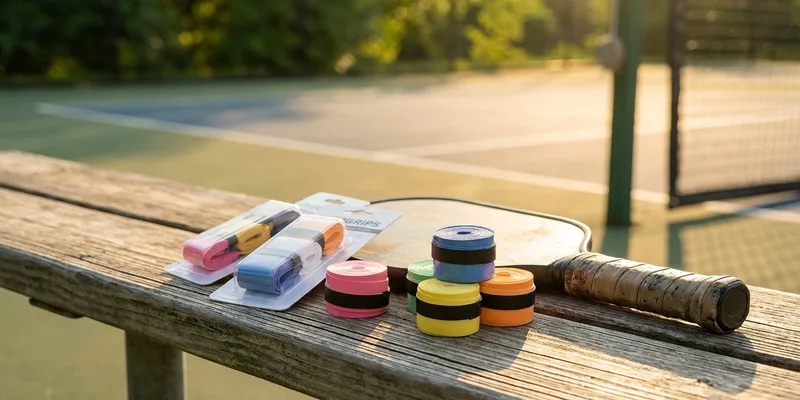
Last updated: August 18, 2026
Ask in an online pickleball group whether you need a new grip and you will get three answers that are all about different products. One person means the wrap that came on the paddle, one means the thin tacky tape that goes over it, and one means the way you hold the handle. The words get used interchangeably and the products are not.
This guide separates them properly: what a replacement grip is, what an overgrip does on top of it, where grip tape and lead tape fit in, and how each choice changes handle size and feel. Sorting that out takes five minutes and saves you from buying the wrong thing twice.
Quick Answer
What is the difference between a pickleball grip and an overgrip?
- A replacement grip is the thicker base wrap that sits directly on the handle. It provides cushioning and is what your paddle shipped with.
- An overgrip is a thin wrap applied over the base grip. It adds tack and sweat absorption, and it is meant to be replaced often.
- Overgrips are disposable by design and add a small amount of handle thickness. Replacement grips are changed rarely and set the underlying feel.
Most players keep the factory grip and simply cycle overgrips over the top.
The Three Products, Clearly Separated
The confusion is worth clearing up before anything else, because each item does a different job and they are not interchangeable. The table below covers what each one is and when you would reach for it, which is the whole distinction in one place.
| Item | What it is | When you use it |
|---|---|---|
| Replacement grip | Thicker base wrap, usually cushioned, applied directly to the bare handle | When the original grip is worn out or you want a different base feel or thickness |
| Overgrip | Thin wrap applied over the existing grip, usually tacky or perforated | Routinely, whenever the current one gets slick or grubby |
| Grip tape (finishing tape) | The small strip that secures the end of a wrap | Comes with most grips and overgrips; replaced when it stops sticking |
| Lead or weight tape | Adhesive weighted tape added to the paddle | To change paddle balance, which is a different question from grip entirely |
What a Replacement Grip Actually Does
The replacement grip is the foundation layer, and it determines two things: how much cushioning sits between your hand and the handle, and how thick the handle is before anything else is added. Paddle manufacturers choose a stock grip that suits an average hand, which is why some players find the handle too slim or too soft straight out of the box.
Cushioned grips absorb more shock and feel plusher, while thinner, firmer grips give a more direct connection to the paddle at the cost of that cushioning. Neither is better in general, and the choice is genuinely personal, but it is a decision you make once and live with for a long time rather than something you revisit monthly.
What an Overgrip Adds
An overgrip is thin and designed to be thrown away. Its job is the surface layer: tack so the paddle does not twist in a sweaty hand, absorption so moisture has somewhere to go, and a clean feel that a months old base grip cannot provide any more. It also protects the base grip underneath from wear.
The two broad families are tacky and absorbent. Tacky overgrips feel slightly sticky and are popular with players who want a secure hold with a relaxed hand, while perforated or towel style absorbent grips prioritise pulling sweat away and suit players who play in heat. Many people try both and stay with whichever one their hand prefers.
Why Players Replace Them So Often
An overgrip is a consumable in the same way a ball is. Tack fades with use and skin oils, and once a wrap goes slick it stops doing the one job you bought it for, which is why players who play several times a week get through them steadily and buy in multipacks.
How Grip Layers Change Handle Size
Every layer you add makes the handle thicker, and handle circumference affects how the paddle sits in your hand. An overgrip adds a small but noticeable amount, and stacking two overgrips or putting an overgrip over an already thick replacement grip adds up faster than people expect.
That is worth knowing in both directions. If your handle feels too thin, adding an overgrip is the simplest adjustment available. If it feels too thick, stripping back to a thinner base grip is the fix, and no amount of overgrip experimenting will make a bulky handle slimmer.
Wrapping One Without Making a Mess
Start at the butt of the handle and work upward toward the paddle face, keeping the tapered edge of the wrap at the leading edge so each turn overlaps the previous one slightly. Even, consistent overlap matters more than tension. Pull it firm but do not stretch it hard, since an overstretched wrap loosens as it relaxes.
Finish before the wrap reaches the throat of the paddle, cut at an angle if there is excess, and secure the end with the finishing tape supplied. If the result has gaps or ridges, unwind and redo it, because a lumpy wrap is something you will feel on every shot and will end up redoing anyway.
Choosing Between Them
For most players the answer is simple: keep the factory replacement grip and cycle overgrips over the top. That combination is the easiest to maintain, and lets you change the surface feel whenever you want without touching the base layer.
Go to a new replacement grip when the original is genuinely worn through, when you want a materially different amount of cushioning, or when the handle size is wrong at the base rather than at the surface. Our pickleball overgrip guide covers what separates the tacky and absorbent options if you are stocking up, and if the underlying question is how to hold the paddle at all, start with our guide on gripping a pickleball paddle.
Frequently Asked Questions
Do I need to remove the old grip before adding an overgrip? No. An overgrip is designed to go over the existing base grip. You only strip the handle bare when you are replacing the base grip itself.
How often should I replace an overgrip? When it stops feeling tacky or starts to look grubby, which depends entirely on how often you play and how much you sweat. Frequent players cycle through them far faster than weekend players.
Can I use a tennis overgrip on a pickleball paddle? Yes. Tennis overgrips are the same product and are widely used on pickleball paddles, and many pickleball branded overgrips come from the same manufacturers.
Does an overgrip change how the paddle plays? It changes handle thickness slightly and adds negligible weight, so the difference is mostly in feel and security of hold rather than in how the paddle strikes the ball.
Can I stack two overgrips? Some players do it deliberately to build handle size. Just be aware you are changing the circumference, and that a thicker base grip is a tidier way to reach the same result.
Is grip size a health issue? Grip size comes up constantly in conversations about arm discomfort, but that is a question for a coach or a clinician who can look at your hand and your technique, not something to settle from a product page. See our piece on what the term pickleball elbow actually means.
The Bottom Line
A replacement grip is the cushioned base layer on the bare handle and gets changed rarely. An overgrip is the thin, tacky, disposable layer over the top and gets changed often. Grip tape just secures the end, and lead tape is about paddle balance rather than grip at all. Keep the factory base grip, cycle overgrips as they lose tack, and remember that every layer thickens the handle. Ready to restock? Our overgrip guide covers the tacky and absorbent options side by side.