Last updated: August 19, 2026
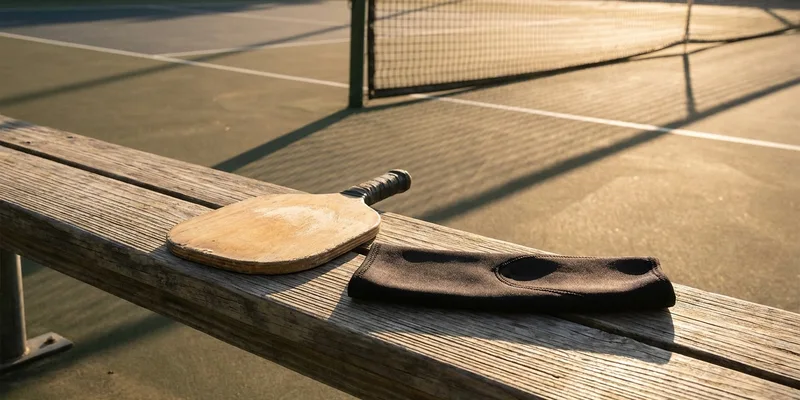
Spend a season around open play and you will hear the phrase. Someone rubs the outside of their forearm between games, someone else nods and says they had pickleball elbow last spring, and within a minute three people are offering paddle recommendations. It is one of the most talked about complaints in the sport, and also one of the most casually diagnosed.
This article explains what the term actually refers to, why a paddle sport brings elbow discomfort into conversation so often, and what belongs in a conversation with a doctor or physical therapist rather than with the group at the net. It deliberately contains no treatment advice, no recovery timelines, and no exercises, because none of that can be responsibly written for a reader whose arm nobody has examined.
Quick Answer
What is pickleball elbow?
- Pickleball elbow is a casual, non medical nickname players use for pain around the elbow that shows up after playing, usually on the outer side of the joint.
- It is the same everyday label that racquet sports have long used with the term tennis elbow. It describes where the discomfort is, not what is causing it.
- Elbow pain has several possible causes, and telling them apart requires an examination. A doctor or physical therapist is the right place to start, not a paddle swap.
This page is general information about a term, not medical advice.
What People Mean by Pickleball Elbow
Pickleball elbow is not a diagnosis. It is a nickname players attached to elbow discomfort that appears alongside regular play, borrowed directly from the older phrase tennis elbow. Clinicians have their own terminology for conditions affecting the tendons around the elbow, and which one applies in a given case is something they establish by examining the arm.
The distinction matters because the nickname implies a single known problem with a single known fix, and that is not how it works. The American Academy of Orthopaedic Surgeons publishes patient level information about elbow tendon conditions on its OrthoInfo site, which is a reasonable place to read background before an appointment, though it does not replace one.
Why a Paddle Sport Brings Up the Elbow So Often
Pickleball involves a very high number of small, repeated impacts through the forearm. A ball meets a rigid paddle face hundreds of times in a session, and unlike a strung racquet, there is no string bed to absorb part of that contact. The arm handles a lot of brief, low magnitude loading over a long period.
Add to that the pattern of how people take up the sport. Many players go from little regular activity to several sessions a week within a month or two because the game is social and easy to start. A rapid increase in the volume of any repeated movement is the sort of thing clinicians ask about, which is why your playing history tends to be one of the first questions at an appointment.
Why the Nickname Spreads Faster Than the Facts
Because the phrase is memorable and the sport is social, the label gets applied to almost any arm pain that shows up near a court. That includes discomfort originating at the wrist, the shoulder, or the neck, which is one more reason a name coined on the sidelines is a poor substitute for an assessment.
Factors Players Commonly Discuss
Several equipment and technique factors come up constantly in player conversations about elbow discomfort. Listing them is not the same as saying any of them caused your symptoms or that changing them will resolve anything. They are simply the variables people raise, and each belongs in a conversation with someone qualified to judge whether it is relevant to you.
| Factor players raise | What is actually known about it |
|---|---|
| Grip size | A frequent topic in racquet and paddle sports. Whether your grip size is appropriate for your hand is something a coach or clinician can look at directly |
| Paddle weight and balance | Widely discussed among players. Manufacturers publish weight ranges, but no equipment specification is a health claim |
| Technique | Coaches routinely look at wrist position and how much of a shot comes from the arm versus the body. A qualified instructor is the person to ask |
| Playing volume | How quickly you increased your sessions per week is standard background information at a medical appointment |
| Braces and sleeves | Commonly seen on courts. Whether one is appropriate in your situation is a question for a clinician, not for a product page |
Do Elbow Braces Help?
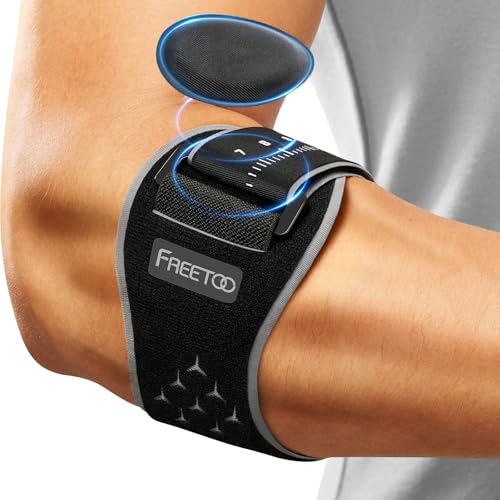
Braces and straps are the most visible item on that list, and the honest position is that this article cannot tell you whether one belongs on your arm. What a brace does mechanically is easy enough to describe: a forearm strap or sleeve sits below the elbow and applies pressure across the muscle, which changes how load is distributed through the area while you are wearing it. Players wear them during play and take them off afterwards.
What that mechanical description does not establish is whether it is useful for whatever is happening in your arm, and the answer differs by cause. Clinicians do recommend bracing in some situations and not in others, which is exactly why the decision belongs in an appointment rather than in a shopping cart. If you are already under the care of a doctor or physical therapist, ask them, and if you are not, that is the step to take before the purchase rather than after it.
Why Buying Something Is the Wrong First Move
The instinct after a few uncomfortable sessions is to shop, because shopping is easy and an appointment is not. The problem is that a new paddle cannot tell you what is going on inside your arm, and a purchase made on a guess only delays the step that actually answers the question.
You will find plenty of gear marketed with comfort language around this exact worry. Treat that language as marketing rather than as evidence about your own symptoms. If you eventually decide to adjust your setup, doing so after an assessment means you are changing something with a reason behind it rather than hoping.
When to See a Doctor or Physical Therapist
Book an appointment if elbow or forearm pain persists beyond ordinary post activity soreness, keeps returning each time you play, interferes with everyday tasks such as lifting a mug or turning a doorknob, or comes with swelling, numbness, tingling, weakness, or loss of movement. Sudden pain after a specific incident also warrants prompt attention.
Bring practical details to that appointment: how long the discomfort has been there, how often and how long you play, what changed recently in your schedule or equipment, and exactly which movements provoke it. That information is more useful to a clinician than any label picked up at the court, and it is the fastest route to an answer that applies to you specifically.
Frequently Asked Questions
Is pickleball elbow the same as tennis elbow? They are two versions of the same everyday nickname, each naming the sport the person happened to be playing. Neither is a clinical diagnosis, and only an examination can establish what is actually going on.
Can I keep playing through it? That is a question for a doctor or physical therapist who has assessed your arm. There is no responsible general answer, because it depends on the cause, the severity, and your own history.
Will a lighter paddle fix it? No article can tell you that. Paddle weight is discussed constantly among players, but equipment is not treatment, and swapping gear before an assessment means you still do not know what you are dealing with.
Do elbow sleeves and braces help? They are common on courts, and whether one is appropriate for you is a clinical question. Ask the professional treating you rather than deciding from reviews.
Does technique matter? Coaches routinely look at grip, wrist position, and how much of a shot is generated by the arm versus the legs and trunk. A qualified instructor can watch you play, which no article can do.
Should I be worried if my arm is just sore after a long session? General soreness after unfamiliar activity is common across sports. What warrants attention is pain that persists, returns every time, interferes with daily tasks, or comes with swelling, numbness, or weakness.
Why does my wrist hurt after pickleball? Wrist discomfort is usually discussed in terms of technique and setup, such as how much of a shot comes from the wrist rather than the shoulder and trunk, and whether the handle size lets you hold the paddle without straining. Those are things a coach can watch. Persistent or worsening wrist pain is a matter for a doctor or physical therapist, since the wrist has several possible sources of pain that only an examination can tell apart.
The Bottom Line
Pickleball elbow is a nickname, not a diagnosis, and treating it as one is how people end up buying gear instead of getting an answer. The sport does involve a lot of repeated forearm impact and many players ramp up their schedule quickly, which is why the topic comes up so often, but that context does not identify what is happening in your arm. Persistent or worsening elbow pain is a reason to see a doctor or physical therapist. If you want to understand the mechanics of how a paddle is held while you wait for that appointment, our guide to gripping a pickleball paddle covers the fundamentals.