Last updated: August 19, 2026
An overgrip is the cheapest thing in your bag and the one that changes how the paddle feels in your hand more than anything short of buying a new paddle. It is also the item most recreational players never replace, which is why so many paddles at open play have a slick, shiny handle that the owner has quietly compensated for by squeezing harder.
This guide covers the actual differences between overgrip types, how to choose based on how much you sweat and what conditions you play in, and how often replacement is genuinely worth doing. If you are not sure how an overgrip differs from the grip the paddle came with, start with our explainer on grip versus overgrip.
Quick Answer
Which pickleball overgrip should you use?
- Tacky overgrips give the most secure feel for players with dry hands or indoor play, but get slick once they are saturated.
- Dry or absorbent overgrips are the better choice for heavy sweaters and hot outdoor conditions, at the cost of a less grippy initial feel.
- Cushioned overgrips add thickness and shock absorption, useful if the handle feels too thin or your hand tires quickly.
- Buy a multipack rather than a single wrap, since the whole point is replacing them regularly.
Bottom line: match the overgrip type to how much your hands sweat, then replace it before it goes shiny rather than after.
What an Overgrip Actually Does
An overgrip is a thin wrap applied over the paddle’s existing handle grip. It is designed to be consumable, meaning you peel it off and replace it when it wears rather than trying to restore it. It changes three things: surface texture, handle circumference, and how sweat is managed during a session.
The reason it matters more than its cost suggests is grip pressure. A handle that feels insecure makes you squeeze harder without noticing, and a tighter grip reduces wrist mobility on dinks and resets while adding fatigue through the forearm. A fresh overgrip removes that reflex.
It Is Not the Same as the Base Grip
The grip that came on your paddle is the base grip, usually a thicker cushioned wrap that is not designed to be swapped every few weeks. An overgrip goes on top of it and protects it. Replacing a base grip is a bigger job and is only worth doing when the underlying wrap has genuinely broken down.
The Three Overgrip Types Explained
Overgrips fall into three broad categories: tacky, dry, and cushioned. The differences are real and easy to feel, and picking the wrong type for your conditions is the most common reason a player concludes overgrips do not help them. The right type depends mainly on how much your hands sweat.
Tacky Overgrips
Tacky overgrips use a slightly sticky polyurethane surface that grabs the hand immediately. They feel the most secure out of the wrapper and suit players with dry hands, indoor play, or cooler conditions. The trade off is that once a tacky overgrip absorbs enough sweat, the tackiness turns slick fairly quickly.
Dry and Absorbent Overgrips
Dry overgrips use a textured, often cloth like material that pulls moisture away rather than relying on stickiness. Tourna Grip is the best known example of this style, carried over from tennis, where it built its reputation among players in humid conditions. The initial feel is less grippy than a tacky wrap, which puts some players off before they have sweated into it.
Cushioned Overgrips
Cushioned overgrips are thicker and add both handle circumference and a degree of shock absorption. They suit players who find a stock handle too thin, or who want a softer feel through the hand. The trade off is a slight loss of feedback from the paddle and a handle that is measurably larger, which not every hand wants.
Choosing an Overgrip by Situation
Most Players Starting Out
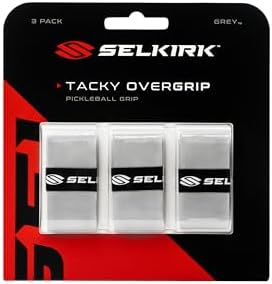
A standard tacky overgrip in a multipack is the sensible default. It gives an immediate improvement over a worn factory grip, costs little per wrap, and gives you enough replacements to work out how quickly you actually wear through one.
Players With Sweaty Hands or Hot Outdoor Play
Dry, absorbent overgrips are the better answer here. Rather than relying on a tacky surface that degrades once saturated, they manage moisture directly, which is why they dominate among players in humid summer conditions.

Players Who Want the Grippiest Possible Feel
Tacky overgrips built for maximum surface adhesion suit indoor players and anyone whose hands stay relatively dry. They are also the type most players describe as feeling like a brand new paddle when first applied.
Players Wanting a Thicker Handle or Softer Feel
Cushioned overgrips add circumference without needing a new base grip, which is the simplest way to build up a handle that feels too thin. They also take some sting out of hard drives if your hand or forearm tires quickly.

Players Who Replace Grips Frequently
Once you know your preferred type, buying in a larger multipack lowers the per wrap cost and removes the excuse for playing on a worn grip. Players on court several times a week go through these considerably faster than they expect.

Overgrip Types Compared
| Type | Feel | Best for | Trade off |
|---|---|---|---|
| Tacky | Sticky, immediate grab | Dry hands, indoor play, cool conditions | Turns slick once saturated with sweat |
| Dry or absorbent | Textured, cloth like | Heavy sweaters, humid outdoor play | Less grippy feel straight out of the pack |
| Cushioned | Soft and thicker | Thin handles, hand or forearm fatigue | Adds circumference, reduces paddle feedback |
| Perforated | Tacky with vent holes | Compromise between tacky and dry | Can wear through faster at the perforations |
How Often to Replace an Overgrip
There is no fixed schedule, because wear depends on how often you play, how much you sweat, and whether you play indoors or out. The practical signal is feel rather than time: when the surface goes shiny, slides under your palm, or you notice yourself gripping harder, it is done.
As a rough frame, players on court several times a week in warm conditions often replace an overgrip every week or two, while a once a week indoor player may go a month or more. What matters is that you check it, since a gradually degrading grip is easy to adapt to without realizing.
Wrapping It Properly
Start at the butt end of the handle and wrap upward, overlapping each turn by roughly an eighth of an inch, keeping steady tension without stretching the material to its limit. Finish below the paddle throat and secure it with the finishing tape included in the pack. Our guide on how to grip a pickleball paddle covers the hand position side of this.
Mistakes Worth Avoiding
The most common mistake is stacking overgrips instead of replacing them. Wrapping a new grip over an old one adds circumference you did not intend, traps the old wrap’s moisture underneath, and eventually leaves you with a handle noticeably larger than the one you chose the paddle for. Peel the old one off every time.
The second is buying purely on color or brand without matching the type to your conditions. A player with sweaty hands who keeps buying tacky overgrips and finding them slick after twenty minutes has a type problem, not a quality problem, and switching to a dry style solves it immediately.
Ignoring Handle Size Changes
Grip circumference affects wrist mobility and how easily you can switch grips mid rally. Adding a thick cushioned overgrip to a handle that already suited you changes the paddle’s handling in ways that are easy to blame on the paddle. If something feels off after a grip change, the grip is the first thing to check.
Frequently Asked Questions
What is the difference between a grip and an overgrip? The grip is the thicker base wrap the paddle ships with. An overgrip is a thin consumable wrap applied on top of it, meant to be replaced regularly.
How often should I change my pickleball overgrip? Replace it when the surface goes shiny or slides under your hand. Frequent players in warm conditions often do this every week or two, occasional indoor players considerably less often.
Can I put an overgrip over the original grip? Yes, that is exactly what it is designed for. What you should not do is wrap a new overgrip over an old overgrip rather than removing the old one first.
Which overgrip is best for sweaty hands? A dry or absorbent style rather than a tacky one. Tacky surfaces lose their grab once saturated, while absorbent wraps manage moisture directly.
Do tennis overgrips work on pickleball paddles? Yes. Overgrips are effectively the same product across both sports, which is why several tennis brands are common in pickleball bags.
Does an overgrip change how the paddle plays? It changes handle circumference and feel rather than the face or core, so it affects comfort and grip security rather than power or control directly. A thicker wrap does reduce wrist mobility slightly.
How many overgrips come in a pack? Packs range from single wraps to bulk boxes. Since the whole point is regular replacement, a multipack is generally more sensible than buying one at a time.
The Bottom Line
Overgrip choice comes down to one question: how much do your hands sweat. Dry hands and indoor play favor a tacky wrap, sweaty hands and hot outdoor sessions favor an absorbent one, and cushioned wraps solve a handle that feels too thin. Buy a multipack, replace it when it starts to shine, and never stack a new one over an old one. For the full explanation of how the base grip and overgrip work together, read our grip versus overgrip guide, and keep a spare in your bag.