Last updated: August 19, 2026
Control is the vaguest word in paddle marketing, and that vagueness is the reason so many players buy a control paddle and still lose the same points. Three completely different paddle properties get sold under the same label: how much pace the paddle absorbs, how predictable it is when you miss the middle, and how quickly you can move it. A paddle can be excellent at one of those and mediocre at the other two.
So the useful first step is not comparing models, it is deciding which of the three you actually mean. This guide separates them, shows which shot each one governs, and matches the type of paddle to the type of control. We have not tested these paddles ourselves, so what follows is manufacturer specification, category-level construction fact, and what players consistently report.
Quick Answer
What makes a pickleball paddle a control paddle?
- Absorption, which comes from a thicker core and a softer, less rigid build, and governs whether your resets die at your feet or float up.
- Predictability, which comes from a wider face and an even response, and governs what happens when you catch the ball off centre.
- Maneuverability, which comes from a lower swing weight, and governs whether you can get the paddle there in time at the kitchen line.
Bottom line: name which of the three is losing you points, because the paddle that fixes one of them can easily make another worse.
The Three Things People Call Control
Absorption is about energy. A paddle that absorbs more of the incoming pace lets you take speed off a hard drive, which is what a reset is. Predictability is about consistency across the face, so a shot struck slightly high or wide behaves close to the way a centred one did. Maneuverability is about time, and it decides whether the paddle arrives before the ball does.
These pull in different directions. A thick, dampened core helps absorption but usually adds weight, which hurts maneuverability. A wider face helps predictability but shortens reach. The paddle that does everything at once does not exist, which is precisely why a generic control ranking is close to useless.
Which Shot Is Telling You What You Need
Every kind of control failure has a signature on court. Watching which one repeats over a few sessions is a far better guide than a spec sheet, because it tells you which property you are short of rather than which one a brand advertises loudest.
Your Resets and Drops Sit Up
If balls you meant to drop into the kitchen keep landing high enough to be attacked, you are short of absorption. Thicker cores are generally built and marketed to absorb energy rather than return it, so a thicker, softer build is the change to look at. Expect to lose some pop on drives in exchange.
Your Good Shots and Bad Shots Feel Random
If some balls fly and others die with what felt like the same swing, you are short of predictability, which usually means you are missing the middle of a narrow face. A wider standard shape with a thicker core is the more forgiving combination.
Control Paddles by the Kind of Control You Need
You Need to Take Pace Off the Ball
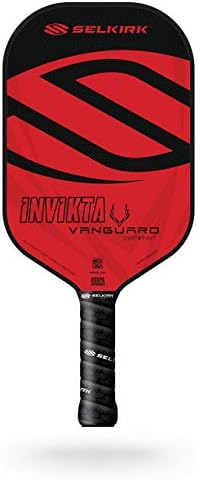
Selkirk’s Vanguard family is positioned squarely around a dampened, softer response and is offered across the brand’s shape range, so you can keep a shape you already like and change only the character. This is the straightforward answer for a player whose resets keep floating. Our Selkirk brand guide covers how the lines differ.
You Want Feel First and Pace Second
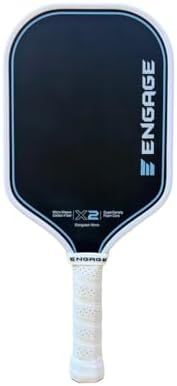
Engage has built its range around control and touch rather than around raw output, which suits players whose game is decided at the kitchen line. If your points come from dinks, resets, and patience rather than from put-aways, this is the positioning to shop.
You Want a Long Track Record Behind the Build
Paddletek has been making performance paddles since well before the current wave of new entrants, and consistency between model years is one of the reasons players stay with it. Worth comparing if you would rather not rebuy blind every time a line is revised.

You Need Forgiveness More Than Finesse
If your problem is off-centre contact rather than pace absorption, a wide-body shape from a mainstream brand does more for you than a boutique soft-game paddle. Onix is widely stocked, which also means you can hold two shapes in your hand before deciding.

You Need the Paddle to Arrive in Time
Losing hands battles is a maneuverability problem, and no amount of core thickness fixes it. A lighter, head-light setup in a standard shape is the answer. Diadem builds across the control range and is worth a look if you want a lower swing weight without dropping to a beginner-grade build.

Matching the Property to the Spec
The table sorts the three kinds of control against the specs that influence them. These are category-level tendencies in how paddles are built and marketed, not measured results for any specific model, so confirm the numbers on the manufacturer’s product page.
| Kind of control | Shot it governs | Spec that drives it | What it costs |
|---|---|---|---|
| Absorption | Reset and third shot drop | Thicker core, softer build | Less pop on drives |
| Predictability | Off-centre contact | Wider face, even response | Less reach |
| Maneuverability | Hands battles at the net | Lower swing weight | Less leverage and pace |
| Directional precision | Dinks and angles | Face texture and feel | Texture wears with use |
Where Control Paddles Get Oversold
The first misconception is that a control paddle makes you accurate. It does not. It makes the ball leave the face at a lower speed and behave more consistently, which gives your technique more margin. If your drops are landing in the wrong place rather than at the wrong height, that is a targeting problem and the paddle is not involved.
The second is stacking every control feature at once. A very thick core in a wide shape with added weight absorbs beautifully and then loses you every fast exchange at the net, because you cannot get it around in time. Change one property, play with it for a few sessions, and see what the next limitation is.
Do Not Ignore the Handle
Grip circumference affects how tightly you have to squeeze, and a grip that is too small encourages a death grip that kills touch on dinks. It is one of the cheapest things to adjust and one of the most commonly skipped. Our grip guide covers how to check what you are holding.
Control and Sanctioned Play
Approval is model specific rather than category specific, so a control paddle is no different from any other in this respect. USA Pickleball publishes its current Approved Paddle List at usapickleball.org, and you should search the exact model and generation you intend to buy rather than trusting a brand name.
Both the list and the rulebook are revised at the start of each year. Check usapickleball.org directly rather than relying on packaging, a retailer badge, or an older write-up, including this one.
Frequently Asked Questions
What is the best pickleball paddle for control? It depends which kind of control you are short of. Absorption, predictability, and maneuverability are different properties and different paddles are built around each one.
Does a thicker core mean more control? Thicker cores are generally built and marketed to absorb energy rather than return it, which helps resets and drops. That is one kind of control, and it usually comes with extra weight.
Is 16mm better than 14mm for control? Thicker cores lean toward dampening and thinner ones toward pop, so the thicker option is the control-leaning choice. Treat it as a tendency rather than a rule and check how the specific model is described.
Can a control paddle still generate power? Yes, but you supply more of it yourself. Control-leaning builds absorb more of the ball’s energy, so pace has to come from your swing rather than from the paddle.
Should a beginner buy a control paddle? Usually yes. Forgiving, control-leaning builds punish mishits less, and newer players generally improve faster when the paddle is not amplifying every error.
Will a control paddle stop my drops from floating? It can help if the ball is coming off too hot. If the drops are landing in the wrong place rather than too high, that is a technique issue no paddle resolves.
The Bottom Line
Control is three separate properties wearing one label, and the paddle that improves one of them often makes another worse. Work out whether your resets float, your mishits feel random, or your hands are late, then change the single spec that governs it. If you are working out where you sit in the upgrade path, our intermediate guide covers when a new paddle is worth it, and our power guide explains the trade in the other direction.