Last updated: August 18, 2026
Paddle shape gets discussed far less than face material, which is backwards. Swapping fiberglass for carbon changes how a shot feels; swapping a standard shape for an elongated one changes where you can reach, how fast the paddle swings, and how much a mishit costs you. An elongated pickleball paddle is the clearest example of a shape decision that shows up on every single point you play.
This guide explains what elongated actually means within the limits the sport allows, who tends to benefit from the extra length, and who gives up more than they gain. We have not tested these paddles ourselves; the descriptions below reflect how manufacturers position elongated shapes and what the geometry itself implies about reach, leverage and sweet spot.
Quick Answer
Should you play with an elongated pickleball paddle?
- Elongated shapes add length at the expense of width, which buys reach and leverage on drives and costs you width in the sweet spot.
- They suit players with reliable contact, singles players, and anyone coming from tennis who is used to swinging a longer implement.
- They are a poor fit for newer players and for hand battles at the kitchen, where a wider face and quicker handling do more for your results.
Bottom line: an elongated paddle rewards players who already find the middle of the face and punishes those who do not.
What Elongated Actually Means
Every paddle shape is a way of spending a fixed budget. USA Pickleball limits the combined length and width of a paddle, including edge guard and butt cap, so a manufacturer that adds length has to take that width away somewhere. Elongated shapes spend the budget on length; wide body shapes spend it on width. Confirm the current figures on usapickleball.org, since equipment standards are revised annually.
That is why the marketing language around elongated paddles almost always mentions reach and power, and why the same paddles rarely lead with forgiveness. It is not a manufacturing choice you can engineer around. Narrower face plus longer body means the sweet spot is shaped differently, and it sits further from your hand.
What the Extra Length Gives You
Length gives you three things: physical reach on stretch volleys and wide balls, extra leverage on drives because the contact point sits further from your wrist, and a longer arc through the swing, which most players experience as easier pace generation. None of that requires more effort from you; the geometry supplies it.
Where You Notice It Most
Singles is where elongated shapes earn their keep, because covering the full court alone puts a premium on reach. Serve returns from deep positions and drives from the baseline are the other two shots where players most often report the shape doing real work for them.
Where You Notice It Least
In fast doubles exchanges at the kitchen line, extra length is close to irrelevant and the narrower face is a live liability. Hand battles are won by quick, small movements with a forgiving face, which is exactly the profile an elongated paddle trades away.
What the Extra Length Costs You
The narrower face means a smaller margin left and right of center, so shots that would have been playable on a wide body shape become mishits. The weight sitting further from your hand also raises the effective swing weight, which makes the paddle feel heavier in fast exchanges even when the listed weight is identical to a standard shape.
That combination is why elongated paddles are usually described as being for intermediate and advanced players. It is not gatekeeping, it is that the shape assumes you already make consistent contact, and our paddle selection framework puts that self assessment first for exactly this reason.
Elongated Paddles by Situation
Shape is only useful in combination with your game style, so the situations below pair the geometry with the player it suits. Check the manufacturer’s stated dimensions on any model you consider, since brands define elongated slightly differently from one another.
Singles Players Covering the Whole Court
If you play mostly singles, reach is the shape’s headline benefit and the narrower face costs you less because you have more time between shots. Selkirk’s Amped Pro Air Invikta is one of the more searched named elongated models, and our full review of that paddle covers how the brand positions it.

Drivers Who Want Leverage From the Baseline
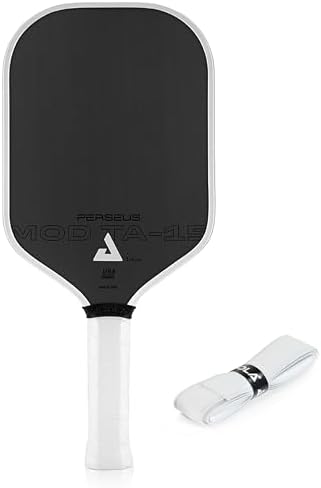
Players whose game runs through hard third shot drives get the most out of the leverage an elongated body provides. Joola’s Perseus line is built around that profile, pairing an elongated body with a carbon face aimed at players generating their own pace.
Tennis Crossovers Adjusting to a Shorter Implement
Coming from tennis, a standard paddle can feel stubby, and an elongated shape shortens that adjustment because the contact point sits closer to where your swing expects it. Pair the shape with a control leaning face if you tend to overhit early on.

Control Players Who Still Want Reach
An elongated body does not have to mean a power build. Brands like CRBN pair elongated shapes with control oriented carbon faces, which softens the trade for players who want the reach without adding pace they cannot place.

Elongated Versus Standard and Wide Body
The table below sets the three common shape families against each other. Each characteristic follows from geometry and from how manufacturers describe their own designs rather than from independent measurement, so use it to narrow your shortlist rather than as a verdict.
| Shape | Strength | Trade off | Suits |
|---|---|---|---|
| Elongated | Reach and leverage on drives | Narrower sweet spot, heavier feel in hand | Singles, drivers, tennis crossovers |
| Standard | Balanced reach and forgiveness | Best at nothing in particular | Most doubles players |
| Wide body | Largest forgiving zone | Least reach, less leverage | Beginners, kitchen line specialists |
| Hybrid shapes | Splits the difference by design | Definitions vary between brands | Players switching between the two |
Switching Shapes Without Wrecking Your Game
Give a shape change a few full sessions before judging it. The first hour with an elongated paddle usually produces more mishits than usual simply because your hands are calibrated to a different contact point, and that settles as your timing adjusts to the longer body.
If you play both singles and doubles seriously, some players keep two shapes and switch by format rather than forcing one paddle to do both jobs. That only makes sense once your technique is stable enough that the switch itself is not the variable creating errors.
Frequently Asked Questions
What is an elongated pickleball paddle? It is a paddle shape that spends more of the allowed dimensions on length and less on width, producing extra reach and leverage at the cost of a narrower face. Manufacturers define the exact dimensions slightly differently, so read the listed measurements per model.
Are elongated paddles better for power? They generally make pace easier to generate, because the contact point sits further from your wrist and provides more leverage. The paddle does not add power on its own; it changes how efficiently your swing converts into pace.
Are elongated pickleball paddles good for beginners? Usually not. The narrower face punishes off center contact, which is the most common beginner error, and a wide body shape gives a new player more usable margin while technique develops.
Do elongated paddles help in singles? Reach matters more in singles because one player covers the whole court, which is why elongated shapes are a frequent recommendation for that format. In fast doubles exchanges the benefit largely disappears.
Does an elongated paddle feel heavier? Often yes, even at the same listed weight, because more mass sits further from your hand. Two paddles with identical stated weights can feel noticeably different if their shapes differ.
Are elongated paddles legal in tournaments? Shape is legal as long as the paddle stays within the equipment standards published by USA Pickleball, and approval is granted per model on the official list at usapickleball.org. Check the exact model before entering a sanctioned event.
The Bottom Line
An elongated pickleball paddle trades width for length, which buys reach and leverage and costs you forgiveness on off center contact. It is a strong fit for singles players, drivers and tennis crossovers, and a poor one for newer players and kitchen line hand battles. Read the manufacturer’s stated dimensions rather than trusting the label, give any shape change several sessions before judging it, and if you are still weighing face material alongside shape, our carbon fiber guide covers the other half of the decision.