Last updated: August 19, 2026
Paddletek is one of the older names in American pickleball, and it has spent most of that time answering a single question in two ways. Bantam is the power side of the catalog, Tempest is the control side, and almost every Paddletek buying decision starts by picking one of those two words before looking at a single model.
That structure makes the brand far easier to shop than catalogs organized around price tiers, provided you know which side of the split your game sits on. This guide explains what each line is for, how to tell which one you need, and where Paddletek is not the right answer. We do not test paddles ourselves; what follows rests on Paddletek’s published product information and on what players consistently report.
Quick Answer
Bantam or Tempest: which Paddletek line should you buy?
- Bantam is the power line, built for players who end points with pace from the baseline and the transition zone.
- Tempest is the control line, built for players who win with dinks, drops, and resets at the kitchen.
- Both lines contain more than one shape, so pick the line first and the shape second.
Bottom line: decide how you actually win points, choose the matching line, then use shape to trade reach against forgiveness.
Who Is Paddletek and Why Does the Two-Line Split Matter?
Paddletek is a long-established American paddle manufacturer that states it builds its paddles at its own facility in Michigan, which is unusual in a category where most production is outsourced. That longevity is why Paddletek models turn up in the hands of players who have been in the sport far longer than the current wave of brands has existed.
The catalog split into a power line and a control line is the brand’s most useful feature for a buyer. Instead of asking you to interpret marketing language about face construction, it asks you a question you can actually answer about your own game, and it puts different paddles behind each answer.
Answer the Question Honestly First
Most players think they want power and actually win points with placement, or think they want control and are frustrated because their drives sit up. Watch what ends your rallies for a couple of sessions before deciding. Our overview of pickleball paddle brands covers how other companies organize the same choice.
Choosing a Paddletek Paddle
Line first, shape second, grip circumference third. The situations below cover the ones that change what you should buy.
If You End Points With Pace: Bantam
Bantam is the power side of the catalog. It suits players who drive from the baseline, put balls away from the transition zone, and are willing to accept a smaller margin for error in exchange for a more immediate response. If your instinct in a fast exchange is to hit through the ball rather than to reset it, this is your line.

If You Win at the Kitchen: Tempest
Tempest is the control line and the one most club players end up recommending. It is built around a softer, more predictable response that favors dinks, drops, and resets, which is where the majority of doubles points are actually decided. Our guide to paddles for control explains what that character does and does not fix.
The Model Most Recommendations Point At
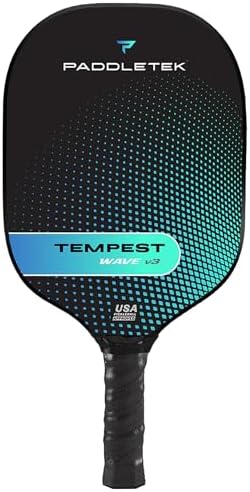
Within the control line, the Tempest Wave is the model with the longest history and the widest recognition, and it is what a clubmate usually means when they say they play a Tempest. Check which generation any listing shows, because long-running model names accumulate versions and older ones stay on sale.
Comparing Across Both Lines
If you are still deciding between power and control, compare current models from both lines side by side and pay attention to shape as well as line. A wider face in the power line can be more forgiving than a narrow one in the control line, so the two variables interact more than the marketing suggests.

Making the Handle Fit Your Hand
Grip circumference is the spec that most often ruins an otherwise good purchase, and it matters on both lines for different reasons: a control paddle needs a relaxed hand, and a power paddle needs a secure one. If you are between sizes, take the smaller grip and build it up. Our guide to choosing a replacement pickleball paddle grip covers the options.

Bantam and Tempest Side by Side
The table compares the character of each line rather than exact figures. Confirm current weight, core thickness, and grip circumference on Paddletek’s own product page, since both lines contain several models.
| Factor | Bantam | Tempest |
|---|---|---|
| Built around | Power and pop | Control and touch |
| Rewards | Driving and put-aways | Dinks, drops, resets |
| Feel on contact | More immediate | Softer, more muted |
| Typical player | Aggressive baseline game | Kitchen-line doubles |
| Margin for error | Smaller | Larger |
What an Established Manufacturer Actually Gives You
The practical benefit of a brand that has been around this long is continuity. Model names persist across years, so a paddle a clubmate recommends is usually still buyable, and a paddle you like can be replaced with something recognizably similar rather than with whatever replaced it.
The second benefit is a support structure that exists. Paddletek states its own warranty terms on its site, and an established company with its own manufacturing is generally an easier counterparty than a brand that appeared last season. Read the terms before buying rather than after.
Where Paddletek Is Not the First Choice
Players chasing the newest thermoformed constructions and the face technologies that dominate tournament conversation usually look at the specialist brands that build their marketing around them. Paddletek’s strength is a clear, stable proposition rather than being first to a new build. If being current matters more to you than being consistent, shop elsewhere.
Tournament Approval Applies Per Model
USA Pickleball maintains an approved equipment list at usapickleball.org, and approval attaches to a specific model and generation rather than to a manufacturer. Long-standing brands are treated exactly like new ones, and a familiar model name does not carry approval forward across versions.
If you compete in sanctioned events, search the full model name including its generation on the official list before buying and check again at the start of a season, since the list and the standards behind it are revised over time. Recreational open play carries no equipment enforcement. Our explainer on USA Pickleball approved paddles covers how to read it.
Common Mistakes When Buying a Paddletek
The most common mistake is choosing the power line because power sounds like an upgrade. For most recreational doubles players it is not, because points are lost on popped-up resets far more often than they are won on unreturnable drives. Picking the line that matches how you lose points is usually better advice than picking the one that matches how you want to win them.
The second mistake is treating a long-running model name as a single paddle. Names that have been in the catalog for years carry generation markers, and a listing showing an older version alongside a current one is common. Read the full model string before ordering, especially when the price looks unusually good.
Frequently Asked Questions
Are Paddletek pickleball paddles good? They have a long-standing reputation, particularly among club players, and the clear split between a power line and a control line makes the range easier to shop than most. Players chasing the newest face constructions generally look at specialist brands instead.
What is the difference between Bantam and Tempest? Bantam is built around power and a more immediate response, while Tempest is built around control and a softer feel that favors dinks, drops, and resets. Both contain more than one shape.
Is Paddletek good for beginners? A control-line model in a forgiving shape is a reasonable early paddle, though a genuine first-timer is usually better served spending less until they know the sport will stick.
Is the Tempest Wave still a good paddle? It remains the most widely recognized model in the control line and continues to suit kitchen-line doubles players. Check which generation a listing shows, since the name has run for years.
Where are Paddletek paddles made? The company states that it manufactures at its own facility in Michigan, which is unusual in a category where production is commonly outsourced.
Are Paddletek paddles USA Pickleball approved? Approval applies to individual models and generations rather than to brands, and a familiar name does not carry it forward. Search the exact model on the official list at usapickleball.org.
The Bottom Line
Paddletek makes the choice unusually simple by splitting its catalog by playing style rather than by price. Take Bantam if you genuinely end points with pace, Tempest if your points are won and lost at the kitchen line, and then use shape to trade reach against forgiveness within whichever line you picked. Check the generation marker on any long-running model name before ordering. If you are not yet sure which side of the split you belong on, our framework for how to choose a pickleball paddle works through it.