Last updated: August 18, 2026
Every regular player eventually arrives at the same packing list, usually by forgetting each item once. You show up without a spare ball on the one morning the group’s only ball cracks. You finish a long outdoor session with an empty bottle and a two hour drive home. You grab your paddle out of the trunk and find the grip has gone slick and tacky-free in the heat.
This is the checklist that prevents all of that. It covers what belongs in a pickleball bag for a normal open play session, what changes for a tournament or an all day event, and the handful of items experienced players carry that beginners never think of.
Quick Answer
What should you put in a pickleball bag?
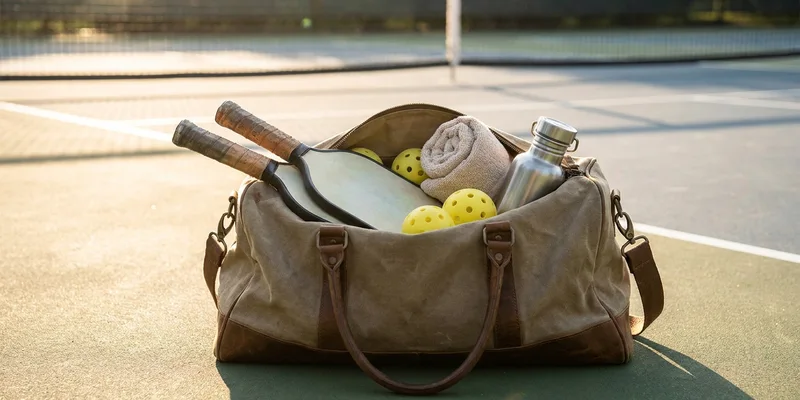
- The non-negotiables: paddle, at least two balls of the right type for your surface, water, a towel, and court shoes.
- The things that save a session: a spare overgrip, a sweat-wicking hat or headband, sunscreen for outdoor play, and a dry shirt.
- The things people forget: a spare paddle for a partner without one, a pen for the score sheet at organized play, and a small bag for wet or dirty gear.
Bottom line: pack for the session you play most often, then keep one small pouch of extras permanently in the bag.
The Core Checklist
Everything below fits in a standard sling or backpack, and this list covers the vast majority of recreational sessions. The right hand column separates what you genuinely need from what you will be glad you brought.
| Item | Why it is in the bag | Priority |
|---|---|---|
| Paddle | Obvious, but check the grip condition before you leave | Essential |
| Balls | Two or three minimum; they crack, and groups run out | Essential |
| Water bottle | Outdoor sessions run long and courts rarely have fountains | Essential |
| Court shoes | Separate from street shoes so the soles stay clean and court-appropriate | Essential |
| Towel | Sweat management between games, and wiping a wet ball | Essential |
| Spare overgrip | Grips get slick mid session, especially in humidity | High |
| Sunscreen and sunglasses | Outdoor play means hours in direct sun | High outdoors |
| Dry shirt | The difference between a comfortable drive home and a cold one | High |
| Small first aid items | Blister care and bandages for the small stuff | Medium |
| Snack | Sessions run longer than planned more often than not | Medium |
Paddles: How Many to Actually Carry
One paddle is enough for casual play, but two is the practical number once you play regularly. The second paddle covers a cracked or delaminated face mid session, and just as often it covers a friend who wants to try the sport and turned up empty handed.
Store paddles in the padded sleeve rather than the main compartment. Loose paddles rubbing against keys, balls, and shoe soles pick up edge chips and face scuffs, and on a textured face those scuffs are the surface that generates spin, so protecting it is not purely cosmetic.
Paddle Covers
A cover adds a second layer of protection for the face and edge guard, which matters most if your bag does not have a dedicated padded sleeve or if the paddle spends time in a car. It also keeps the grip cleaner, since a bare handle in an open compartment collects whatever else is in the bag.
Balls: Type Matters More Than Quantity
Carry at least two or three balls, and make sure they match your surface. Outdoor balls are harder plastic with smaller, more numerous holes to resist wind, while indoor balls are softer with fewer, larger holes for a gym floor. Using the wrong one is not dangerous, it just plays badly.
Balls crack, and they crack more in cold weather when the plastic gets brittle. A ball that has gone soft or out of round is worth retiring rather than keeping in rotation, since it changes bounce enough to affect a rally. Our guide to indoor and outdoor pickleball balls covers the differences in more detail.
Grip and Maintenance Items
A spare overgrip is the highest value small item in any bag. Grips lose tack from sweat, humidity, and simple use, and a slick grip changes how hard you have to squeeze, which is exactly the thing you do not want to be adjusting mid game. Replacing one takes a couple of minutes on the sideline.
Alongside the overgrip, a small microfiber cloth for wiping the paddle face is worth carrying for outdoor play, since dust and court grit sit on a textured face and reduce the bite that texture is there to provide. A quick wipe between games keeps the surface doing its job.
Hydration, Weather, and Sun
Water is the item people underestimate, because a pickleball session almost never ends when planned. Open play rotates, someone suggests one more game, and a bottle sized for a single workout runs dry in the first hour. An insulated bottle pocket in the bag is a genuine convenience in summer heat.
Sun exposure adds up on outdoor courts, and hats, sunglasses, and sunscreen live permanently in most experienced players’ bags for that reason. If you play in a hot climate, a small towel soaked at a water fountain does more for between-game recovery than anything else you can carry.
Cold and Wet Weather Additions
Spring and fall outdoor sessions often start cold and finish warm, so a packable layer that comes off after two games belongs in the bag from roughly October through April in most of the country. A plastic bag for wet gear keeps a damp towel from soaking everything else on the way home.
The Small Things Experienced Players Carry
Bandages and blister pads are the most common addition, since court shoes and repeated lateral movement create hot spots long before they create real injuries. Persistent pain in a joint is a reason to see a doctor or physical therapist rather than to tape over it, but a blister on the way to becoming a problem is exactly what a small first aid pouch is for.
Beyond that: a pen for score sheets at organized play, a spare hair tie, a phone charging bank for all day events, and a small container for keys so they are not loose against a paddle face. None of these are exciting, and each one solves a problem that has interrupted somebody’s session.
What Not to Bother Carrying
Valuables are the main thing to leave behind. Bags sit on a fence or a bench during play, often unattended, so keeping a wallet and anything expensive in a locked car is standard practice at most public courts.
Beyond that, resist the urge to fill every compartment. A heavy bag that you dread carrying gets left in the car, and the whole point of an organized bag is that everything you need is with you at the court. If an item has sat unused for two months, it can come out.
Packing It So You Can Find Things
The organizing principle is simple: wet and dirty things stay separate from dry things. Shoes go in a vented compartment or a separate bag, the towel gets its own pocket, and the paddle sleeve stays reserved for paddles and nothing else.
Keep the small items in a single pouch rather than scattered across side pockets. A permanent pouch with overgrip, bandages, sunscreen, and a pen means restocking happens once in a while instead of every session, and nothing gets forgotten because it was living in a pocket you did not check. If your current bag does not have the compartments to make that work, our pickleball bag guide covers what to look for in the next one.
Frequently Asked Questions
How many paddles should I keep in my bag? One is enough for casual play, two is the practical number for regular play, covering a damaged paddle and a friend who shows up without one.
How many pickleballs should I bring to open play? Two or three is a sensible minimum. Groups share balls, they crack, and having a spare is the difference between playing on and waiting.
Do I need a separate shoe compartment? Only if you change shoes at the court. If you do, a vented compartment keeps moisture and odor away from the rest of your gear, which a sealed pocket does not.
Should I keep my paddle in the car between sessions? It is better not to. Extended heat in a closed car is hard on adhesives and grips, and paddle manufacturers generally advise against long term storage in extreme temperatures.
What should I add to my bag for a tournament? More of everything consumable: extra overgrips, extra balls, a second dry shirt, extra food and water, plus anything you would not want to go find between matches.
Do I need a first aid kit for pickleball? A few bandages and blister pads cover the everyday scrapes. Anything beyond that, particularly ongoing joint or muscle pain, is worth raising with a doctor or physical therapist instead of self-managing on court.
The Bottom Line
A well packed pickleball bag holds a paddle in a padded sleeve, two or three surface-appropriate balls, water, a towel, court shoes, and a small permanent pouch with a spare overgrip, sunscreen, and bandages. Everything else is situational. Once the list is settled, the bag itself is the next question, and our pickleball bag guide covers which style actually fits how much you carry.