Last updated: August 18, 2026
Pickleball has one of the shortest equipment lists in racquet sports, which is a large part of why it grew so fast. You need a paddle, a ball, and a court, and public courts and community centers supply the last one. Everything past that is comfort, protection, and convenience rather than a requirement to play.
That short list still produces a lot of confusion for new players, mostly because gear sites present the full inventory of the sport as if all of it were entry level. This guide separates what you need on day one from what you should buy after a month, and what you can ignore entirely until you know whether the sport sticks.
Quick Answer
What equipment do you need to start playing pickleball?
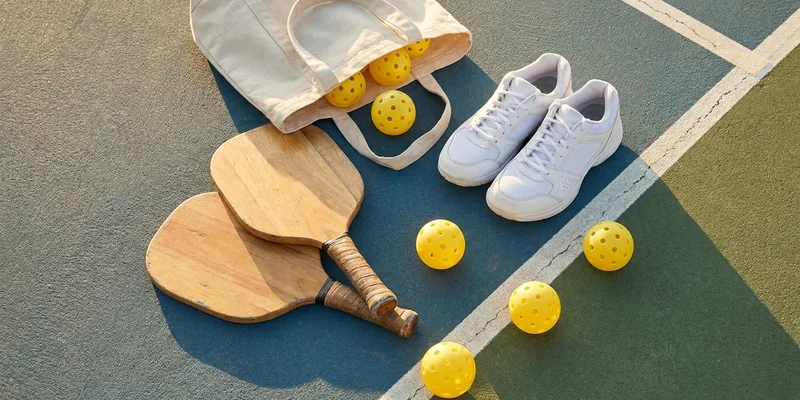
- Day one: a paddle, a couple of balls that match your surface, and court shoes with lateral support.
- Within the first month: moisture-wicking clothing and a bag with a padded paddle sleeve, once you are playing regularly enough to carry gear.
- Only if you are building a home setup: a portable net. Public and club courts already have one.
Bottom line: paddle, balls, and proper shoes cover a beginner completely, and shoes are the item most beginners skip.
The Beginner Equipment List at a Glance
Here is the whole list in one place, sorted by when you actually need it. Each row is explained further down the page, and the timing column is the part worth paying attention to, since buying everything at once is how new players end up with gear they never use.
| Item | Why you need it | When to buy |
|---|---|---|
| Paddle | The one piece you cannot borrow indefinitely | Day one |
| Balls | Indoor and outdoor versions are genuinely different | Day one |
| Court shoes | Lateral support that running shoes are not built to provide | Day one, or as soon as you commit |
| Performance clothing | Moisture management over cotton | First month |
| Bag | Padded paddle sleeve and organization | First month of regular play |
| Hat and sunglasses | Outdoor sessions run long in direct sun | Before your first full sun session |
| Overgrips | Consumable; grips lose tack with use | After a few weeks of play |
| Portable net | Only for driveway or home court play | Optional, later |
The Paddle Is the Only Real Decision
A paddle is the one thing you genuinely have to own, and it is also where beginners overthink the most. For a first paddle the useful specifications are weight, grip circumference, and face material, and none of them require a large investment to get right at entry level.
Midweight paddles suit most beginners because they balance control and power without demanding a developed swing, and grip size should let your fingers sit comfortably without squeezing. Our beginner paddle guide covers how to narrow the field, and how to choose a pickleball paddle goes into what each spec actually changes.
Should Beginners Buy a Set Instead?
A starter set with two or four paddles and a few balls is a sensible entry point for families, couples, or anyone who expects to introduce friends to the sport. The paddles in a set are basic by design, but they are enough to learn on and they solve the problem of guests turning up empty handed. Our pickleball set guide covers what separates a usable set from a novelty one.
Balls: Match the Type to Your Surface
Pickleballs come in indoor and outdoor versions, and they are not interchangeable in practice. Outdoor balls are harder plastic with more, smaller holes so wind affects them less, while indoor balls are softer with fewer, larger holes suited to a gym floor.
Buy for whichever surface you play on most, and expect to replace balls periodically since they crack, particularly outdoors in cold weather. Our guide to indoor and outdoor pickleball balls explains what changes between the two and how to spot a ball that should be retired.
Shoes Are the Item Beginners Skip and Regret
If there is one place to spend deliberately as a beginner, it is footwear rather than the paddle. Pickleball is built around short lateral cuts, sudden stops, and quick direction changes, and running shoes are engineered for forward motion with cushioning that flexes unpredictably during a sideways push off.
Court shoes, whether pickleball-specific or tennis, use a firmer base and an outsole pattern built for lateral grip. Indoor and outdoor surfaces call for different outsoles, so check which one a model is rated for. Our pickleball shoe guide covers what actually separates a court shoe from a general athletic shoe.
Clothing: Simple, but Not Cotton
There is no dress code for recreational pickleball, so the only real rule is fabric. Moisture-wicking polyester or blended performance fabric pulls sweat away and dries, while cotton absorbs it and stays heavy, which is the difference between a comfortable second hour and a miserable one.
Outdoor players should add a hat and sunglasses before their first full sun session, and a UPF-rated long sleeve is worth considering in hot, sunny climates. Our pickleball clothing guide covers the category across men’s and women’s options.
A Bag Comes Once You Play Regularly
You do not need a pickleball bag on day one, and most beginners start with whatever gym bag they own. The upgrade becomes worthwhile once you are playing weekly and carrying a paddle, balls, water, a towel, and possibly a shoe change, at which point loose gear starts scuffing the paddle face.
The feature that matters is a padded paddle compartment separate from everything else. Style, sling versus backpack, follows from how much you carry, which our pickleball bag guide breaks down, and our bag essentials checklist covers what belongs inside once you have one.
Nets and Home Setups Are Optional
Public courts, community centers, and clubs already have nets, so a portable net is only relevant if you want to play in a driveway, on a tennis court without pickleball lines, or in a converted garage or gym space. It is a later purchase, not a beginner one.
If you do go that route, net height and court dimensions are set by USA Pickleball and worth getting right rather than eyeballing. Our portable net guide covers what separates a stable setup from one that sags after a few sessions.
What You Can Safely Skip at First
Skip the second paddle, the ball machine, the paddle erasers, the specialty grips, and anything marketed on spin numbers until you have played enough to have a preference. None of it will improve a beginner’s game, and several of those items only make sense once you know what you want to change about your current setup.
Also skip buying a paddle based on what a professional player uses. Pro paddles are chosen for a fully developed swing and a specific playing style, and the same paddle in a beginner’s hand usually produces less control, not more power.
A Sensible Buying Order
Borrow a paddle for your first session or two if you can, since most open play groups have spares and someone will happily lend one. That first hour tells you whether the sport clicks before you spend anything at all.
After that, the order that works for most players is paddle first, court shoes second, clothing and a bag third, and consumables like overgrips and extra balls as they come up. Learning the game itself is free, and our how to play pickleball guide covers the rules you need before your first session.
Frequently Asked Questions
What is the minimum equipment needed to play pickleball? A paddle, a ball, and access to a court. Everything else, including shoes and clothing choices, improves comfort and safety but is not required to play a first game.
Do beginners need an expensive paddle? No. An entry level paddle is enough to learn on and to figure out what you would want from a second one, and paddle preferences develop from playing rather than from specs.
Can I use running shoes for pickleball? You can, but they are not built for the repeated lateral movement pickleball demands, which is why court shoes are the upgrade most experienced players recommend earliest.
Do I need my own net to start playing? No. Public courts, community centers, and clubs provide nets. A portable net is only needed for driveway or home court play.
How many balls should a beginner buy? A few, matched to the surface you play on. Balls crack with use, so a small supply prevents a session ending because the only ball split.
Is a pickleball starter set worth it? For families, couples, or anyone who will regularly play with guests, yes. For a single player planning to join open play, a single decent paddle is usually the better value.
The Bottom Line
A beginner’s pickleball equipment list is short: a midweight paddle in the right grip size, a few balls matched to your surface, and court shoes with real lateral support. Clothing and a bag follow once you are playing weekly, and a net only matters if you are building a setup at home. Start with our beginner paddle guide, then read the complete rules guide before your first session.