Last updated: August 18, 2026
Onix is one of the few brands that takes the ball side of pickleball as seriously as the paddle side, and it sells separate lines for indoor and outdoor play rather than one ball with two labels. That is useful, and it also means the brand name alone is not enough to order with confidence.
This guide walks through the Onix ball range, which line belongs on which surface, how the outdoor balls compare with the tournament standards most groups already know, and what to buy if you play on both.
Quick Answer
Which Onix pickleball balls should you buy?
- For asphalt and concrete, choose an Onix outdoor ball such as the Pure 2 Outdoor, with the 40 small hole pattern.
- For gym floors, choose an Onix indoor ball, which uses fewer and larger holes and a softer plastic.
- Onix outdoor balls are generally chosen by groups who value a longer working life over the last few percent of tournament pace.
- Check the current approved ball list on usapickleball.org if you plan to enter sanctioned events.
Decide on the surface first. Everything else about the ball follows from that.
What Onix Makes and How the Range Splits
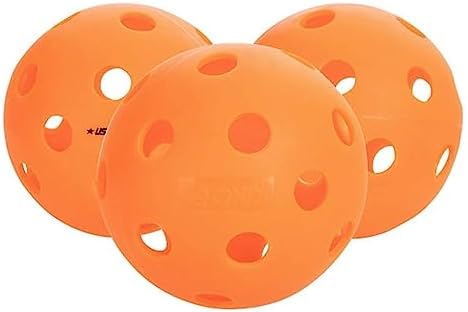
Onix sells its balls in two clearly separated families: outdoor balls built with 40 small holes and a rigid shell, and indoor balls built with fewer, larger holes and a softer plastic. Within each family there are named lines, most visibly the Pure 2 series and the Fuse series.
The important thing is that the split is real rather than cosmetic. An Onix indoor ball on asphalt scuffs quickly and drifts in wind, and an Onix outdoor ball in a gym is loud and fast. Our guide to indoor versus outdoor pickleball balls explains exactly why those two constructions exist.
Where Onix Sits Against the Big Two
In outdoor play, the reference points are the Franklin X-40 and the Dura Fast 40. Onix outdoor balls are generally described by players as slightly more forgiving and longer lived than the hardest tournament balls, which is precisely why recreational groups keep buying them.
Onix Pickleball Balls by Situation
Regular Outdoor Sessions Where Balls Keep Cracking
If your group is retiring a ball or two every session, the Onix outdoor line is the obvious thing to try. A slightly more forgiving shell trades a little pace for a longer working life, and for weekly recreational play that is almost always the better deal.

Gym and Community Center Play
Indoors, the priorities change to control, a softer feel, and less noise bouncing off hard walls. Onix indoor balls use the larger hole pattern that sits on the paddle face marginally longer, which is what makes dinking and resets feel manageable on a smooth floor.

Buying for a Club, School, or Large Group
Anyone supplying a regular group is buying by the dozen, and the case for a durable ball gets stronger with volume. Bulk packs of one model also keep the group’s timing consistent, which matters more than any small difference between brands.

Players Who Split Time Between Both Surfaces
If you play indoors in winter and outdoors in summer, you need both types rather than a compromise. Keeping a small supply of each in the bag is normal, and it prevents the classic mistake of arriving at an outdoor court with a bag of indoor balls.
Drilling and Ball Machine Use
Machine drilling burns through balls quickly, so durability and consistency between balls matter more than usual. Feeding a pickleball ball machine with a single model in bulk is what makes the practice worthwhile in the first place.

Comparing the Onix Lines
The two families are not variations on a theme, they are different products for different air and different surfaces. This is the short version of what changes when you cross from one to the other.
| Line | Holes | Feel | Where it belongs |
|---|---|---|---|
| Onix outdoor | 40 small holes | Firmer, faster, sharper sound | Asphalt and concrete courts |
| Onix indoor | Fewer, larger holes | Softer, more controllable, quieter | Wood and synthetic gym floors |
| Bulk packs | Same as the line | Consistent across the group | Clubs, schools, drilling |
How Onix Outdoor Balls Actually Play
Players who move to an Onix outdoor ball from a harder tournament ball generally report a slightly duller sound, a fraction less pace off the paddle, and a bounce that feels a touch more settled. None of that is dramatic, and after a session most groups stop noticing.
What they do notice is how many balls survive the month. A softer outdoor shell absorbs more of each impact instead of resisting it, which is the whole mechanism behind longer life. If you want maximum speed instead, our Dura Fast 40 guide covers the opposite end of that trade.
Consistency Matters More Than Peak Performance
For recreational play, the ball that makes the group happiest is the one that behaves the same every session. Chasing the liveliest ball tends to produce a bin of mismatched models, which does more damage to everyone’s timing than any single ball choice.
Approval, Model Names, and Buying Without Confusion
Onix has had balls on the USA Pickleball approved list, but approval applies per model and versions change over time, so treat any status quoted in an article as a starting point. Verify the current list on usapickleball.org if you are entering sanctioned events.
The practical buying risk with Onix is picking the wrong family rather than the wrong brand, because listings for indoor and outdoor balls look similar in a thumbnail. Read the word indoor or outdoor in the product title before you order, and count holes when the balls arrive. Our explainer on what approval means covers the general principle.
Mistakes to Avoid
The most common error is assuming a well known brand name guarantees a ball suits your court. It does not. An Onix indoor ball outdoors will drift in the mildest breeze, and no amount of brand quality compensates for the wrong construction.
The second is mixing models mid session. Different balls have genuinely different pace, so rotating between an Onix ball and a harder tournament ball within one game makes everyone play slightly worse without anyone quite naming why. Pick a model, buy enough of it, and stay there. Our overview of pickleball balls by court and situation helps make that one decision properly.
Frequently Asked Questions
Are Onix pickleball balls indoor or outdoor? Both exist. Onix sells separate indoor and outdoor lines, so check the product title and the hole pattern rather than assuming from the brand name.
How do Onix outdoor balls compare with the Franklin X-40? Players generally describe Onix outdoor balls as slightly softer and longer lived, and the X-40 as the more widely stocked default with a touch more pace.
Are Onix balls approved for tournament play? Approval applies per model and the list is revised over time. Check the current approved ball list on usapickleball.org before entering sanctioned events.
What is the difference between the Pure 2 and Fuse lines? They are separate Onix ball families sold for different play settings, with indoor and outdoor versions. The surface the ball is made for matters more than the line name.
Do Onix outdoor balls still crack? Yes. Every hard outdoor ball eventually cracks, and cold weather speeds it up. The realistic expectation is fewer cracked balls, not none.
How many balls should I buy? Enough that a cracked ball never ends a session. Groups playing weekly usually keep a dozen of one model rather than a sleeve of three.
The Bottom Line
Onix makes genuinely different balls for indoor and outdoor play, so the surface you play on settles the purchase before the brand does. The outdoor line suits groups tired of replacing cracked balls and willing to give up a little pace for it, and the indoor line is a proper gym ball rather than an outdoor ball in different packaging. Buy one model in quantity, keep the group on it, and check usapickleball.org if sanctioned play matters. For the full field, read our outdoor pickleball balls guide or the indoor equivalent.