Last updated: August 18, 2026
Engage occupies an unusual position in pickleball. It is neither a retail-shelf brand nor a scrappy direct-to-consumer newcomer, but a paddle company that has spent years telling an engineering story about face texture and how long the ball stays on the paddle. Players who like Engage tend to like it for a specific reason, and players who bounce off it usually wanted something the brand was never trying to deliver.
The catalog does not make itself easy to read, because line names and model suffixes carry different information and get mixed together on listings. This guide sorts out what the names mean, which tier suits which player, and where Engage is the wrong answer. We do not test paddles ourselves; everything below rests on Engage’s published product information and on what players consistently report.
Quick Answer
Which Engage pickleball paddle should you buy?
- Pursuit is the upper tier and the line most Engage recommendations are pointing at.
- Encore sits below it and covers most club players without asking them to pay for the flagship build.
- Engage is positioned around control and touch, so if you want a paddle that ends points with pace, start elsewhere.
Bottom line: pick the tier that matches your budget, then use shape to decide between reach and forgiveness, because both tiers are built on the same control-first idea.
Who Is Engage and What Is the Brand Known For?
Engage is an American paddle manufacturer that built its identity around face and core engineering rather than around sponsored players. The company markets its faces as being designed to hold the ball on the paddle marginally longer than a harder surface would, which it presents as the basis for the control and spin its paddles are known for.
Whether or not you take the engineering language at face value, the resulting character is consistent and widely reported. Players describe Engage paddles as soft, quiet, and predictable on touch shots, with less immediate pop than paddles marketed on power. That is a preference, not a ranking, and it is the single most useful thing to know before you shop the brand.
How to Read an Engage Model Name
An Engage listing usually stacks three things: the line name, which tells you the tier, then a model name, then a suffix or series marker that distinguishes shape or build within that model. Read the line first, because it sets the price bracket and the general construction, and treat everything after it as the fine-tuning. Our overview of pickleball paddle brands covers how this compares with the naming schemes other companies use.
Choosing an Engage Paddle
Almost every Engage decision comes down to tier first and shape second. The situations below cover the ones that actually change what you should buy.
The Line Most Recommendations Mean: Pursuit
Pursuit is Engage’s upper tier and the line that carries the brand’s reputation. It is where the company puts its current face construction, and it is what someone almost certainly means when they tell you to buy an Engage without saying which one. If you play competitively and value a soft, controllable response, this is the starting point.

The Sensible Club Choice: Encore
Encore sits below Pursuit and covers the large middle of the market: players who compete in local leagues, play several times a week, and do not need the flagship build. The brand character carries over, so you are buying the same control-oriented feel with a slightly less current face construction underneath it.
If You Want Reach: The Elongated Option
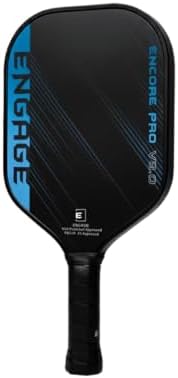
Engage offers elongated shapes alongside its standard profiles, and the choice matters more than the tier does for how the paddle feels in your hand. An elongated face adds reach on the stretch and leverage through a full swing while narrowing the hitting surface. Our guide to elongated pickleball paddles explains who genuinely benefits from that trade.
Comparing the Brand Rather Than a Model
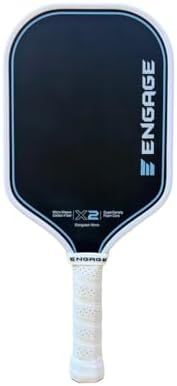
If you are shopping Engage generally, compare current listings side by side and check which series marker each one carries, because superseded versions often stay on sale next to current ones. That can be a genuine bargain, but you want to know which one is in the box before you order.
Getting the Grip to Fit Your Hand
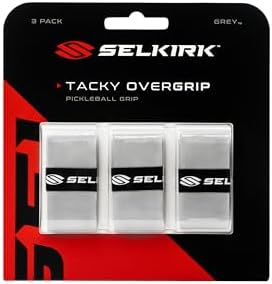
Grip circumference is the spec players most often get wrong, and it matters more on a control paddle than on a power paddle because touch shots depend on a relaxed hand. If you fall between sizes, take the smaller grip and build it up. Our comparison of grips and overgrips explains which layer to change.
Engage Tiers Side by Side
The table compares the character of each tier rather than exact figures. Confirm current weight, core thickness, and grip circumference on the product page, since Engage offers multiple variants inside each line.
| Tier | Position | Leans toward | Suits |
|---|---|---|---|
| Pursuit | Upper tier | Current face construction, touch | Competitive and tournament players |
| Encore | Middle tier | Same character, older build | League and multiple-times-a-week players |
| Entry models | Accessible tier | Ease and price | Newer players trying the brand |
What the Control-First Design Actually Buys You
A paddle marketed on control is generally one where the face and core absorb a little more of the ball’s energy instead of returning it immediately. In practice that shows up as drops and dinks landing closer to where you aimed, resets that die in the kitchen rather than popping up, and less free pace on drives.
The cost is exactly what it sounds like. A player who wins points by putting balls away will feel like they are working harder for the same result. If that describes your game, a paddle built around power suits you better, and our guide to paddles for power is the more useful starting point.
Face Texture Wears on Every Brand
Any textured face generates spin because it grips the ball, and any textured face smooths with play. That is normal wear rather than a defect, and it affects a control-oriented paddle in the same way it affects everything else. Our explainer on how long pickleball paddles last covers what to watch for.
Tournament Approval Applies Per Model
USA Pickleball maintains an approved equipment list at usapickleball.org, and approval attaches to a specific model and generation rather than to a manufacturer. Standards and the list itself are revised over time, and models from many companies have been added and removed across seasons.
If you play sanctioned events, look up the full model name on the official list before buying and check again ahead of each season. Recreational open play carries no equipment enforcement of any kind. Our explainer on USA Pickleball approved paddles covers how to read the list correctly.
Common Mistakes When Buying Engage
The most common mistake is buying into the brand for the engineering language rather than for the playing character it produces. The marketing is about dwell time and face design; what you will actually notice on court is a softer, quieter paddle that rewards touch. If that is not what you want, no amount of technical copy will change how it feels in a fast exchange.
The second mistake is assuming the line name alone identifies the paddle. Engage keeps model names in circulation across revisions, so two listings with almost the same name can be different paddles. Compare the full model string including any series marker, and if a listing does not show it clearly, treat that as a reason to look at another seller.
Frequently Asked Questions
Are Engage pickleball paddles good? They have a strong reputation among control-oriented players, who consistently report a soft, quiet feel that favors dinks, drops, and resets. Players who want immediate pop on drives generally prefer paddles marketed around power.
What is the difference between Engage Pursuit and Encore? Pursuit is the upper tier carrying the current flagship construction, while Encore sits below it with the same general character at a lower price. Both share the brand’s control-first design.
Is Engage good for beginners? A forgiving shape in the accessible tier works for a newer player, but the brand is aimed at people who already know they want touch and control. A first-time buyer is usually better served spending less to start.
Why do Engage paddles feel softer than other paddles? Players describe the face and core combination as absorbing more of the ball’s energy before returning it, which produces a muted feel on contact and more predictable soft shots.
Are Engage paddles USA Pickleball approved? Approval applies per model and generation, not per brand. Search the exact model name at usapickleball.org before entering a sanctioned event, since the list is revised over time.
How do I tell which version of an Engage model I am buying? Read the full model string on the listing, including any series or generation marker after the model name. Superseded versions are often sold alongside current ones.
The Bottom Line
Engage is a control brand first and everything else second. Choose Pursuit if you want the current flagship construction, Encore if you want the same character without paying for it, and pick your shape based on whether you value reach or forgiveness. If you are not sure control is what your game needs, our framework for how to choose a pickleball paddle works through that question before you pick a brand.