Last updated: August 19, 2026
Search for a pickleball paddle bag and you get two genuinely different products mixed together in the same results: small bags built to carry a paddle plus the minimum you need for a session, and thin covers that protect a single paddle face and nothing else. They solve different problems, they cost very different amounts, and buying the wrong one is the most common small mistake in pickleball gear.
This guide separates the two, explains which one your situation actually calls for, and lists the features worth checking before you order. Nothing here rests on side-by-side testing; the comparisons come from published specs and from what players consistently report about carrying and protecting paddles.
Quick Answer
Do you need a paddle bag or a paddle cover?
- Paddle bag: a small carry bag holding one or two paddles plus balls, keys, and a bottle. This is what you want if it is the only bag you bring.
- Paddle cover: a thin protective sleeve for the paddle itself, meant to go inside a bag you already own.
- Own a gym bag already? Buy a cover. Carrying nothing else? Buy a paddle bag.
Bottom line: a cover protects, a bag carries, and plenty of players end up using both together.
What a Pickleball Paddle Bag Actually Is
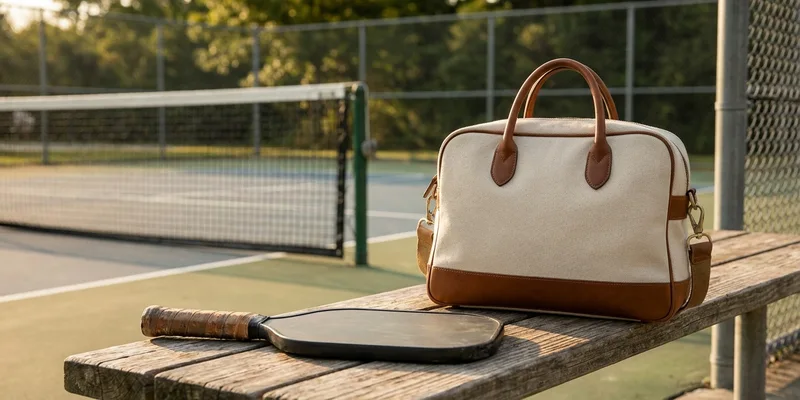
A paddle bag is a compact carry bag built around paddle-shaped storage rather than around general capacity. It typically holds one or two paddles in a padded compartment, with a small amount of extra room for a sleeve of balls, keys, a phone, and a water bottle, and it is worn over a shoulder or clipped to a larger bag.
The distinction from a full pickleball backpack is capacity, not features. A paddle bag deliberately does not hold court shoes, a change of clothes, or gear for a partner, and that restraint is the whole point for players who want the smallest thing that still does the job.
What a Paddle Cover Is Instead
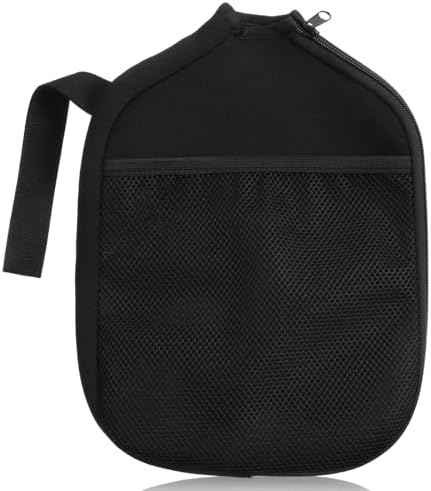
A cover is a thin sleeve, usually neoprene or a similar padded fabric, sized to the paddle face and edge. It has no carrying capacity of its own. Its job is to stop the paddle face from being scratched by keys, a zipper, or a shoe inside whatever bag it is riding in.
Paddle Bag vs Paddle Cover at a Glance
The two products overlap in search results and almost nowhere else. The table sets them against each other on the four factors that decide which you should buy: what they hold, what they protect, how they are carried, and the situation each one actually suits.
| Factor | Paddle bag | Paddle cover |
|---|---|---|
| Holds | One to two paddles, balls, keys, bottle | One paddle, nothing else |
| Protects | Paddle in a padded compartment | Paddle face and edge directly |
| Carried | Over the shoulder, on its own | Inside another bag |
| Suits | Players who bring only this to the court | Players who already carry a gym or work bag |
Our paddle cover guide goes deeper on cover materials and fit if that is the side you are leaning toward.
Which One Your Situation Calls For
The decision comes down to what else you are already carrying. If a bag is coming to the court with you regardless, add a cover and you are done. If your hands are otherwise empty, a paddle bag is the smallest thing that carries everything a session needs.
You Bring Only Your Paddle and the Basics
A dedicated paddle bag is the cleanest solution here. Padded paddle storage, a pocket for balls and keys, a bottle holder, and no wasted volume. It is the bag most players who describe themselves as travelling light actually end up with.

You Already Carry a Gym Bag or Backpack
Buy a cover, not a second bag. It slides into what you already carry, keeps the paddle face away from zippers and keys, and takes up almost no space, which is exactly what the situation needs.
You Own a Premium Paddle and Want Firmer Protection
A hard-shell or heavily padded paddle case sits between the two. It protects far better than a fabric sleeve and is worth considering if your paddle is the expensive part of your kit and it travels in a car trunk or a checked bag.

You Are Starting to Carry More Than You Expected
If shoes, an extra shirt, and a second paddle keep creeping into the load, a paddle bag is already too small and a sling or backpack is the honest answer. Buying the right size once is cheaper than buying up twice.

What to Check Before You Buy
Four specs decide whether a paddle bag works: the stated paddle capacity, whether the paddle compartment is padded and separate from the general pocket, whether there is a secure closure for keys and a phone, and the strap length if you plan to wear it across the body rather than on one shoulder.
For a cover, the only spec that matters is fit. Paddle shapes differ between elongated and standard widebody profiles, so a cover cut for one may be loose or tight on the other, and a loose cover slides off in a bag and stops doing its job.
The Feature People Overlook
A separate small pocket with a real zipper is worth more than it sounds. Keys and a car fob loose in the same compartment as a paddle are the single most common cause of face scratches, and a lined valuables pocket removes that risk without adding bulk.
Why Paddle Protection Matters at All
The playing surface of a modern paddle is a thin composite face, and its texture is part of how the paddle performs. Scuffs and gouges from keys, zippers, or another paddle’s edge guard affect that surface, and the damage is cosmetic only until it is not.
Edge guards take the other kind of abuse. A paddle dropped into a bag repeatedly with nothing between it and a shoe or a bottle picks up edge wear faster than one that spends its time in a padded sleeve, and edge guard damage is harder to ignore than a scratch on the face.
Mistakes Worth Avoiding
The first is buying a paddle bag when you already own a backpack you like. You end up with two bags, use the bigger one, and the paddle bag goes in a closet. A cover would have solved the actual problem for a fraction of the outlay.
The second is assuming any padded sleeve fits. Laptop sleeves, tennis racket covers, and generic neoprene pouches are all the wrong shape for a short, wide paddle, and a paddle that slides around inside an ill-fitting sleeve is barely more protected than one carried loose.
Frequently Asked Questions
What is the difference between a paddle bag and a paddle cover? A paddle bag carries a paddle plus balls, keys, and a bottle and is worn on its own. A cover only protects the paddle face and edge and is meant to go inside a bag you already have.
Do I need a paddle cover if my bag has a padded sleeve? Usually not. A dedicated padded paddle compartment already isolates the paddle from the rest of your kit, which is the job a cover does.
How many paddles fit in a pickleball paddle bag? Most are built for one or two. If you rotate three or more paddles, you are looking at a backpack or a tour bag rather than a paddle bag.
Will a tennis racket cover fit a pickleball paddle? Not well. Pickleball paddles are shorter and wider than tennis rackets, so a racket cover leaves the paddle loose and does not protect the face reliably.
Are hard cases worth it for pickleball paddles? They are worth considering if your paddle travels in a car trunk or a checked bag, where crushing and impact matter more than surface scratches. For a short walk from the car, a padded sleeve is enough.
Can I use a paddle bag as my only pickleball bag? Yes, as long as you do not need to carry court shoes or a change of clothes. Once those enter the picture, see our pickleball bag guide for the larger styles.
The Bottom Line
A paddle bag and a paddle cover answer different questions. If the paddle bag is the only thing coming to the court, buy the bag; if you already carry something, buy the cover and skip the second bag entirely. In both cases the feature that matters is a padded compartment or sleeve that actually fits your paddle shape, with keys and a fob kept somewhere else. If your kit is growing past two paddles and a bottle, our pickleball bag guide covers the next size up.