Last updated: August 19, 2026
The JOOLA Perseus is probably the most talked-about paddle name in the sport, which is a mixed blessing when you are trying to decide whether to buy one. Almost everything written about it is either promotional copy from the brand or opinion from players with a very specific style, and neither tells you whether it fits yours. The paddle also exists in several generations sold side by side, so “the Perseus” is not one product.
This profile explains what the Perseus line is, what JOOLA’s own construction language actually refers to, and which kind of player the paddle keeps working for. We have not tested any of these paddles ourselves, so treat everything below as manufacturer specification or reported player experience, not as a measured result.
Quick Answer
Who is the JOOLA Perseus pickleball paddle for?
- Aggressive players who drive the ball and want a paddle built around pace rather than around the largest forgiving zone.
- Anyone comfortable with an elongated shape, since the Perseus follows the longer, narrower profile rather than a wide-body one.
- Players who will actually check which generation they are buying, because JOOLA sells multiple Perseus versions with different construction at the same time.
Bottom line: the Perseus suits a player who already generates their own pace and wants a paddle that rewards it, and it is a poor first paddle for anyone still learning contact.
What the Perseus Line Actually Is
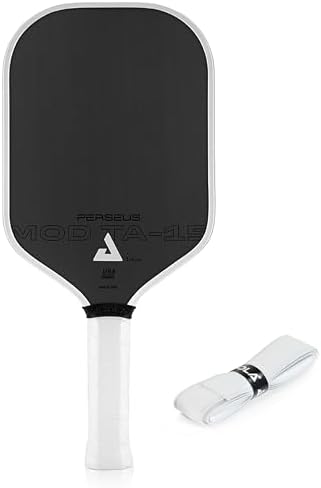
Perseus is JOOLA’s flagship performance paddle family and the model most closely tied to the brand’s signature-athlete marketing. It uses an elongated shape, a carbon face that JOOLA markets under its own surface naming, and the thermoformed construction the brand introduced across its performance range. It is positioned at the top of JOOLA’s catalog rather than as an all-rounder.
The important practical point is that Perseus is a line, not a single paddle. JOOLA has released successive generations, each with revised core and edge construction, and retailers frequently stock more than one at once. Two paddles both sold as a Perseus can differ in weight, thickness, and internal build, so the generation marker on the listing matters as much as the model name.
Decoding JOOLA’s Construction Language
JOOLA describes the Perseus using its own branded terms for the face texture and the core, and those terms describe design intent rather than independently verified performance. The carbon face is marketed around grip on the ball and spin generation, while the thermoformed build with foam-filled perimeter walls is marketed around a stiffer overall structure and a larger effective hitting area.
What Thermoforming Changes in Practice
Thermoformed paddles are built as a more unified structure than traditional cold-pressed paddles with a separate edge guard, and brands market that as adding stiffness and pop. Players generally report a firmer, livelier feel from thermoformed paddles as a category. The trade-off usually raised is that a stiffer, more powerful paddle asks more of your touch on soft shots, because the same construction that adds pace also makes a reset harder to keep low.
The Elongated Shape and Who It Fits
The Perseus follows the elongated profile, which means added length and reach at the cost of face width. That suits players who take full swings from the baseline, hit two-handed backhands, or want extra reach on stretch volleys, and it works against players who need a wide forgiving zone to cover inconsistent contact.
If you are choosing between shapes rather than between brands, the shape decision should come first. A wide-body paddle from a less famous brand will serve an inconsistent striker better than a flagship elongated paddle will, and no amount of face technology changes that. Our beginner paddle guide covers the shape decision from the ground up.
What Players Report
The consistent theme in player discussion is pace. Players describe the Perseus as a paddle that makes drives and put-aways easier and that rewards an already aggressive game, and that is also the game JOOLA markets it toward. Spin generation off the carbon face comes up almost as often.
The recurring criticism is the mirror image of the praise. Players who play a soft, reset-heavy kitchen game report needing more care on drops and blocks than they did on a softer control paddle, and some describe an adjustment period before their touch shots settle down. Whether that reads as a flaw depends entirely on which half of the court you win your points from.
Who Should Skip It
Three groups are usually better served elsewhere. Complete beginners, players whose game is built on dinks and resets rather than drives, and anyone who does not want to research which generation a listing refers to before buying. The Perseus is a specialist paddle sold at a flagship position, and it does not try to be forgiving.
Players who want the same carbon face character in a more control-leaning package have plenty of alternatives, several of which sit well below flagship pricing. The section below lines up the ones most often cross-shopped against it.
Paddles Worth Comparing It Against
The Perseus Itself
Start here, and read the generation marker on the listing before anything else. Confirm weight range, core thickness, handle length, and grip circumference on the exact version you are looking at rather than on a review of an earlier one.
Same Brand, Different Shape Character
JOOLA’s Hyperion line is the other pillar of the brand’s performance range and is the natural in-house comparison if you like the construction but want to compare the shape and balance against the Perseus.

The Main Rival Elongated Paddle
Selkirk’s AMPED Pro Air Invikta is the elongated paddle most often set against the Perseus in shopping comparisons, from a brand with a different construction philosophy and a US manufacturing base. Our full profile of that paddle covers what the name actually means.

Control-First Carbon Alternative
CRBN built its catalog around carbon faces positioned toward control and spin consistency rather than maximum pace, which makes it the obvious alternative for a player who likes the face material but not the power-first character.

What to Check on the Listing
Every field below comes from the manufacturer’s product page. None of these are numbers we measured, and several of them change between Perseus generations, which is why reading the listing beats reading a review of a paddle that shares the name.
| Field | Why it matters on this paddle |
|---|---|
| Generation marker | The single most important field; construction differs between Perseus versions |
| Core thickness | Thicker cores are generally marketed toward control, thinner toward pace |
| Weight range | Elongated paddles carry mass further from the hand, so listed weight understates the feel |
| Handle length | Decisive if you hit a two-handed backhand |
| Grip circumference | A grip that does not fit undermines control no matter what the face does |
| Approval status | Assigned per model and generation on the official list, never per brand |
Approval Status for Sanctioned Play
USA Pickleball approves paddles per model, and it publishes current results on its official Approved Paddle List at usapickleball.org. For a line like Perseus that spans multiple generations, that distinction is not academic: the status of one version tells you nothing reliable about another, so search the exact model and generation printed on the listing.
Equipment standards and the rulebook are revised at the start of each year, and paddles have both been added to and removed from the list over time as standards and testing change. Do not treat a retailer badge, a packaging claim, or an older review as confirmation. The list at usapickleball.org is the only authoritative source, and it is worth checking on the day you buy if a sanctioned event is on your calendar.
Frequently Asked Questions
Is the JOOLA Perseus good for beginners? Generally no. It is an elongated, power-oriented flagship paddle with a narrower forgiving zone, and newer players usually progress faster on a wider, more forgiving shape.
What is the difference between the Perseus and the Hyperion? They are two separate JOOLA performance lines with different shape and balance characteristics. Compare them directly on JOOLA’s own product pages, since both lines have run across multiple generations.
Which Perseus generation should I buy? That depends on what you want and what a retailer actually has in stock, but the generation marker is the field to read first, because construction and specs differ between versions sold under the same name.
Is the Perseus a power paddle or a control paddle? JOOLA positions it toward pace, and players consistently describe it that way. A player who wins points with soft resets at the kitchen may prefer a control-leaning paddle instead.
Is the JOOLA Perseus approved by USA Pickleball? Approval is decided per model and generation, and the list changes. Search the exact version you intend to buy on the official Approved Paddle List at usapickleball.org before entering a sanctioned event.
Does the carbon face wear out? Textured carbon faces lose surface grip gradually with use, which affects spin more than power. How quickly depends on how often you play and on the surface, so check the manufacturer’s own warranty and care guidance for the model.
The Bottom Line
The JOOLA Perseus is a flagship elongated paddle built around pace and spin, and it suits players who already generate their own power and want a paddle that amplifies it. It is not a forgiving paddle, and it is not one line but several, so the generation on the listing matters as much as the name on the face. Compare it against the Selkirk AMPED Pro Air Invikta if you want the same shape from a different builder, or read our power paddle guide if pace is the whole reason you are shopping.