Last updated: August 19, 2026
Shopping for a paddle as an advanced player is a completely different exercise from shopping as a beginner. You are no longer looking for forgiveness, you are looking for a specific behaviour that supports a game you already have. That means the useful question is not which paddle is best, it is which part of your game the paddle needs to support, because the paddle that helps a banger and the paddle that helps a soft-game specialist are close to opposites.
This guide sorts advanced paddle choices by the role you play on the court rather than by brand ranking. We have not tested these paddles ourselves, so everything below is either manufacturer specification, category-level construction fact, or what players consistently report.
Quick Answer
What should an advanced player look for in a pickleball paddle?
- Pick for the shot that decides your matches. Drivers want a stiffer, power-leaning build; soft-game players want a thicker core and a control-leaning face.
- Shape and handle length matter more than face material at this level, especially if you hit a two-handed backhand.
- Swing weight and balance decide how the paddle feels in hands battles, and they are not the same thing as the listed static weight.
Bottom line: an advanced paddle is a specialist tool, so buy the one that matches how you actually win points rather than the one topping a generic ranking.
What Changes Once You Are Past Intermediate
At an advanced level your contact is consistent enough that a paddle’s forgiving zone stops being the limiting factor. What starts to matter instead is how predictably the paddle behaves on the shots you hit under pressure: the reset off a hard drive, the roll volley, the counter in a fast exchange. Those are feel-sensitive shots, and small construction differences show up in them.
That is also why advanced players are far more sensitive to a paddle change than beginners are. Switching shape or core thickness resets the calibration on shots you have grooved over hundreds of hours, and most players report needing several sessions before a new paddle stops costing them points. Factor that adjustment period in before switching mid-season.
The Three Specs That Actually Separate Advanced Paddles
Shape, core thickness, and swing weight do most of the work. Face material gets the marketing attention, but two paddles with identical carbon faces can play completely differently if one is elongated with a thin core and the other is a wide-body with a thick one. Read those three fields first.
Core Thickness
Thicker cores are generally marketed and experienced as more control-oriented and more dampened, while thinner cores are marketed toward pop and a firmer response. Neither is objectively better, and the choice tracks directly with whether you win more points by resetting the ball or by putting it away.
Swing Weight and Balance
Static weight is what the listing prints; swing weight is how heavy the paddle feels when you move it, which depends on where the mass sits. An elongated paddle at a given static weight feels heavier through the swing than a wide-body at the same weight, because more of its mass is further from your hand. If you struggle in fast hands exchanges, this is usually the spec to change.
Advanced Paddles by the Game You Play
You Win Points With Pace From the Baseline
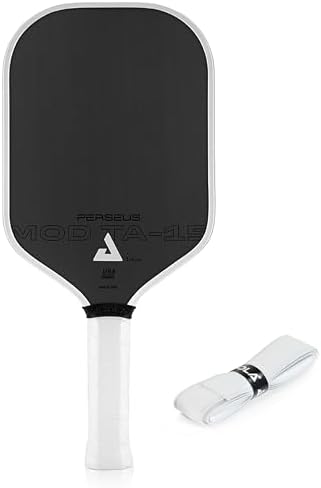
Drivers want a stiffer, power-leaning build, and that usually means a thermoformed elongated paddle from a brand that markets pace explicitly. JOOLA’s Perseus line sits squarely in this category and is the most cross-shopped flagship in it. Our Perseus profile covers what to check before buying, since the line spans multiple generations.
You Win Points at the Kitchen With Resets and Dinks
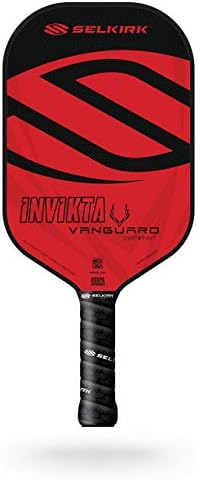
Soft-game specialists generally want the opposite: a thicker core, a dampened feel, and a face marketed toward control and consistent response rather than pop. Selkirk’s Vanguard line is built around that positioning and is available across the brand’s shape range, so you can keep your shape and change the character.
You Play a Spin-Heavy Game
Players whose game runs on topspin rolls and heavy third-shot drives care most about face texture and how long it holds up. CRBN built its entire catalog around carbon faces positioned toward spin consistency and control, which makes it the default shortlist entry for this style.

You Want a Long-Established Performance Brand
Paddletek has been building performance paddles since well before the current wave of new entrants, and its lines are a common choice for players who would rather buy from a manufacturer with a long track record than chase the newest release. Worth comparing if consistency between model years matters to you.

You Want Advanced Specs Without Flagship Pricing
Vatic Pro is consistently recommended by players who want thermoformed carbon-faced construction without paying flagship money, and it has built a following on exactly that positioning. Compare the spec sheet against a flagship listing side by side and decide what the difference is buying you.

Matching the Spec to the Style
The table lines up the tendencies described above. These are category-level tendencies in how paddles are built and marketed, not measured results for any specific model, so always confirm the actual numbers on the manufacturer’s product page.
| Your game | Shape tendency | Core tendency | Priority spec |
|---|---|---|---|
| Baseline driver | Elongated | Thinner | Stiffness and pace |
| Soft game and resets | Standard or hybrid | Thicker | Dampening and control |
| Spin-heavy roller | Elongated or hybrid | Either | Face texture durability |
| Fast hands at the net | Standard or hybrid | Either | Low swing weight |
| Two-handed backhand | Elongated | Either | Handle length |
Mistakes Advanced Players Still Make
The most expensive one is buying the paddle a pro uses without checking whether their game resembles yours. Sponsored players are matched to paddles, and a flagship built for a professional driver will actively work against a club player whose value is in the soft game. Buy for your own point patterns.
The second is chasing releases. New paddles arrive constantly, and switching every few months means never fully calibrating to any of them. If you are changing paddles more often than you are changing your shot selection, the paddle is probably not the limiting factor.
Adding Lead Tape Without a Plan
Weighting a paddle is a legitimate way to tune balance, but adding tape by feel usually just raises swing weight and slows your hands. Change one thing at a time and give it a few sessions, and our lead tape guide covers where the common placements shift the balance. Note also that permitted modifications are governed by the rules in force, so check the current rulebook before altering a paddle you intend to use in sanctioned play.
Approval Status Matters More at This Level
Advanced players are the group most likely to enter sanctioned events, which makes the official list a practical concern rather than a footnote. USA Pickleball approves paddles per model, and publishes current results on its Approved Paddle List at usapickleball.org. Search the exact model and generation you intend to buy.
Standards and the rulebook are revised at the start of each year, and the flagship end of the market moves fastest, so a model reviewed a season ago is not a reliable guide to current status. Check usapickleball.org directly rather than relying on packaging, a retailer badge, or an older article, including this one.
Frequently Asked Questions
What is the best pickleball paddle for advanced players? There is no single answer, because advanced paddles are specialist tools. The right one depends on whether you win points with pace, with spin, or with a soft game at the kitchen line.
Should an advanced player use a thick or thin core? Thicker cores lean toward control and dampening, thinner cores toward pop. Choose based on which of those your game is short of, not on which is newer.
Do advanced players need an elongated paddle? No. Elongated shapes suit reach, leverage, and two-handed backhands, but plenty of high-level players prefer standard or hybrid shapes for faster hands at the net.
How long does it take to adjust to a new paddle? Most players report several sessions before touch shots recalibrate after a shape or core change. Plan a switch outside your competitive season if you can.
Is a more expensive paddle better for an advanced player? Not automatically. Price reflects materials, marketing, and athlete endorsement as well as construction, and several mid-priced brands use comparable builds. Compare spec sheets rather than price tags.
Can I add lead tape to my paddle for tournaments? Permitted modifications are set by the rules in force for the event. Check the current USA Pickleball rulebook at usapickleball.org before modifying a paddle you plan to compete with.
The Bottom Line
An advanced paddle should be chosen for the shot that decides your matches, which means shape, core thickness, and swing weight matter more than the brand on the face. Drivers and soft-game players want genuinely opposite builds, so a generic ranking is close to useless at this level. If you are not sure you have left the previous tier yet, our intermediate paddle guide covers when an upgrade is actually worth it. If pace is specifically what you are after, our power paddle guide goes deeper, and our carbon fiber guide covers what the face material does and does not change.
Related Reading
- Pickleball Paddle for Power: What Actually Adds Pace
- JOOLA Perseus Pickleball Paddle: Who It Actually Suits
- Selkirk AMPED Pro Air Invikta: Who This Paddle Suits
- Carbon Fiber Pickleball Paddles: What the Material Actually Changes
- How to Grip a Pickleball Paddle Correctly
- The Third Shot Drop Explained