Last updated: August 19, 2026
JOOLA is one of the most searched paddle brands in pickleball, and it is also one of the most confusing to shop. The brand runs several parallel product lines, refreshes them on a roughly annual cycle, and attaches generation numbers to names that already sound similar. Two paddles can share a line name and play completely differently because one is a newer generation or a different core thickness.
This guide sorts the JOOLA lineup by what each line is built to do rather than by which one is newest, so you can match a line to your own game and then check the current generation on the retailer page. We do not test paddles ourselves. Everything below is based on JOOLA’s own published specifications and on what players consistently report about how these lines feel.
Quick Answer
Which JOOLA pickleball paddle should you buy?
- Perseus is JOOLA’s headline line and the one most players mean when they say they want a JOOLA, positioned around an all-court blend of power and control.
- Hyperion is the elongated shape for reach and swing speed; Scorpeus leans toward a softer, control-first feel at the kitchen.
- JOOLA’s more accessible lines cover first-paddle buyers who want the brand without the flagship price bracket.
Bottom line: pick the JOOLA line by shape and intent first, then confirm the generation and core thickness on the listing, because those two details change the paddle more than the name does.
Who Is JOOLA and Why Is the Brand Everywhere?
JOOLA is a racquet sports company with deep roots in table tennis that moved into pickleball equipment and scaled up fast. Its visibility in the sport comes largely from pro sponsorship, most notably its long association with Ben Johns, whose signature paddles carry the Perseus and Hyperion names and put the brand in front of every televised match.
That visibility is why JOOLA outsearches almost every other paddle brand. It is worth separating the marketing reach from the product itself, though. The lines below are genuinely different tools, and the pro on the box tells you very little about which one suits an average recreational player.
How JOOLA Names Its Paddles
A JOOLA model name usually stacks three pieces of information: the line name, a generation marker, and a core thickness. Two paddles labeled with the same line name from different generations can use different faces, different core builds, and different weights. Always read the full model string on the product page rather than assuming a line plays the same way it did last season.
Picking a JOOLA Paddle by How You Play
JOOLA’s lines split fairly cleanly by shape and intent. The situations below cover the reasons most players end up choosing one JOOLA over another, and each one points you at the line worth comparing first.
The All-Court Default: Perseus
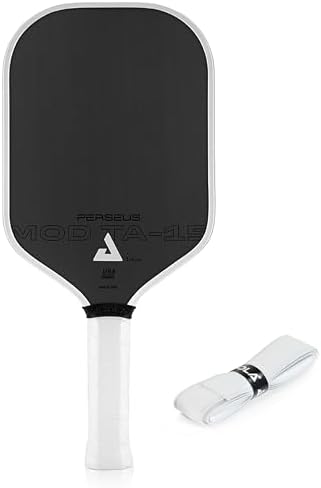
Perseus is JOOLA’s flagship line and the paddle most people picture when they think of the brand. It is positioned as a balanced, all-court paddle rather than a specialist, which is why it turns up in so many hands across skill levels. Players describe it as offering enough pop to finish a point without giving up the feel needed for a reset, which is exactly the profile most intermediate players are shopping for.
Reach and Swing Speed: Hyperion
Hyperion is JOOLA’s elongated shape. An elongated paddle trades some sweet spot width for extra length, which on paper gives you more reach at the stretch and more leverage on a full swing. Players who come from tennis often prefer this shape because it rewards a longer swing path, while players who live at the kitchen line sometimes find it less forgiving on quick hands battles.

Control and Soft Game: Scorpeus
Scorpeus is the line JOOLA positions toward the control end of its range. If your game is built on dinks, resets, and dropping the third shot rather than driving through opponents, a control-oriented build gives you more margin on those touch shots. Players report the trade is real in both directions, so expect to work a little harder for put-away pace.

First JOOLA Without the Flagship Price
JOOLA also sells more accessible paddles aimed at newer players and at anyone who wants the brand without the signature-line bracket. These use simpler face and core constructions than the flagship lines, and for someone still deciding whether pickleball is going to stick, that is the sensible place to start. Our beginner paddle guide walks through what actually matters on a first paddle regardless of brand.

Buying for Two Players at Once
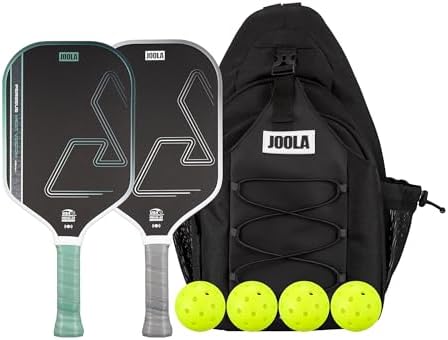
If you are equipping a household or a regular doubles partner, JOOLA and other brands sell two-paddle bundles that usually pair paddles with balls and a carry case. Bundles are a reasonable way into the sport, but check whether the paddles inside are from a current line or an older clearance model before treating the bundle as a bargain.
JOOLA Lines Side by Side
The table below lines up the general intent of each family. Confirm exact shape, weight, and thickness on JOOLA’s own product page, since those numbers move between generations within the same line name.
| Line | Shape tendency | Leans toward | Suits |
|---|---|---|---|
| Perseus | Standard or hybrid | Balanced all-court | Most intermediate players |
| Hyperion | Elongated | Reach and swing speed | Tennis converts, baseline drivers |
| Scorpeus | Standard | Control and touch | Kitchen-line and soft-game players |
| Accessible lines | Standard or wide-body | Forgiveness and value | First paddle buyers |
Core Thickness Changes a JOOLA More Than the Line Name Does
Most JOOLA lines are sold in more than one core thickness, and that single number does more to change how a paddle plays than the name printed on the face. Thicker cores are generally described by manufacturers as softer and more forgiving with a larger usable face, while thinner cores are described as more powerful and more direct off the strings.
Practically, that means a control-leaning player can often get closer to what they want by choosing the thicker option inside a power line than by switching lines entirely. When you compare two JOOLA listings, put the thickness figures next to each other before you compare anything else.
Face Construction and Grit
JOOLA markets its paddles around proprietary face and core technologies, and the practical takeaway from all of it is how much bite the face gives the ball and how long that bite lasts. Textured carbon faces are what generate spin, and that texture wears down with use on every brand. If you play several times a week, expect the spin ceiling of any paddle to drop over its life, which our guide to how long pickleball paddles last covers in more detail.
Tournament Approval: Check, Do Not Assume
USA Pickleball maintains the official approved paddle list at usapickleball.org, and only a specific model and generation appears on it, not a brand as a whole. A JOOLA line being approved in one generation tells you nothing about the next one. Approval status has changed for various manufacturers over the years, JOOLA included, which is precisely why the list exists.
If you play sanctioned events, look up the exact model string on the official list before you buy, and check it again before a tournament season starts. For casual open play there is no equipment enforcement, so this only matters if you compete. Our overview of what USA Pickleball approval actually means explains how the list works.
Common Mistakes When Buying a JOOLA
The most common mistake is buying the pro’s paddle because it is the pro’s paddle. Signature models are built around a specific professional’s swing speed and hand skills, and a paddle that lets a top player redirect a drive at the kitchen can feel unforgiving in the hands of someone still learning to reset. Buy the shape and feel that fits your game, not the endorsement.
The second mistake is shopping a discounted older generation without realizing it is an older generation. Retailers list superseded models alongside current ones, often at a real discount, and sometimes that is a genuinely good buy. It is only a good buy if you know what you are getting, so match the full model string against JOOLA’s current lineup before you check out.
Frequently Asked Questions
Which JOOLA pickleball paddle is best for beginners? A paddle from JOOLA’s more accessible lines in a standard or wide-body shape is the easier starting point, since the flagship signature lines are built around advanced swing mechanics rather than forgiveness.
What is the difference between JOOLA Perseus and Hyperion? Broadly, Perseus is the more balanced all-court shape and Hyperion is the elongated shape built for reach and swing speed. Compare the published length and shape figures on both product pages, since generations differ.
Are JOOLA paddles approved by USA Pickleball? Approval applies to individual models and generations, not to brands. Search the exact model name on the official list at usapickleball.org, which is the only authoritative source and changes over time.
Why do JOOLA paddles have generation numbers? JOOLA refreshes its lines on a roughly annual cycle and keeps the line name while changing the construction, so the generation marker is how you tell two otherwise similarly named paddles apart.
Is a JOOLA paddle worth it over a cheaper brand? That depends on whether you will use what you are paying for. Direct-to-consumer brands compete hard on specs at lower prices, so a JOOLA earns its place mainly if you want a specific shape and feel the brand does well.
Which JOOLA paddle is best for control? The control-leaning line is the obvious starting point, but choosing the thicker core option inside any JOOLA line also shifts the paddle toward a softer, more forgiving feel.
The Bottom Line
The right JOOLA pickleball paddle comes down to shape and intent, all-court, elongated, or control-first, followed by a careful look at core thickness and generation on the actual listing. Ignore the endorsement, read the spec block, and check the approved list if you compete. If you are still deciding between brands rather than between JOOLA lines, our framework for how to choose a pickleball paddle is the better place to start.
Related Reading
- How to Choose a Pickleball Paddle
- Pickleball Paddle for Beginners: How to Choose Your First One
- Carbon Fiber Pickleball Paddles: What the Material Actually Changes
- JOOLA Perseus: A Closer Look at the Flagship Line
- USA Pickleball Approved Paddles: What the Label Means
- How to Grip a Pickleball Paddle Correctly