Last updated: August 18, 2026
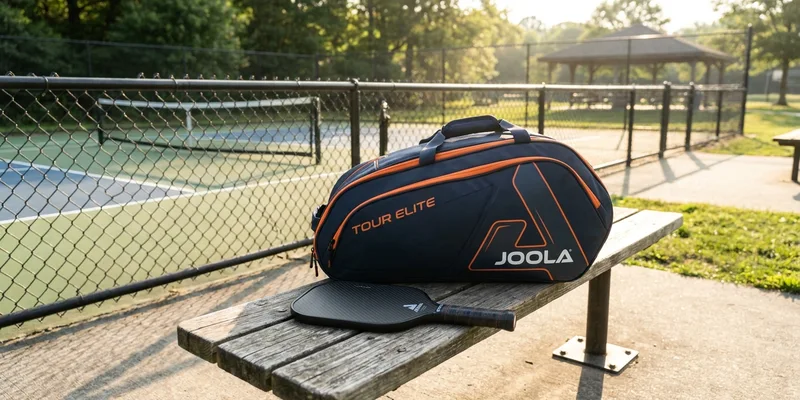
The JOOLA Tour Elite sits at the top of JOOLA’s bag range, and it is the bag people picture when they imagine a tournament player walking onto a court complex with everything they own on their back. It is also the bag most commonly bought by players who did not need anything close to that much space, which is the real question worth answering before you order one.
This review is written from JOOLA’s published specifications and from what owners consistently report about living with a bag this size. No side-by-side testing is claimed. The goal is to be clear about who the Tour Elite genuinely suits and who will be happier spending less on something smaller.
Quick Answer
Is the JOOLA Tour Elite pickleball bag worth it?
- Yes, if you play tournaments or long multi-session days and carry several paddles, a shoe change, and a full day of food and water.
- No, if you carry one or two paddles to weekly open play. You will use a fraction of the volume and feel all of the bulk.
- The defining features are the separated paddle storage, the ventilated shoe compartment, and the fact that it can be worn as a backpack rather than only carried.
Bottom line: this is a tournament-day bag, and it is excellent at that job and oversized for anything less.
What the Tour Elite Actually Is
The Tour Elite is a large duffel-style pickleball bag with backpack straps, positioned as JOOLA’s full-kit option rather than as an everyday carry. The layout follows the tournament-bag convention: a large main compartment, separated paddle storage, a ventilated shoe compartment, and smaller pockets for valuables, balls, and a bottle.
The important structural point is that it can be worn on the back. A duffel of this capacity carried by hand is genuinely tiring across a large court complex, and the shoulder straps are the difference between a bag you use and a bag you leave in the car.
Where It Sits in JOOLA’s Range
JOOLA’s bag lineup runs from compact slings up through backpacks to the Tour line, and the Tour Elite is the large end of that. If you are comparing within the brand rather than across brands, our JOOLA bag guide covers the smaller options in the same family.
The Features That Actually Matter
Three features carry this bag, and all three are the ones you notice on a long day rather than in a product photo: paddle storage that is padded and isolated from the rest of the kit, a shoe compartment with real ventilation, and enough separate pockets that you are not digging through one large space to find a set of keys.
The ventilated shoe compartment is the feature owners mention most. Damp outdoor shoes sealed in with a paddle and a shirt is a problem you only need to experience once, and a vented pocket with its own external access solves it without you having to think about it again.
Fabric and Hardware
A bag this size is loaded heavily and slung on and off a shoulder constantly, so the zippers and the stitching at the strap anchors are the parts under real stress. Heavier gauge zippers and reinforced anchors are the reason a tournament-grade bag outlasts a general sports duffel doing the same work.
Who the Tour Elite Suits
This bag is built for a specific player: someone who arrives at a venue for a full day rather than an hour, who rotates between paddles, who changes shoes on site, and who does not want to walk back to a car mid-day. Tournament competitors, coaches, and players who run clinics all fit that description.
The Travel Case People Miss
A second group gets real value here: players who travel to play. A single bag that holds paddles, court shoes, a change of clothes, and everything else is easier to move through an airport than the same gear split across a paddle bag and a suitcase.
Who Should Skip It
If your normal session is a couple of hours of open play with one or two paddles, a bottle, and a towel, this is the wrong bag. The capacity is unused, the footprint is awkward to store in a car or a locker, and the empty space lets whatever you did pack shift around while you walk.
Players in that group are consistently happier with a sling or a mid-size backpack, and the difference in day-to-day convenience is larger than most people expect. Our sling bag guide covers the lighter end if that sounds more like your week.
Alternatives Worth Comparing
Three alternatives cover the players who like the Tour Elite’s feature set but not its size. Each one keeps the padded paddle storage that matters most and trims capacity, weight, or both, so the comparison comes down to how many paddles you carry and whether shoes go in the bag.
Same Brand, Less Bag
JOOLA’s smaller backpack and sling styles keep the separated paddle storage and drop the tournament-day volume, which suits players who want the brand’s layout without the footprint of the Tour line.

A Multi-Paddle Option Without the Duffel Shape
Selkirk’s larger bags cover players who rotate two or three paddles and want a backpack profile rather than a duffel worn on the back, which is an easier bag to store between sessions.

A Minimal, Build-Focused Alternative
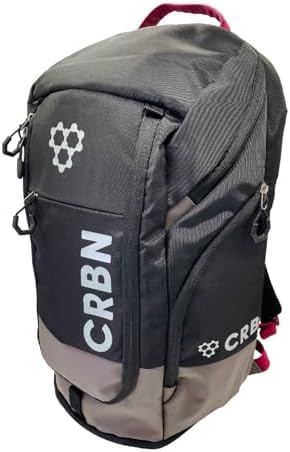
CRBN’s backpack range leans toward a restrained build with heavier hardware and less capacity, which appeals to players who prioritize paddle protection over carrying everything at once.
How It Compares on the Basics
The table below sets the Tour Elite against the two smaller shapes most buyers actually choose between. Capacity descriptions are relative rather than absolute, since stated dimensions vary by model year and the useful comparison is what each shape is built to carry.
| Bag | Built for | Main drawback |
|---|---|---|
| Tour Elite duffel | Tournaments, travel, coaching, full-day kit | Oversized and bulky for a normal open play session |
| Mid-size backpack | Regular play with a shoe change and two to three paddles | Tight for a full tournament day |
| Sling | One or two paddles and the basics | No shoe space, all weight on one shoulder |
What to Check Before You Order
Confirm three things on the listing rather than assuming them: the current stated paddle capacity, whether the shoe compartment has its own external access, and the strap configuration, since some large bags in this class ship with a shoulder strap and backpack straps while others offer only one.
It is also worth measuring the space where the bag will live between sessions. A bag that fits a car trunk fine but not a gym locker or a hall closet is a small annoyance that repeats every single time you use it.
Frequently Asked Questions
How many paddles does the JOOLA Tour Elite hold? It is built for multiple paddles rather than one or two, but the exact stated capacity varies by model year, so check the current product listing instead of relying on a figure from an older review.
Does the Tour Elite have a shoe compartment? Yes, a ventilated shoe compartment is one of its defining features, and the ventilation is what keeps damp outdoor shoes from passing moisture and odor to the rest of your kit.
Can the Tour Elite be worn as a backpack? Yes. It is a duffel shape with shoulder straps, which is what makes a bag of this capacity practical to move across a large venue rather than carry by hand.
Is the Tour Elite too big for recreational play? For most recreational players, yes. If your usual session is one or two paddles and a bottle, a sling or mid-size backpack is more convenient and you will not miss the extra volume.
Is it good as a travel bag? It works well for that. Players who fly to tournaments often prefer a single bag that holds paddles, shoes, and clothing over splitting gear between a paddle bag and a suitcase.
Do I need a JOOLA bag for a JOOLA paddle? No. Paddle compartments are sized by paddle shape rather than by brand, so any bag with correctly sized padded storage protects the paddle equally well.
The Bottom Line
The JOOLA Tour Elite is a genuinely good tournament bag: separated paddle storage, a ventilated shoe compartment, backpack straps on a duffel-size body, and hardware built for being loaded heavily and carried often. It is also far more bag than a weekly open play player needs, and buying it for that use is the most common way people end up disappointed. Match the capacity to your longest normal day, and compare against the smaller shapes in our pickleball bag guide first.