Last updated: August 19, 2026
Searching for Lifetime pickleball balls turns up two completely different products from two completely unrelated companies, and almost nothing online tells you that before you have already added something to a cart. One is a tour-partnered ball sold through Life Time, the national gym chain many people still call Life Time Fitness. The other is the ball that comes bundled with a portable net set from Lifetime, the sporting goods manufacturer that also makes folding tables and basketball hoops.
Both are real, both are reasonable purchases, and they are aimed at different people. This guide separates them, explains who each one actually suits, and is honest about the point at which you should be buying an established tournament ball instead.
Quick Answer
Are Lifetime pickleball balls worth buying?
- Check which Lifetime you mean. Life Time the fitness club chain sells the LT Pro 48, promoted as the official ball of the PPA Tour and Major League Pickleball. Lifetime the sporting goods manufacturer sells net sets with paddles and balls included.
- For recreational players, families, and clubs buying in volume, either is a sensible ball to rally with.
- Competitive players preparing for sanctioned events should default to the balls their events actually use, which in American outdoor play usually means a Franklin or Dura model.
- Official ball status is a partnership claim from the brand. Approval and event ball lists live at usapickleball.org and with the tour, and both change.
Short version: fine for rec play and bulk buying, not the ball to train on if you are chasing a tournament.
Two Different Companies, One Name
The confusion is not your fault. Two large American businesses use the same word, both sell pickleball products, and search engines cheerfully mix them together. Sorting out which one you are looking at takes ten seconds once you know what to look for, and it changes what you should expect from the ball.
| Which Lifetime | What it is | Its pickleball product |
|---|---|---|
| Life Time (two words) | The national gym and athletic club chain, formerly styled Life Time Fitness | The LT Pro 48 ball, sold through its clubs and shop and promoted as a tour ball |
| Lifetime (one word) | The Utah manufacturer known for folding tables, basketball hoops, and kayaks | Pickleball paddles, and portable net sets that bundle paddles with indoor and outdoor balls |
The tell is context. If the listing mentions clubs, tours, or a numbered Pro ball, you are looking at the fitness chain. If it mentions a net, a base you fill with water, and four color-coded paddles, you are looking at the sporting goods manufacturer.
The Club Chain Ball: What the LT Pro 48 Is
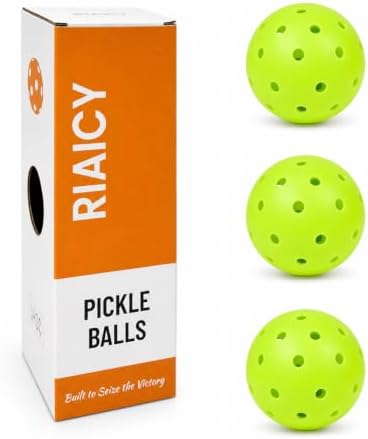
The LT Pro 48 is a molded pickleball with 48 holes, which places it outside the usual split between 40 hole outdoor balls and the larger holed indoor pattern. It is marketed as usable on both surfaces, and it is sold in small sleeves as well as in bulk cases through the chain’s own shop and its clubs.
The headline on every listing is that it is the official ball of the PPA Tour and Major League Pickleball. That is a genuine commercial partnership rather than a technical grade, and it tells you the ball is consistent enough for televised professional play, which is not nothing. It does not tell you the ball behaves like the one in your local club’s bin.
Buying It in Volume
The realistic reason to buy this ball is that you play at one of the chain’s clubs and want the ball you already play with at home, or that you run sessions and need a case rather than a sleeve. It is sold in small sleeves through general sporting goods retailers and in bulk packs through the chain’s own shop, so where you buy depends mostly on how many you need.
Balls are a consumable rather than an investment. Buying a large pack of one model is always cheaper per ball and always better for consistency than picking up sleeves as you go, and it is the one ball-buying decision that is the same whichever brand you land on.
The Balls in a Lifetime Net Set
The other Lifetime sells complete pickleball setups rather than balls on their own. Its portable sets pair a steel-pole net with weighted bases, four paddles, and a handful of balls, typically a few outdoor balls plus one indoor ball so the set works in a driveway or a gym.
The same company also sells its paddles on their own, which is worth knowing if a search for balls keeps returning paddles and sets. Those bundled balls are exactly what you would expect: perfectly playable, not the reason anybody buys the set. They get a family or a group of friends rallying on day one, and most people who keep playing replace them with a named ball within a season without ever thinking of it as an upgrade.
When the Set Is the Right Purchase
A complete set makes sense when you have a driveway, a cul-de-sac, or a gym booking and no equipment at all, since buying a net, paddles, and balls separately is slower and rarely cheaper. Our guide to what a pickleball set actually includes covers what to check before you commit to a bundle.

Who Lifetime Balls Actually Suit
Both products land in the same place: recreational play where consistency across your own group matters more than matching a tournament standard. That covers family games, casual weekly groups, school and community programs, and anyone buying enough balls that per-ball cost is the deciding factor.
It also covers the person who plays at a club that already uses one of these balls. Learning one ball’s flight and pace and then playing with that same ball is worth more than any small quality difference between reputable brands, which is the single most underrated point in ball buying.
Clubs and Programs Buying by the Case
Group organizers have a different problem from individual players: they need every ball in the bin to be the same model, because mixing models mid session quietly ruins everyone’s timing. Buying one large case of a single ball solves that, whichever brand it is.
When to Buy an Established Tournament Ball Instead
Switch to a named tournament ball when you are training for events, when your regular group has strong players who notice pace differences, or when your courts already run on one. In American outdoor play that means the Franklin X-40 or a Dura model far more often than anything else, simply because those are what turns up in the bin.
The reason is preparation rather than snobbery. Every outdoor ball has its own flight, its own pace off the paddle, and its own failure point, and arriving at an event having practiced with something else costs you a game or two of adjustment.
The Default Club Ball
The Franklin X-40 is the most widely stocked outdoor ball in the country and the safest single purchase if your group has not standardized on anything. Our Franklin X-40 review covers where it sits and how it fails, and the Dura Fast 40 guide covers the faster, shorter-lived alternative.

What Official Ball Claims Do and Do Not Mean
An official ball designation is a commercial arrangement between a ball maker and a tour, a league, or a governing body. It signals that the ball is consistent enough for professional play and that money changed hands. It is not a quality ranking, and it does not mean other balls are unapproved.
Treat any status you read in an article, including this one, as a snapshot. Tour partnerships get renegotiated and equipment lists get revised, so confirm the current picture at usapickleball.org and with the specific event you are entering. Our overview of what approval labels actually mean explains how the same logic works for equipment generally.
Indoor, Outdoor, and the 48 Hole Question
Most pickleballs sit in one of two camps: hard shells with 40 small holes for asphalt and concrete, or softer shells with fewer, larger holes for gym floors. A ball advertised for both is making a compromise, and the compromise usually shows up as a ball that is slightly slow outdoors and slightly lively indoors.
That is a real trade-off but a small one at recreational level, and a dual-purpose ball genuinely simplifies life for a group that plays in both places. If your play is mostly one or the other, a purpose-built ball is still the better buy, as our comparison of indoor versus outdoor pickleball balls explains.
Frequently Asked Questions
Are Lifetime pickleballs and Life Time pickleballs the same thing? No. Lifetime the sporting goods manufacturer sells pickleball paddles and net sets with balls included. Life Time the gym chain, long known as Life Time Fitness, sells the LT Pro 48 ball. They are unrelated companies that happen to share a word.
Is the LT Pro 48 indoor or outdoor? It is marketed for both, which is unusual. Most balls are built for one surface, so expect a compromise rather than a specialist ball in either setting.
Is the LT Pro 48 approved for tournament play? It is promoted as the official ball of the PPA Tour and Major League Pickleball, which is a partnership claim. Approval and event ball lists are maintained separately and change, so check usapickleball.org and the event itself.
Are the balls in a Lifetime net set any good? They are fine for getting started and for casual play. Players who keep at it usually move to a named outdoor ball within a season, mostly for consistency rather than because the bundled balls fail.
How many balls should I buy at once? More than you think. Outdoor balls crack rather than wear out, cold weather accelerates it, and buying a single large pack of one model is cheaper per ball and keeps your whole group on the same flight.
Can I mix Lifetime balls with Franklin or Dura balls in the same session? You can, but do not. Different models have different pace and flight, and switching between them mid session is the fastest way to make everyone’s timing feel off without anyone knowing why.
Which ball should a complete beginner buy? Whichever one your courts already use. Matching the local default beats optimizing on paper, and our overview of pickleball balls by court and situation covers what to do if there is no local default.
The Bottom Line
Work out which Lifetime you are looking at first, because the answer changes the product entirely. The club chain’s LT Pro 48 is a dual-surface ball with a professional tour partnership behind it and bulk packs available, and the sporting goods manufacturer’s balls arrive bundled with a net and four paddles. Both are perfectly reasonable for recreational and club play, and neither is the ball to train on if a sanctioned event is on your calendar. For the wider field, start with our outdoor pickleball balls guide.