Last updated: August 19, 2026
Most men shopping for pickleball shoes already know they should not be playing in running shoes. The harder question is which court shoe actually fits, because the men’s court shoe market is built around a narrower last than a lot of men’s feet, and sizing up is the wrong fix for a width problem.
This guide is about fit specifically: how men’s court shoe lasts are shaped, where wide sizing exists and where it does not, and how player weight changes what you should prioritize in a midsole and outsole. For the broader question of what makes a shoe court appropriate at all, start with our pickleball shoe guide.
Quick Answer
How should men choose a pickleball shoe?
- Fit width first. Court shoes run snugger through the midfoot than everyday sneakers, and going up a size adds length, not width.
- If you need a wide, check that the specific model offers a 2E or 4E option rather than assuming the brand does.
- Heavier players should weight midsole support and outsole durability over low shoe weight.
- Match the outsole to your usual surface: outdoor rated for asphalt, non marking for gym floors.
Bottom line: the model matters less than getting the width and volume right for your foot.
What a Men’s Last Actually Changes
A shoe last is the shape a shoe is built around, and men’s and women’s court shoes use different ones. Men’s lasts are generally longer for a given size, higher in volume through the instep, and straighter through the arch, which is why the same numerical size fits differently across the two lines.
This matters because the difference is not just scaling. A men’s size 8 and a women’s size 9.5 are close in length but not in shape, so men with narrow, low volume feet sometimes find a men’s court shoe swims on them even at the correct length.
Width, Volume, and Why Sizing Up Does Not Work
Court shoes are deliberately snug through the midfoot so the foot does not slide during lateral cuts. If a shoe pinches across the forefoot, the correct answer is a wider version of the same size, not a longer size, because extra length lets the heel slip and moves the flex point away from your toe joints.
Wide sizing in court shoes is inconsistent. Some tennis oriented lines carry 2E and 4E widths, others are standard width only, and pickleball specific models from newer entrants often launch in a single width. Check the model, not the brand.
Toe Box, Bunions, and Long Sessions
A narrow toe box that feels acceptable in the store becomes a problem after ninety minutes of repeated stops. Players dealing with bunions, hammertoes, or simply broad forefeet should filter for a roomier toe box specifically, since that is a separate dimension from overall width rating.
Men’s Pickleball Shoes by Situation
The Broadest Starting Point
Asics carries the most search interest and the widest retail presence in pickleball footwear, with the Gel Resolution line as its best known court platform. It is the default recommendation for men who want a proven court shoe without researching further.

Value Focused Buyers
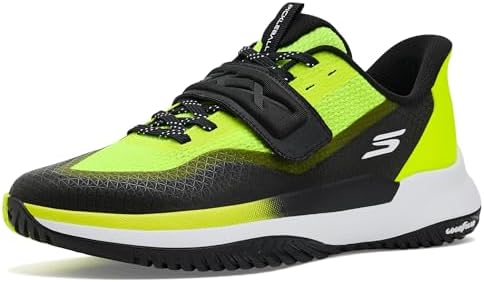
Skechers built its Viper Court line specifically for pickleball, and it sits at a more accessible position than the premium tennis brands while still delivering court appropriate lateral support and outsole grip. It is a common first pair.
Men Who Need a Wide or Extra Wide Fit
Wide sizing is where court shoes most often disappoint, so filtering directly for 2E or 4E availability saves a return. Tennis heritage brands generally carry wide options more consistently than pickleball only newcomers, and our New Balance court shoe guide covers the brand that treats width as a standard option rather than an exception.

Players Who Want a Lighter, Quicker Shoe
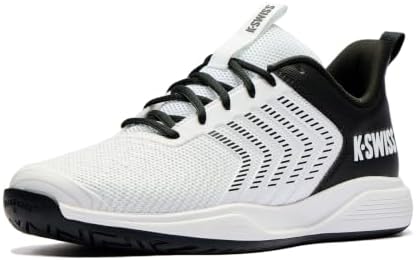
Lower profile court shoes such as K-Swiss’s Express Light line trade some cushioning for reduced weight, which suits lighter players and anyone who values quick footwork at the kitchen line over long session comfort. Our K-Swiss guide covers how the lines differ.
Mostly Indoor Gym Play
If you play primarily on wood or synthetic gym floors, a non marking indoor outsole grips better and protects the floor. Many facilities require non marking soles outright, which makes this a practical requirement rather than a preference.

What to Prioritize by Player Type
| Player type | Prioritize | Deprioritize |
|---|---|---|
| Heavier or taller players | Midsole support, outsole durability | Minimum shoe weight |
| Wide feet | 2E or 4E availability, toe box room | Brand loyalty |
| Quick, lighter players | Low profile, light weight | Maximum cushioning |
| Indoor regulars | Non marking outsole | Outdoor tread durability |
Player Weight, Midsole Support, and Outsole Wear
Heavier players compress a midsole faster and grind through an outsole faster, which shortens the useful life of a light, low profile shoe considerably. A firmer, more structured midsole holds its shape longer under load and keeps lateral support intact through more sessions.
Outdoor courts accelerate all of this. Asphalt is abrasive, and outsole compounds rated for outdoor use are meaningfully more durable than indoor rubber. Some tennis oriented models carry an outsole durability guarantee, which is a useful signal even if you never claim it.
Knowing When to Replace
Tread wear is the visible signal, but the earlier one is feel. When the shoe stops resisting a hard lateral cut the way it used to, the midsole has softened even if the outsole still looks acceptable. Replace at that point rather than waiting for the tread to disappear.
Mistakes Men Make Buying Court Shoes
The most common one is ordering the usual street sneaker size and assuming it transfers. Court shoe lasts are built differently, and brands vary against each other by a noticeable margin, which is why the same stated size can fit two ways.
The second is buying a tennis shoe designed for clay or a specific tennis surface without checking. Tennis and pickleball shoes share construction, but surface specific tennis outsoles are optimized for a court you will probably never play pickleball on.
When Foot Pain Is Not a Shoe Problem
Persistent heel, arch, or ankle pain that continues across multiple pairs of shoes is worth discussing with a podiatrist or physical therapist rather than treating as a purchasing problem. Court shoes affect support and stability, but they do not resolve an underlying condition, and continuing to swap models can delay a diagnosis that actually helps.
Frequently Asked Questions
Are men’s pickleball shoes different from women’s? Yes, in last shape rather than just size numbering. Men’s lasts are generally higher volume through the instep and straighter through the arch, which is why cross shopping by size alone rarely fits well.
Can men wear tennis shoes for pickleball? Yes. They share the same lateral support construction, and many men play in tennis shoes. Just avoid outsoles built specifically for clay or grass tennis surfaces.
Do pickleball shoes come in wide widths? Some models do, in 2E and 4E, and some do not. Availability follows the model rather than the brand, so check the specific shoe before committing.
Should I size up in pickleball shoes? Not for width. Sizing up adds length, which causes heel slip and moves the flex point. If the shoe is tight across the forefoot, look for a wider version of the same size.
How often should men replace pickleball shoes? When the shoe stops feeling stable during hard lateral cuts, or when tread wear is visible. Heavier players and outdoor regulars will hit that point sooner than lighter indoor players.
Are pickleball specific shoes better than court shoes? Not automatically. Pickleball specific models are built for the movement pattern, but established court and tennis shoe lines from Asics and others use the same underlying construction and often offer more size options.
The Bottom Line
For men, choosing a pickleball shoe is primarily a fit exercise: get the width and volume right, then pick a model that matches your surface and your weight. Asics covers the widest range, Skechers is the accessible entry point, K-Swiss suits lighter and quicker players, and wide feet should filter for 2E or 4E availability before anything else. Our main pickleball shoe guide covers why court shoes differ from running shoes in the first place.