Last updated: August 18, 2026
The noise complaint is the most common reason a pickleball court gets restricted hours, a driveway game gets a visit from a neighbor, or a community center starts asking players to pack up early. The sharp crack of a hard ball against a rigid paddle face carries further than most people expect, and it repeats every second or two for hours.
Quieter balls are one of the few things a player can change immediately. This guide covers what actually reduces the sound, what a quiet ball costs you in playing feel, and where the ball stops being the problem and the paddle or the court takes over.
Quick Answer
What are the quietest pickleball balls you can buy?
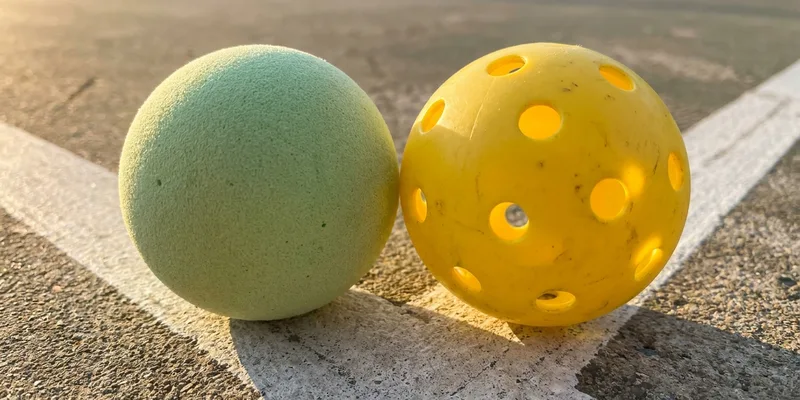
- Foam balls are the quietest option by a wide margin and are the usual answer for driveways, indoor rooms, and noise sensitive neighborhoods.
- Standard indoor balls are noticeably softer sounding than outdoor balls, and they need no adjustment in how you play.
- Some brands market low noise plastic balls specifically. They help, but they do not disappear the sound entirely.
- Be honest with yourself: quieter balls play slower and lighter, and serious outdoor play with them feels different.
The ball is only half of it. A quieter paddle changes the noise at least as much.
Why Pickleball Is So Loud in the First Place
The sound comes from a rigid plastic ball striking a rigid paddle face. Both surfaces are hard and neither absorbs much energy, so the impact releases a short, high pitched crack. That combination of high pitch and constant repetition is what makes the sound carry and what makes it irritating at a distance.
Softening either surface lowers the noise. A softer ball deforms on impact and spreads the energy over a fraction more time, which drops the pitch and the volume. A softer or more damped paddle face does the same thing from the other side, which is why the two are usually addressed together.
Distance and Repetition Matter More Than Peak Volume
A single contact is not loud in absolute terms. The complaint is almost always about a high pitched sound repeating hundreds of times an hour, carrying across open ground. That is why reducing the pitch often satisfies neighbors more than reducing the raw volume.
Quiet Pickleball Balls by Situation
Driveways, Garages, and Backyard Play
Foam balls are the standard answer where the game is happening close to houses. They are dramatically quieter than any plastic ball, they are safe against cars and windows, and they make casual family play possible in places where a hard ball would be unwelcome within minutes.

Indoor Rooms, Halls, and Community Centers
Indoor balls are softer plastic with fewer, larger holes, and they are meaningfully quieter than outdoor balls without changing the game. In a room with hard walls and a hard floor that difference is the one most facilities actually notice. Our indoor pickleball balls guide covers the range in full.

Clubs Under Pressure From Neighbors
Where courts are already the subject of complaints, some clubs move to balls marketed specifically for low noise. These are still plastic balls, so treat the marketing as a claim about degree rather than a promise of silence, and expect a slightly different feel from a standard ball.

Teaching Beginners and Playing With Children
Foam and softer balls travel more slowly, which gives new players more time to react and produces longer rallies. That is a coaching advantage rather than a compromise, and the quieter sound is a bonus for anyone teaching in a shared indoor space.
Reducing Noise From the Paddle Side
Some paddles are built and marketed with noise reduction in mind, and swapping the paddle often changes the sound more than swapping the ball. If quiet play is a real requirement at your courts, treat the paddle as part of the same decision rather than a separate one.

What Each Option Costs You in Play
Nothing here is free. Every step toward a quieter ball also moves the ball toward less pace, less predictable flight outdoors, and a different feel on contact. Knowing which compromise you are accepting is the difference between a solution and a disappointment.
| Option | Noise | How it plays | Best for |
|---|---|---|---|
| Foam ball | Quietest by a clear margin | Slow, light, drifts easily outdoors | Driveways, indoor rooms, teaching |
| Standard indoor ball | Noticeably softer than outdoor | Normal indoor game, controllable | Gyms and community centers |
| Low noise plastic ball | Reduced, not silent | Close to a normal ball, slightly different feel | Clubs managing complaints |
| Standard outdoor ball | Loudest | Full pace and true outdoor flight | Regular outdoor and competitive play |
Being Honest About How Quiet Play Feels
A foam ball is not a stand in for an outdoor ball. It carries less energy, sits up more, and moves in even light wind, so drives lose their bite and the game becomes slower and more forgiving. Plenty of players enjoy that. Players used to fast outdoor rallies usually do not.
Low noise plastic balls sit much closer to normal, but there is still a trade. Anything that softens the impact takes a little pace and a little of the crisp feedback that tells you how clean the contact was. Going in expecting a small change rather than no change makes the switch far easier to accept.
Do Not Mix Quiet and Standard Balls in One Session
Switching between a foam ball and a plastic ball mid session wrecks everyone’s timing, since the two travel at completely different speeds. Choose one for the session and keep the group on it, the same rule that applies across every ball type.
When the Ball Is Not the Real Problem
If the complaint concerns a permanent court near housing, the ball is the smallest of the levers available. Court siting, acoustic fencing or barrier panels, playing hours, and the paddles in use all move the noise more than a ball swap does, and most successful solutions combine several of them.
Governing bodies and manufacturers have both been working on noise reduction standards and designations for equipment, and any current criteria are published by USA Pickleball at usapickleball.org rather than by retailers. If you are choosing equipment to satisfy a facility rule, check what that facility actually requires before buying anything.
Frequently Asked Questions
What is the quietest pickleball ball? Foam balls are quietest by a wide margin. Among plastic balls, indoor balls are softer sounding than outdoor balls, and some brands market specific low noise models.
Can you use foam pickleballs on a real court? For casual play and coaching, yes. They are too light for normal outdoor conditions, since any breeze moves them and the pace of the game changes considerably.
Do quiet balls work with regular paddles? Yes, but the paddle contributes a large share of the noise. Combining a quieter ball with a paddle designed for noise reduction gives a much bigger change than either alone.
Are quiet balls allowed in tournaments? Sanctioned play requires balls that meet the governing body’s equipment specifications. Check the current approved ball list on usapickleball.org rather than assuming a low noise ball qualifies.
Why do outdoor balls sound so much sharper than indoor balls? Outdoor balls use harder, denser plastic so wind affects them less. That same rigidity produces a higher pitched, louder crack on contact.
Will a quieter ball satisfy my neighbors? It helps, and on its own it is rarely the whole answer. Playing hours, court position, barriers, and paddle choice usually matter at least as much.
The Bottom Line
Quiet pickleball balls work, within limits. Foam is the quietest and changes the game the most, indoor balls are a meaningful step down in noise with no real compromise on a gym floor, and low noise plastic balls reduce the sound without eliminating it. Whatever you choose, the paddle and the court matter too, so treat noise as a package rather than a single purchase. For the wider ball landscape, read our comparison of pickleball balls by court and situation or the indoor versus outdoor explainer.