Last updated: August 18, 2026
CRBN built its name on carbon fiber paddles aimed at competitive players, and the bag range reads the same way: fewer novelty features, more attention to how the bag holds up and how it carries. If you found CRBN through the paddles, the bags are usually the next thing you look at, and the question is whether the brand premium buys anything you will actually use.
This guide sorts the CRBN bag styles by who each one suits, explains the features that matter on a competitive-oriented bag, and says plainly where a cheaper brand covers the same job. Nothing here is based on side-by-side testing; the comparisons come from published specs, stated capacities, and what players consistently report about each style.
Quick Answer
Which CRBN pickleball bag makes sense for you?
- Sling: a deliberately minimal option for players who carry one or two paddles and nothing else.
- Backpack: the version most CRBN buyers land on, with room for a shoe change and a full session’s gear.
- Duffel or tour style: for players carrying multiple paddles to competitive events rather than to open play.
Bottom line: CRBN’s build quality and paddle protection are the reason to buy, so choose on capacity and skip the brand if you only carry the basics.
What CRBN Bags Are Built Around
CRBN’s bags are aimed at players who already care enough about their paddles to buy a premium one. That shows in the priorities: padded and separated paddle storage, heavier fabric and zipper hardware, and a restrained, mostly monochrome look, rather than a long list of extra pockets or bright team colorways.
What you give up in exchange is the mainstream availability and the entry price of a general sporting goods brand. A CRBN bag is a considered purchase, not something you pick up on the way to the court, and for a player who carries one paddle to weekly open play, that spend is hard to justify on function alone.
Who Ends Up Buying One
In practice the buyer is usually someone who rotates two or three paddles, plays several times a week, and wants the paddle faces protected from everything else in the bag. That is a narrower group than the pickleball bag market as a whole, and the range is sized accordingly.
CRBN Bags by Situation
Model names move around from season to season, so the reliable way to choose is by style and stated capacity. The four situations below cover most buyers, and each one lists the specific spec to confirm on the product page before you order rather than a model number that may have changed.
The Deliberately Minimal Carry
A sling suits players who have decided to carry less on purpose: one paddle, maybe a spare, a sleeve of balls, a bottle, and nothing more. It is the fastest bag to grab and the least comfortable to overload, which is exactly the point for players who otherwise fill whatever space they are given.

The Everyday Backpack for Regular Play
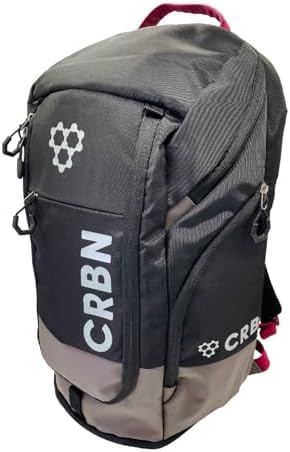
The backpack is where most CRBN buyers land. Weight sits across both shoulders, the paddle storage stays separate from the main compartment, and there is room for a shirt change, a towel, and the extra layer outdoor players end up needing more often than they expect.
Carrying Multiple Paddles to Competitive Play
A duffel or tour style bag is the right shape once you are carrying three or more paddles plus shoes plus a full day of food and water. This is the one situation where the larger CRBN bags clearly beat a recreational brand, since the paddle sleeves are actually sized and padded for that number.

Protecting the Paddle Without Buying a Bag
If your paddle is the expensive part and you already own a gym bag you like, a cover or sleeve solves the scuffing problem for a fraction of the bulk. Plenty of CRBN paddle owners use exactly this setup and never buy a branded bag at all.

Comparing the CRBN Bag Styles
The table compares the three main shapes on the two factors that decide the purchase: what they hold and what carrying them actually feels like. Capacity descriptions reflect the typical positioning of each style rather than one specific model, since the lineup is refreshed regularly.
| Style | Suits | Main trade-off |
|---|---|---|
| Sling | One to two paddles, minimal kit, quick sessions | All weight on one shoulder; no shoe space |
| Backpack | Regular play, shoe change, two to three paddles | More bag than a casual once-a-week player needs |
| Duffel or tour | Competitive days, multiple paddles, full kit | Bulky and awkward for a short walk from the car |
The Features Worth Paying For
Three things separate a premium bag from a cheap one in daily use: the paddle compartment is genuinely padded and isolated, the zippers are heavier gauge and run smoothly under load, and the fabric shrugs off a wet trunk or an unexpected shower. Those are the features that decide whether a bag lasts two seasons or five.
Everything else is preference. Extra pockets, insulated bottle sleeves, and towel loops are pleasant but not the reason a bag succeeds or fails, and a long feature list on a listing tells you very little about how the stitching at the strap anchors will hold up after a year of being slung on and off a shoulder.
Ventilation Is the One People Skip
If a bag has a shoe compartment, check that it is ventilated rather than merely separate. A sealed pocket holding damp outdoor shoes will pass odor and moisture to everything nearby, including the paddle sleeve, and that is not something you can fix after the fact.
When to Buy a Different Brand Instead
If you carry one paddle to a weekly session and store the bag indoors, a CRBN bag will work fine and so will a bag costing far less. The premium is aimed at frequency, multiple paddles, and gear that lives in a car, and it earns nothing at all in a low-mileage use case.
Two comparisons are worth making before you commit. Our Franklin bag guide covers the recreational end of the range, and the JOOLA Tour Elite review covers the large tournament-day option if a duffel is what you are actually shopping for.
Mistakes That Cost People Money Here
The most expensive mistake is buying a tour-size bag for open play. It looks the part, holds far more than you carry, and then sits half empty in a trunk while you go back to using a sling because it is easier. Buy for the sessions you actually play most weeks, not the tournament you might enter.
The second is assuming the brand name means every model in the range is the premium build. Specs vary within a lineup, so read the material and paddle capacity for the specific product rather than generalizing from a flagship model or from the paddles.
Frequently Asked Questions
Are CRBN pickleball bags worth the price? They make sense for players who carry multiple paddles several times a week, where build quality and paddle protection get used. For one paddle at a weekly session, a cheaper bag covers the same job.
How many paddles does a CRBN bag hold? It depends entirely on the style, from one or two in a sling up to several in a duffel or tour bag. Confirm the stated paddle capacity on the specific listing rather than assuming a range-wide figure.
Do CRBN bags have a shoe compartment? The larger backpack and duffel styles typically do, slings typically do not. Check whether the compartment is ventilated as well as separate, since that is the detail that matters after an outdoor session.
Do I need a CRBN bag to carry a CRBN paddle? No. Paddle sleeves are sized by paddle shape, not by brand, so any bag with a correctly sized padded compartment protects the paddle just as well.
Is a sling bag enough for tournament play? Rarely. A tournament day usually means multiple paddles, a shoe change, food, and water, which is more than a sling is built to hold without stressing the seams.
What is the difference between a CRBN bag and a paddle cover? A cover protects only the paddle face and edge and fits inside another bag. Our paddle bag guide explains when a cover is the smarter buy.
The Bottom Line
CRBN bags are built for players who already treat their paddle as equipment worth protecting, and the value sits in padded and isolated paddle storage, heavier hardware, and fabric that survives a car trunk. Choose the style by how many paddles you carry and whether you need shoes in the bag, and skip the brand entirely if a single paddle and a bottle is your whole kit. Our pickleball bag guide compares every style without the brand filter.