Last updated: August 18, 2026
Franklin is the brand most recreational players run into first, partly because Franklin balls are the official ball of a lot of organized play and partly because Franklin gear sits on the shelf at general sporting goods stores rather than only in specialist pickleball shops. That same reach applies to bags, which is why a search for a Franklin pickleball bag usually turns up several very different products at once.
This guide sorts the Franklin bag range by style and by who each style actually suits, and flags the situations where a different brand makes more sense. No side-by-side testing is claimed here, the comparisons are based on published specs, stated capacities, and what players consistently report about each style.
Quick Answer
Which Franklin pickleball bag should you buy?
- Sling: the right pick if you carry one or two paddles, a few balls, and a water bottle to open play.
- Backpack: the safer default once you also bring a shoe change, a towel, or gear for a partner.
- Tote or duffel: only worth it if you regularly haul gear for a group, a clinic, or a full tournament day.
Bottom line: Franklin covers the recreational end of the range well, so pick by how much you actually carry rather than by the largest bag in the lineup.
What Franklin Actually Offers in Pickleball Bags
Franklin’s pickleball bag range is built around recreational and club play rather than around tournament professionals. In practice that means sling bags, backpacks, and tote or duffel styles with padded paddle storage, a few organizational pockets, and mainstream availability, rather than the multi-paddle tour cases the specialist paddle brands build.
The trade-off is predictable. Franklin bags are widely stocked, easy to find in stock in the size you want, and sized around the way most club players actually load a bag. Players who rotate four or more paddles, or who want a dedicated thermal compartment sized for a full tournament day, generally end up looking at a specialist brand instead.
Why the Brand Shows Up So Often
Franklin’s presence in pickleball started with balls and paddle sets rather than with bags, and that distribution carries over. A player who bought a Franklin starter set often looks at Franklin bags next simply because the brand is already familiar and available in the same store.
Franklin Bags by Situation
The most useful way to narrow the Franklin range is not by model name but by what a session looks like for you. Below are the four situations that cover most buyers, each matched to the bag style that fits it, with the specific features worth confirming on the product page before you order.
Casual Player Carrying One or Two Paddles
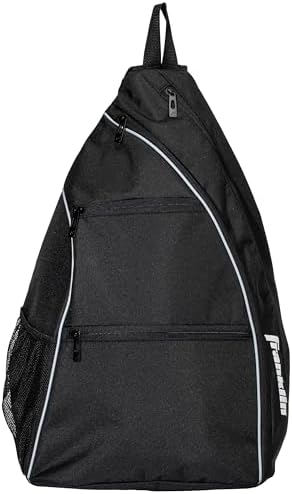
A sling bag is the simplest answer here. It is fast to grab, sits close to the body while you walk between courts, and holds a paddle or two, a sleeve of balls, a towel, and a bottle without the bulk of a full backpack. If your gear fits in that description, a bigger bag mostly adds empty space.
Regular Player Who Wants Room to Grow
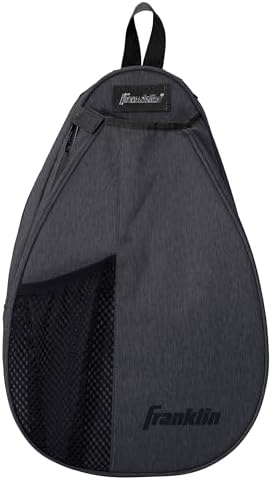
A backpack is the safer default once you play more than once a week. Both shoulders share the weight, the main compartment leaves room for a shirt change or an extra layer for outdoor sessions, and most backpack builds keep the paddle storage separate from whatever else ends up in the bag.
Players Who Change Shoes at the Court
If you swap into court shoes on arrival, a vented shoe compartment stops damp outdoor shoes from sitting against a clean shirt and a paddle face. Check that the compartment is actually ventilated rather than simply separate, and that it is sized for your shoe rather than for an average one.

Hauling Gear for a Group or a Full Day
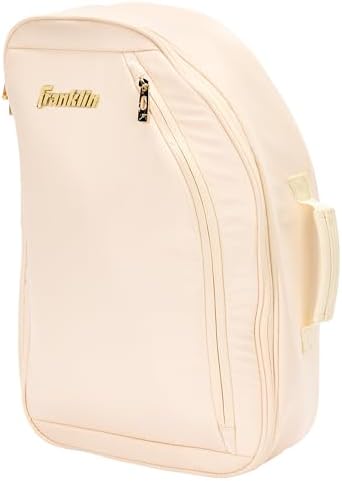
Tote and duffel styles carry the most and are the least comfortable to actually wear, which is the trade every large bag makes. They suit coaches, clinic organizers, and anyone who brings paddles for other people, and they suit almost nobody who walks a long way from the parking lot.
Protecting the Paddle Rather Than Carrying Everything
Some players do not need a bag at all, just protection for the paddle face inside a gym bag they already own. A paddle-only sleeve or cover solves that for far less bulk, and it is worth knowing that option exists before you buy a full bag you will half fill.
Comparing the Franklin Bag Styles
The table below compares the three main Franklin bag shapes on the two things that decide the purchase for most players: how much they hold and how they feel to carry. Capacity descriptions reflect typical stated specs for each style rather than one specific model, since the lineup changes from season to season.
| Style | Suits | Main trade-off |
|---|---|---|
| Sling | One to two paddles, short sessions, quick trips to open play | Weight sits on one shoulder; little room for a shoe change |
| Backpack | Regular play, shoe change, gear for a partner | Bulkier to store in a car or locker than a sling |
| Tote or duffel | Coaches, clinics, gear for a group, tournament days | Least comfortable to carry any real distance |
What to Check Before You Buy
Three specs decide whether a bag works for you, and all three are listed on the product page: the stated paddle capacity, whether the paddle storage is padded and separate from the main compartment, and whether the shoe pocket is ventilated. Everything else, from color to logo placement, is preference rather than function.
Paddle capacity is the one people get wrong most often. A sleeve rated for two paddles will physically hold three, but the padding is then no longer doing its job and the zipper takes strain it was not built for. If you own three paddles and expect to keep all three, size up now rather than replacing the bag in six months.
Fit and Strap Details
Strap length and the position of the shoulder pad matter more on a sling than on a backpack, since a sling carries its entire load on one side. If you are between sizes or have a smaller frame, check whether the strap adjusts far enough before ordering, and read the fit-specific comments in reviews rather than the general star rating.
Where a Franklin Bag Is Not the Right Choice
Franklin bags are built and priced for the recreational end of the sport, so the fit is poor in two situations. Players carrying four or more paddles to competitive events will find the paddle sleeves undersized, and players who want heavier weather-resistant fabric for bags that live in a car trunk year round often prefer a specialist brand.
If either describes you, the tour-oriented lines from the paddle brands are the more direct comparison. Our JOOLA bag guide and CRBN bag guide cover those ranges, and the general pickleball bag guide compares all the styles side by side without the brand filter.
Mistakes Worth Avoiding
The most common mistake is buying the largest bag available on the theory that extra room is free. It is not. A half empty backpack lets gear shift around, is more awkward to store, and encourages you to carry things you do not need, which is how a bag ends up feeling heavy for no useful reason.
The second mistake is treating a general gym bag as equivalent. Pickleball paddles have a wide face and a short handle, so a sleeve designed for a tennis racket or a laptop does not hold one securely, and a paddle rattling loose against a water bottle picks up edge scuffs fast.
Frequently Asked Questions
Are Franklin pickleball bags good for beginners? Yes. The range is built around recreational play, so the sizes, the paddle capacities, and the feature set line up well with what a new or casual player actually carries to open play.
How many paddles does a Franklin pickleball bag hold? It varies by style, from one or two in a sling up to several in a tote or duffel. Check the stated paddle capacity on the specific product listing rather than assuming a range-wide number.
Do Franklin bags have a shoe compartment? Some backpack and duffel models do and some do not. If a vented shoe pocket matters to you, confirm it is listed in the specs for that exact model instead of assuming it comes with the style.
Is a Franklin sling bag big enough for outdoor play? For a normal outdoor session with one or two paddles, balls, a towel, and a bottle, yes. If you also bring a shoe change, extra layers, or gear for a partner, a backpack is the more practical size.
Can I use a Franklin bag for other racket sports? The main compartment works for most gear, but the paddle sleeves are shaped for a pickleball paddle. A tennis racket will not fit a pickleball paddle sleeve, so check the compartment dimensions if you play both.
Do I need a bag at all, or just a paddle cover? If you already carry a gym bag you like, a cover that protects the paddle face may be all you are missing. Our paddle cover guide explains when a cover is enough.
The Bottom Line
Franklin’s pickleball bag lineup does the recreational end of the market well: sling bags for players carrying the basics, backpacks for regular play and shoe changes, and totes for the people who bring gear for everyone else. Pick the style that matches your actual load rather than the biggest one on the shelf, and confirm the paddle capacity and shoe pocket ventilation on the specific listing. If you are still weighing styles or brands, start with our pickleball bag guide and our packing checklist.