Last updated: August 18, 2026
Run a fingertip across a paddle that has seen a season of outdoor play and you can feel what happened. The face that used to catch on your skin now slides. Some of that is genuine wear, but a surprising amount of it is a thin film of ball plastic, court dust, sunscreen and hand oil sitting in the surface texture.
That film is removable, and removing it takes a couple of minutes. This guide covers how to clean a carbon or composite face without damaging it, what a paddle eraser actually does, which household products to keep well away from your paddle, and how to tell the difference between a dirty face and one that is simply worn out.
Quick Answer
How do you clean a pickleball paddle?
- Wipe the face with a damp microfibre cloth after play. That alone prevents most build up.
- For a dirty face, use a slightly damp cloth with a drop of mild soap, then wipe with clean water and dry immediately.
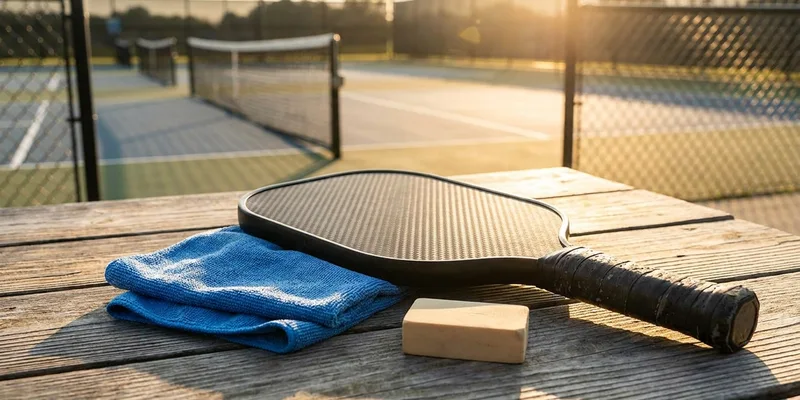
- For stubborn ball residue on a raw carbon face, a dedicated paddle eraser lifts it without soaking the paddle.
- Keep water away from the edge guard seam and the handle, and never soak or submerge a paddle.
Bottom line: clean little and often with a damp cloth, and save the eraser for residue that a cloth will not shift.
Why a Dirty Paddle Face Costs You Grip on the Ball
Spin comes from friction between the ball and the paddle face, and modern faces are built with a deliberately textured surface to create it. Raw carbon fibre faces in particular have a gritty finish that grabs the ball for a fraction longer at contact. Anything that fills in that texture reduces the friction available.
What fills it in is mundane. Outdoor balls shed a fine plastic residue on impact, courts contribute dust, and hands contribute sunscreen and oil. The result is a face that looks fine and feels noticeably smoother than it did new, with a corresponding drop in how much the ball bites.
Cleaning Is Not the Same as Restoring
Be clear about what cleaning can and cannot do. Removing the film restores the texture that is still there. It does not rebuild texture that has physically worn away, and every paddle face wears down with use. If a thorough clean makes no difference at all, the surface itself is likely past its useful life, which our guide to how long pickleball paddles last goes into.
What You Need
Almost nothing. A clean microfibre cloth handles routine maintenance and a second dry cloth handles the drying step. Beyond that, the only products worth considering are a mild soap you already own and a paddle eraser for residue that resists a cloth.
What matters more than the kit is restraint. Paddle faces are thin composite layers bonded to a core, and almost every way to damage one involves being too aggressive: too much water, too much solvent, or too much abrasion.
Cleaning a Carbon or Composite Face Step by Step
The routine below works for raw carbon, textured composite and fibreglass faces alike. It takes about two minutes and is the only cleaning most paddles will ever need. Do it in good light so you can see whether the film is actually lifting.
Dampen a microfibre cloth with water so it is moist rather than dripping, and wipe the face in one direction rather than scrubbing in circles. Add a single drop of mild dish soap to the cloth if plain water is not shifting anything. Wipe again with a cloth dampened in clean water to remove any soap, then dry the whole paddle immediately with a dry cloth.
The Edges, the Guard and the Handle
The edge guard seam is where water can get past the face and into the core, so keep the cloth damp rather than wet and never let water pool along that line. Wipe the edge guard itself with the same cloth to clear grit. For the handle, wipe the wrap down and let it air dry, and if the grip is genuinely grubby that is a signal to replace it rather than wash it. Our replacement grip guide covers that job.
When a Paddle Eraser Earns Its Place
A paddle eraser is a firm rubber block that lifts ball residue out of surface texture through friction, in the same way an art gum eraser lifts graphite from paper. It works dry, which is its main advantage: no liquid anywhere near the edge seam, and no waiting for anything to dry.
Use it with light pressure and short strokes across the face, checking progress every few passes. The crumbs coming off are the residue leaving the surface. Wipe the debris away with a dry cloth afterwards. Erasers are the usual answer for outdoor players, whose faces pick up ball material faster.

Do Not Try to Sand or Re-texture the Face
There is an important line between cleaning a surface and altering it. Cleaning removes what does not belong on the paddle. Abrading, sanding or otherwise re-texturing the face changes the surface itself, and paddle surface characteristics fall under equipment rules for sanctioned play. If you compete, check the current equipment standards at usapickleball.org rather than relying on forum advice, and see our explainer on what paddle approval means.
Paddle Cleaners and Sprays
Dedicated paddle cleaning sprays are mild surfactant solutions formulated to lift oil and residue without attacking the resin or printed graphics. Their real selling point next to soap and water is that they take the guesswork out of what is safe to apply.
Apply the spray to the cloth rather than to the paddle, so nothing runs into the edge seam. Wipe, then dry. Many players keep a small bottle and a cloth in the bag and clean between games in humid conditions.

What Not to Use on a Paddle
The list of things that damage paddle faces is longer than the list of things that clean them. Most of the damage is permanent, because you are dealing with a thin surface layer and a printed graphic over a bonded core rather than a solid slab of material.
| Avoid | Why |
|---|---|
| Melamine foam sponges | They work by fine abrasion, which means they remove surface material and graphics along with the dirt |
| Rubbing alcohol, acetone and solvents | Can attack resin and lift printed graphics, and offer no benefit over mild soap |
| Bleach or harsh household cleaners | Aggressive chemistry on a bonded composite surface, with a real risk of discolouration |
| Abrasive pads, brushes and sandpaper | Alters the surface rather than cleaning it, and can void a warranty |
| Soaking, submerging or a dishwasher | Water gets past the edge guard into the core, which is the fastest way to ruin a paddle |
| Leaving it wet | Trapped moisture along the seam does damage you will not see until the paddle sounds dead |
How Often to Clean and How to Store It
A quick wipe with a dry or barely damp cloth after each session is the whole maintenance routine for most players. A more thorough clean with soap or an eraser is worth doing whenever you notice the face feeling smoother than usual, which for regular outdoor players tends to be every few weeks.
Storage does as much for a paddle as cleaning does. Heat is the enemy, and a car trunk in summer is the worst place a paddle can live, because sustained heat works on the adhesives holding the face to the core. Our paddle cover guide covers the protection side.
Telling a Dirty Paddle From a Worn One
Clean it properly and then judge. If the texture comes back under your fingertip and the ball bites again, it was dirt. If a thorough clean and an eraser pass change nothing, the surface has worn smooth. A dull, hollow sound on contact or a soft spot in the face points at core or delamination trouble instead, and that is a paddle at the end of its life.
Frequently Asked Questions
Can I use a magic eraser on a pickleball paddle? No. Melamine foam sponges clean by fine abrasion, so they take surface material and graphics with them. A dedicated paddle eraser works by lifting residue instead.
Does cleaning a paddle restore spin? It restores the friction that ball residue was masking. It cannot rebuild texture that has physically worn away, so the improvement depends on how much of the problem was dirt.
Can I use rubbing alcohol on the face? It is best avoided. Solvents can attack resin and lift printed graphics, and mild soap and water does the same job without the risk.
How often should I clean my paddle? A dry wipe after every session, and a more thorough clean whenever the face starts feeling smooth. Outdoor players generally need it more often than indoor players.
Can I wash a pickleball paddle with water? With a damp cloth, yes. Never soak, submerge or run water over it, because moisture entering the edge guard seam reaches the core.
How do I clean the grip? Wipe it with a damp cloth and let it air dry. A grip that stays grubby or slick has reached the end of its life and should be replaced rather than washed.
Does cleaning affect whether a paddle is legal for tournaments? Cleaning does not alter the surface, but sanding or re-texturing does, and surface characteristics fall under equipment standards. Check the current rules at usapickleball.org before modifying anything.
The Bottom Line
Cleaning a paddle is a two minute job with a microfibre cloth, done often rather than thoroughly. Use water first, a drop of mild soap if needed, and a dedicated paddle eraser for ball residue that a cloth will not shift. Keep water away from the edge seam, dry the paddle straight away, and keep it out of a hot car. Solvents, bleach and melamine sponges have no place near a composite face. If a proper clean changes nothing, the surface is worn rather than dirty, and our guide on paddle lifespan explains what happens next.