Last updated: August 18, 2026
Most pickleball bags are sold as unisex, which in practice means they are built around a longer torso and a wider shoulder span. If a bag has ever ridden low across your back, dug into your collarbone on a long strap, or swung sideways every time you walked between courts, the problem was almost certainly geometry rather than capacity.
This guide is about the two things that actually separate a good women’s pickleball bag from a generic one: how it carries on a smaller frame, and how it is divided inside for everything that is not gear. If you are still deciding between a sling, a backpack, and a tote in the first place, start with our broader pickleball bag guide and come back here for the fit details.
Quick Answer
What should you look for in a pickleball bag for women?
- Strap geometry first: adjustable, contoured straps that sit inside the shoulder line instead of sliding off it.
- A shorter pack body, so the bag sits at your waist rather than below your hips on a shorter torso.
- Separate compartments for personal items, since a single large main pocket means keys and a phone end up under damp shoes.
- A padded paddle sleeve remains the one non-negotiable feature, exactly as with any pickleball bag.
Bottom line: check strap adjustment range and pack height before capacity, because those are what a unisex bag most often gets wrong.
Why Carry Comfort Is the Real Difference
The features that make a bag comfortable on a smaller frame are strap length range, strap width and contouring, the height of the pack body, and where the weight sits relative to your center of gravity. Capacity and pocket count get the marketing attention, but those four dimensions decide whether a loaded bag feels balanced or lopsided.
A backpack designed around a longer torso hangs lower when the straps run out of adjustment, which pushes the weight behind your hips instead of against your upper back. On a sling, the equivalent failure is a strap that cannot be shortened enough, so the bag slides toward your elbow every time you move and you end up holding it in place with one hand.
Straps: The Detail Worth Checking First
Look for three things on the strap system: a genuinely wide adjustment range, padding that is contoured rather than a flat strip of foam, and on slings, a strap that can be worn on either shoulder. A sternum strap, which pulls both shoulder straps inward, solves most of the sliding problem on a backpack.
Sling Straps
A crossbody sling puts all the weight on one shoulder, so strap width matters more than on a backpack. A narrow strap concentrates load on the collarbone, which becomes noticeable after a walk from a far parking lot with paddles, balls, water, and a change of clothes inside. Wider, slightly padded straps spread the same weight over more surface area.
Backpack Straps
On a backpack, the useful features are a sternum strap and straps that are set closer together at the top. Straps anchored wide apart, which is common on bags scaled to broader shoulders, slide outward no matter how tight you pull them. Being able to shorten the straps enough that the pack body sits above your hips is what keeps the load stable while walking.
Inside Layout: What Actually Needs Its Own Pocket
The organization complaint that comes up most often is not a shortage of space but a shortage of separation. Gear, shoes, and personal items belong in three different places, and a bag with one large main compartment plus a paddle sleeve forces two of those three to share.
Personal Items
A small zipped pocket that is easy to reach without opening the main compartment covers keys, a phone, cards, and lip balm. Fleece-lined or otherwise soft-lined pockets are worth looking for if you put sunglasses or a phone screen in there. A pocket on the strap itself, common on slings, is the fastest to reach mid-session.
Shoes and Damp Gear
A ventilated shoe compartment keeps court shoes away from a clean shirt, and it matters more than it sounds like it does after an outdoor session in summer. If a bag has no shoe pocket, the workaround is a separate mesh bag inside the main compartment, which works but eats capacity. Our pickleball shoe guide covers why many players end up carrying a second pair at all.
Women’s Pickleball Bags by Situation
The Broad Starting Point
Bags sold specifically in a women’s pickleball bag category are typically scaled down in pack height and strap length, with color and pattern options that unisex lines rarely offer. This is the category to browse first if a standard bag has never sat right on you.
Minimal Carry, One or Two Paddles
A crossbody sling is the lightest option and the fastest to grab for a quick session, holding a paddle or two, balls, a towel, and a water bottle without the bulk of a full backpack.

Regular Play With a Shoe Change
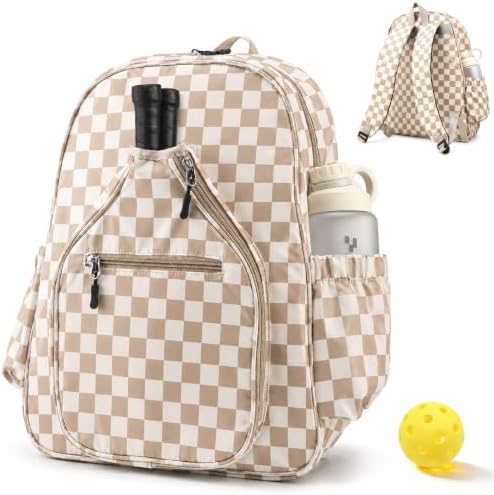
A backpack with a vented shoe compartment and a sternum strap covers players who go straight from work or the gym to the court and need clothes, shoes, and gear separated inside one bag.
Court to Everything Else
Tote-style pickleball bags carry the most and look least like sports equipment, which suits players who use the same bag for errands after playing. The trade-off is that a tote is carried by hand or on one shoulder rather than worn.

Longer Sessions and Tournament Days
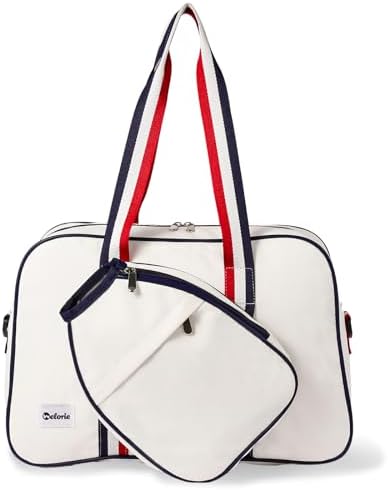
Larger duffel and tour-style bags hold multiple paddles, a full change of clothes, and enough water for a long day. They are more bag than most weekly players need, but they are the right answer for full-day events.
Matching the Style to How You Play
| Style | How it carries | Best for | Watch out for |
|---|---|---|---|
| Crossbody sling | One shoulder, across the back | Quick sessions, minimal gear | Narrow straps on heavier loads |
| Backpack | Both shoulders, weight centered | Regular play with a shoe change | Strap spacing and pack height |
| Tote | Hand or one shoulder | Court plus errands | Not wearable while walking far |
| Duffel or tour bag | Hand, shoulder, some worn | Tournament and all-day play | Oversized for weekly sessions |
Mistakes Worth Avoiding
Buying purely on capacity is the most common one. A bag rated for six paddles is heavier and taller empty than a two-paddle sling, and on a shorter torso that extra height is exactly what pushes the load out of position. Size the bag to a normal session, not to the busiest day you might ever have.
The second is treating color and pattern as the only difference between a women’s line and a unisex one. Some bags marketed to women are the same body with a different colorway, so check the stated strap adjustment range and pack dimensions rather than assuming the fit was reworked.
Frequently Asked Questions
Are women’s pickleball bags actually different from unisex bags? Often yes, in pack height, strap length range, and strap spacing, though some lines only change the colorway. Check the listed dimensions and strap adjustment rather than the marketing category.
Sling or backpack for a woman starting out? A sling suits players carrying one or two paddles and the basics. Move to a backpack once you regularly bring shoes, a change of clothes, or gear for a partner.
How many paddles should a women’s pickleball bag hold? Most players are well served by a two to four paddle sleeve. Check the manufacturer’s stated capacity, since a sleeve rated for two paddles will not protect four properly.
Do I need a separate shoe compartment? Only if you change shoes at the court. If you do, a ventilated compartment keeps damp shoes away from clean clothes and gear, which is the main reason the feature exists.
Can I use a tennis bag for pickleball? You can, but tennis bags are built around longer racket compartments and the sleeve is often not sized well for a shorter, wider pickleball paddle.
What is the most overlooked feature on a women’s pickleball bag? A sternum strap on a backpack, or a wide enough strap on a sling. Both fix the sliding and lopsided carry that make an otherwise good bag uncomfortable.
The Bottom Line
A pickleball bag for women is worth choosing on strap geometry and pack height before capacity, because those are the dimensions a unisex bag most often gets wrong on a shorter torso. Separate pockets for personal items and damp shoes handle the rest of the daily annoyance. Once the bag is settled, our packing checklist covers what should actually be inside it, and the main bag guide compares the styles side by side.