Last updated: August 19, 2026
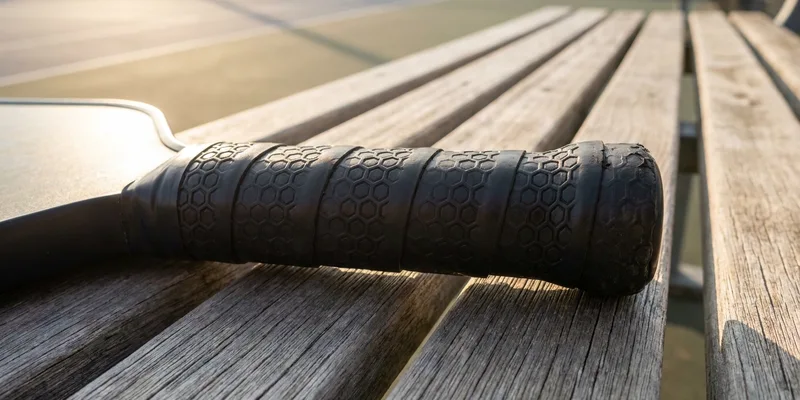
Sooner or later somebody at open play pulls the overgrip off their paddle and shows you a black rubbery sleeve underneath, covered in raised hexagons. That is a Hesacore, and the reaction it gets is unusually split. Some players call it the best thing they ever put on a handle. Others try it once, decide the paddle now feels like a baseball bat, and peel it straight back off.
This is a look at what the grip actually is, what it changes about holding a paddle, and which of those two camps you are likely to land in. If you are still working out the difference between the layers on a handle, our explainer on grip versus overgrip is the place to start.
Quick Answer
Is the Hesacore grip worth putting on a pickleball paddle?
- It is a stretchy sleeve with a raised hexagonal pattern that goes over the handle, underneath your normal overgrip.
- The pattern gives the hand something to lock into, so a lot of players find they can hold the paddle securely without squeezing as hard.
- It makes the handle noticeably thicker. That is the single biggest reason people either love it or return it.
- Players with sweaty hands and players who grip too tightly are the two groups who report the most benefit.
If you already think your handle is too fat, this is not your product.
What the Hesacore Grip Actually Is
Hesacore Grip Technology is a moulded sleeve, not a wrap. It stretches over the paddle handle in one piece and its surface is covered in a repeating hexagonal relief, which is where the name comes from. It is not a replacement grip and it is not an overgrip. It sits between them as a third layer.
The idea behind the shape is straightforward. A smooth cylindrical handle transfers load into the hand across a narrow band under the fingers and the base of the palm. A raised, faceted surface spreads that contact across a larger and less concentrated area, and gives the skin ridges to catch on rather than relying purely on friction.
Where It Came From
The product is a padel and tennis accessory that pickleball adopted rather than one designed for the sport. That matters mostly for sizing expectations: it was made for racquet handles, and pickleball handles are shorter, so the fit is not always a neat match. It has been visible on tour in racquet sports for a while, which is a large part of how it reached pickleball courts.
What It Changes in the Hand
Two things change immediately. The handle gets thicker, because you have added a moulded layer plus whatever overgrip goes on top. And the handle stops being smooth, so your hand settles into a repeatable position instead of sliding around and being repositioned between points.
The second effect is the one players talk about. When a handle is slick, the natural response is to grip harder to keep control of it. A textured surface that the hand locks onto lets you hold the paddle with less force for the same security, which is a comfort difference you feel most in the last half hour of a long session.
Feel and Feedback
The trade is directness. A thick, cushioned handle puts more material between the paddle and your palm, so fine feedback from contact is a little muted compared to a thin tacky wrap on a bare handle. Players who chase touch and feel at the kitchen line tend to notice this. Players who mostly want a secure, comfortable hold tend not to care.
Who the Hesacore Grip Suits
Players Whose Hands Sweat
Tack is the first thing to fail once a handle is wet, which is why plain tacky overgrips go slippery in humid conditions. Mechanical texture does not depend on stickiness in the same way, so a hexagonal surface under an absorbent overgrip is a combination a lot of heavy sweaters end up on after cycling through wraps that kept letting go.

Players Who Squeeze the Paddle Too Hard
Death gripping the handle is one of the most common things coaches call out, and it is usually a confidence problem rather than a strength problem. Anything that makes the handle feel more secure tends to relax the hand, and this grip is a fairly direct way of doing that without changing your paddle.
Players Who Want a Thicker Handle Anyway
If you already build your handle up with a second overgrip or extra wraps, a Hesacore is a tidier way of getting there. It adds circumference in one moulded step and keeps the shape even, instead of stacking layers that compress unevenly over a few weeks.
Players Who Have Discussed Comfort With a Professional
Players dealing with elbow or forearm discomfort often prefer a thicker, textured handle and a looser hold, and this grip comes up constantly in those conversations. That is a preference reported by players, not a treatment. Persistent elbow pain belongs with a doctor or physical therapist, and our page on what pickleball elbow actually means explains why no piece of equipment answers that question for you.
Who Should Skip It
Anyone who deliberately runs a slim handle should leave this alone. A thin handle gives more wrist mobility and faster grip changes, and this product moves you in the opposite direction by design. There is no thin version of the concept, so there is nothing to compromise on.
The same goes for players with smaller hands who already find a stock pickleball handle a fraction wide. Adding a moulded sleeve plus an overgrip on top of that is likely to push the circumference past what you can comfortably rotate in your fingers, and grip changes are the first thing to suffer.
If You Are Happy With Your Current Setup
The honest answer for a large number of players is that a fresh overgrip solves the problem they actually have. If your handle only feels slick because the wrap is old, that is five minutes of work with a consumable you were going to buy anyway, rather than a new layer to learn. Our overgrip guide covers which type suits which hand.
Fitting It Without Fighting It
The installation is the part people are unprepared for. This is a stretch fit sleeve, so you work it over the butt of the handle and roll it up, and it takes real force. Going slowly and working it around evenly rather than yanking one side is the whole technique, and rushing is how people tear one.
It goes on over the existing base grip in the normal setup, and your overgrip then goes on top of the Hesacore rather than underneath it. That order is what preserves the texture: the pattern reads through a thin overgrip, and the overgrip is still the layer you replace when it wears out.
Two Things Worth Checking First
Check handle length before you buy, because a sleeve cut for a racquet may sit differently on a shorter pickleball handle, especially if you play two handed on the backhand. And accept that the sleeve, unlike an overgrip, is not something you swap every few weeks. It is a semi permanent change to the handle, so decide before you fit it rather than after.
Hesacore Compared to the Usual Alternatives
| Option | What it does | Handle thickness | Suits |
|---|---|---|---|
| Hesacore sleeve | Moulded hexagonal texture the hand locks into | Adds a lot | Sweaty hands, over gripping, players who want bulk |
| Tacky overgrip | Sticky surface, replaced often | Adds very little | Dry hands, players who want a slim handle |
| Absorbent overgrip | Soaks up moisture instead of relying on tack | Adds a little | Humid conditions, moderate sweating |
| Cushioned replacement grip | Rebuilds the base layer with more padding | Adds a moderate amount | Worn factory grips, players wanting a softer handle |
| Second overgrip layer | Cheap way to build circumference | Adds a moderate amount | Trying out a thicker handle before committing |
If you want the thicker handle but not the texture, the last two rows are the cheaper experiment. Wrap a second overgrip on, play a week, and see whether the extra circumference is what you were actually missing. Our guide to the base replacement grip covers the same decision from the bottom layer up.
![Premium Pickleball Overgrip [12 Pack] – Extra Tacky Grip Tape, Sw...](https://m.media-amazon.com/images/I/41tiq72F21L._AC_.jpg)
Frequently Asked Questions
What is a Hesacore grip? It is a stretch fit sleeve with a raised hexagonal surface that goes over a paddle or racquet handle, underneath the overgrip. It adds thickness and gives the hand a textured surface to hold rather than a smooth one.
Does a Hesacore grip go over or under the overgrip? Under. The sleeve fits over the existing handle grip, and the overgrip is wrapped on top of it. The pattern still reads through a thin overgrip.
Does it make the handle much thicker? Yes, noticeably. That is the main reason people either keep it or remove it, so factor it in if your handle already feels close to the upper limit of what suits your hand.
Can you use a Hesacore made for tennis on a pickleball paddle? Players do, since it is the same product family, but pickleball handles are shorter and the fit is not always neat. Check handle length and shape before buying.
Will it help with elbow pain? That is not a question a grip can answer. Some players with elbow discomfort prefer a thicker, textured handle and a looser hold, but persistent pain should be assessed by a doctor or physical therapist.
Is it hard to install? It takes more force than people expect because it stretches over the handle in one piece. Work it on gradually and evenly rather than pulling hard on one side.
Can you take it off again? You can, but it is not a layer designed for frequent swapping the way an overgrip is. Treat fitting one as a decision about the handle rather than a weekly consumable.
The Bottom Line
The Hesacore is a genuine solution to two specific problems: a hand that slips once it is wet, and a hand that squeezes too hard because the handle never feels secure. It solves both by making the handle thicker and textured, which is also exactly why it does not suit players who want a slim, direct handle with fast grip changes. Try a second overgrip first if all you really want is bulk, and buy the sleeve if you want the mechanical grip that comes with it. For the layer underneath, see our paddle grip guide.