Last updated: August 18, 2026
The JOOLA Beacon is the paddle that turns up when somebody wants the brand they keep seeing on television without stepping into the signature range. It sits at the accessible end of JOOLA’s catalog, it is stocked widely in general sporting goods stores as well as online, and it is bought far more often as a first paddle than as an upgrade.
That makes it a genuinely useful paddle to be honest about, because the buying question is not whether it competes with a flagship. It does not, and it is not meant to. The question is whether it is the right first or second paddle for you. We do not test paddles, so everything below is JOOLA’s published specification or what players commonly report.
Quick Answer
Who is the JOOLA Beacon pickleball paddle for?
- New and casual players who want a recognisable brand and a light, easy paddle rather than a performance tool.
- Anyone buying a spare paddle to keep in the car or to hand to a guest who turns up without one.
- Players who want pop from a fiberglass face more than they want the spin ceiling of a textured carbon face.
Bottom line: the Beacon is a sensible entry paddle with a familiar name on it, and it is the wrong buy for an improving player who has started shaping topspin.
What the Beacon Is, and What It Used to Be Called
The Beacon is JOOLA’s accessible recreational paddle, built with a fiberglass playing surface over a honeycomb polymer core and finished with an edge guard. JOOLA positions it for beginners and casual players rather than for competition, which is why it turns up in mainstream retail alongside the specialist shops.
One detail saves a lot of confusion while shopping. The Beacon is the renamed version of the paddle JOOLA previously sold as the Journey, so older reviews and forum threads about the Journey are describing the same product family. If you find a Journey listing at a clearance price, you are looking at the older name rather than a different paddle, though you should still confirm the specification on the listing itself.
Where It Sits in JOOLA’s Range
JOOLA’s catalog runs from accessible recreational paddles like this one up to the signature performance lines. The gap between the two ends is not marketing, it is a genuine difference in face material, core construction and intended player. Our JOOLA brand guide maps the whole range if you want to see where each line sits.
Fiberglass Face: What That Actually Changes
A fiberglass face is more flexible than a carbon one and tends to return the ball with more immediate pop, which is why entry paddles use it so often. It feels lively and rewarding on a clean drive, and for a new player that feedback is genuinely encouraging. What it does not do is grip the ball the way a textured carbon face does.
That difference is why an improving player eventually outgrows a fiberglass paddle. Once you start trying to shape topspin drives, roll volleys and heavy third-shot drops, the spin the face can generate becomes the limiting factor. Our guide to what a carbon face actually changes covers the comparison in detail.
Pop Is Not the Same as Power
Entry paddles that feel lively at the kitchen line often feel underwhelming when you try to drive through somebody from the baseline. Pop comes from the face flexing and springing back, while sustained pace comes from mass, swing speed and clean contact. If you want a paddle that finishes points, that is a different purchase, and our power paddle guide is the better starting point.
Weight, Grip and Why the Beacon Feels Easy
JOOLA builds the Beacon on the lighter side with a comfortable grip length, and that combination is most of the reason it feels approachable. A lighter paddle is quicker to get into position, tires the arm less over a long session, and is more forgiving of a late swing, which is exactly the profile a new player needs.
The trade is stability. A light paddle twists more in the hand on off-centre contact and gives back less on a hard incoming ball, so blocks and volleys against a strong hitter take more effort. That is not a defect at this level of the range, it is the shape of the compromise.
Who Should Skip the Beacon
Skip it if you have already played a season and know what a topspin drive should feel like. Skip it if you are entering sanctioned play and want a paddle you will not replace within months. And skip it if you were choosing it purely because it says JOOLA, since the badge is the only thing this paddle shares with the signature range.
The honest alternative for an improving player is an entry-level carbon paddle from a value brand rather than a recreational paddle from a famous one. Several direct-to-consumer builders sell textured carbon faces well below flagship level, and for someone starting to shape the ball that is the more useful upgrade path.
Paddles Worth Comparing It Against
The Beacon Itself
Read the listing for the current colour options, weight and grip figures, since JOOLA sells this paddle in several finishes and specifications can differ slightly between them.

If You Are Buying for Two
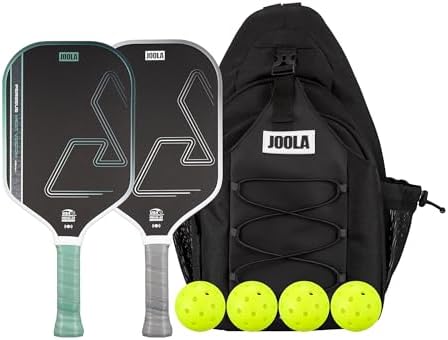
Most people buying a first paddle end up needing two, and bundled sets pair paddles with balls and a case. Check whether the paddles inside the set are current models before treating the bundle as a saving, and see our paddle set guide for what to look for.
The Carbon-Face Alternative at a Similar Level
If you already suspect you will want spin, an entry carbon paddle from a value brand is the more future-proof buy. Our Vatic Pro guide covers one of the better known options in that bracket.

Moving Up Inside JOOLA
If you like the brand and want the construction that comes with the performance range, the signature lines are where that starts. Our Perseus Pro IV profile explains who that paddle actually suits, which is a narrower group than the marketing suggests.

What to Check on the Listing
These fields come from JOOLA and from the retailer page rather than from us. On an entry paddle they matter less than on a flagship, but two of them still decide whether the paddle suits your hand.
| Field | Why it matters here |
|---|---|
| Face material | Fiberglass gives pop, textured carbon gives spin; this is the defining choice at entry level |
| Core thickness | Thicker cores are marketed toward control and forgiveness, thinner toward pop |
| Weight | Light is easy on the arm but less stable against a hard hitter |
| Grip circumference | The one field that can make a good paddle feel wrong; measure your hand first |
| Edge guard | Present on this paddle, and worth having on a first paddle that will meet the court |
| Approval status | Assigned per model on the official list, never per brand |
Approval Status for Sanctioned Play
USA Pickleball approves paddles per model and publishes current results on its official Approved Paddle List at usapickleball.org. Approval is not granted to a brand, so the presence of other JOOLA paddles on the list says nothing about this one. Search the exact model name on the official list if you intend to compete.
For casual open play there is no equipment enforcement, so this only matters if you enter sanctioned events. Standards are revised at the start of each year, and retailer badges and packaging claims are not a substitute for the list itself. Our overview of what the approval label means explains the process.
Frequently Asked Questions
Is the JOOLA Beacon good for beginners? Yes, that is the group it is built for. It is light, forgiving and easy to swing, which is what a new player needs before technique settles.
Is the Beacon the same as the JOOLA Journey? The Beacon is the renamed version of the Journey, so older reviews of the Journey describe the same paddle family. Confirm the specification on the listing you are actually buying from.
Can you play tournaments with a Beacon? Only if the exact model appears on the official USA Pickleball approved list, which you should check at usapickleball.org rather than assume. Beyond eligibility, most competitive players want a carbon face for spin.
Beacon or a carbon paddle for a first paddle? If you are unsure whether the sport will stick, the Beacon is the lower-risk buy. If you already know you will play weekly, an entry carbon paddle will stay useful longer.
Does the Beacon generate spin? Less than a textured carbon face. A fiberglass surface is built around pop rather than grip, so heavy topspin is where it runs out first.
How long will it last? Entry paddles usually get replaced because the player improves rather than because the paddle fails. Our guide on paddle lifespan covers the wear signs to watch for.
The Bottom Line
The JOOLA Beacon is an honest entry paddle: light, forgiving, widely stocked, and carrying a name most players recognise. Its fiberglass face gives pop rather than spin, which is the ceiling an improving player eventually hits. Buy it as a first or spare paddle, and if you already know you want to shape the ball, start with our guide to choosing a first paddle instead of buying on the badge.
Related Reading
- Pickleball Paddle for Beginners: How to Choose Your First One
- JOOLA Pickleball Paddles: Which Line Fits You?
- Budget Pickleball Paddles: Where the Compromises Are
- Carbon Fiber Pickleball Paddles: What the Material Changes
- Pickleball Paddle Sets: What Is Actually in the Box
- How to Choose a Pickleball Paddle