Last updated: August 19, 2026
Every paddle brand claims power, which makes the word close to meaningless on a product page. What actually differs between paddles is which construction choices they made, and those choices produce pace in different ways: some by adding stiffness, some by adding mass, some by moving that mass further from your hand. Knowing which lever a paddle pulls tells you whether it will help your game or just make your hands slower at the net.
This guide explains what genuinely adds pace, what the trade-offs are, and which type of power paddle suits which kind of player. We have not tested these paddles ourselves, so what follows is manufacturer specification, category-level construction fact, and what players consistently report.
Quick Answer
What makes a pickleball paddle a power paddle?
- A stiffer overall structure, which usually means a thermoformed build with reinforced perimeter walls rather than a traditional cold-pressed one.
- A thinner core, since thicker cores are generally built and marketed to absorb energy rather than return it.
- Mass placed further from your hand, either through an elongated shape or through added weight toward the head.
Bottom line: every one of those levers costs you something in touch or hand speed, so pick the one that fixes your actual weakness instead of stacking all three.
Where Paddle Power Actually Comes From
Pace off a paddle comes from how much of the ball’s energy is returned rather than absorbed, plus how much speed and mass you bring into contact. Construction affects the first part, and shape and weight distribution affect the second. Face material, despite being the headline spec on most listings, is the smallest of the three factors.
That is why two paddles with the same carbon face can feel wildly different. One with a thin core and a stiff thermoformed shell returns energy sharply, while one with a thick core and a softer build dampens it deliberately. The face texture is doing spin work, not power work, on both of them.
The Three Levers, and What Each One Costs
Stiffness, core thickness, and weight distribution are the three ways a paddle adds pace. Each one has a specific downside, and understanding the downside is what stops you from buying a paddle that solves a problem you did not have.
Stiffness Costs You Reset Control
Thermoformed paddles are built as a more unified structure with reinforced perimeter walls, and players consistently report them feeling firmer and livelier than traditional cold-pressed builds. The same stiffness that fires the ball back on a drive also fires it back on a block, which is why players moving to a stiff paddle usually report their resets sitting up until they adjust.
A Thinner Core Costs You Forgiveness
Thinner cores are generally marketed toward pop and a firmer response, thicker cores toward control and dampening. The trade is that thinner cores tend to feel harsher on off-center contact, so the mishits that a thick-core control paddle would soften become more obvious.
Head Weight Costs You Hand Speed
Moving mass toward the head, whether by choosing an elongated shape or by adding tape, increases leverage and therefore pace on a full swing. It also raises swing weight, which slows you down in fast exchanges at the kitchen line. If you already lose hands battles, this is the lever to leave alone.
Power Paddles by Player Type
Baseline Drivers Who Want the Full Flagship Build
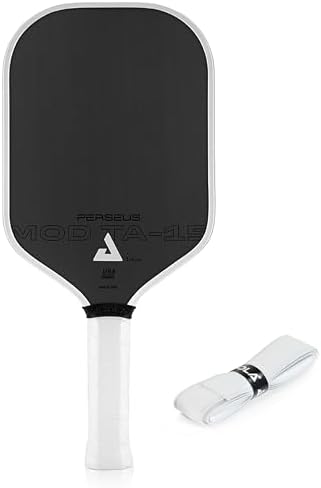
If your game is built on driving the third shot and putting balls away, the flagship thermoformed elongated category is aimed directly at you. JOOLA’s Perseus line is the most cross-shopped example, and our full profile covers the generation differences worth checking before you buy.
Players Who Want Reach and Leverage From an Established Brand
Selkirk’s elongated Invikta shape delivers pace through length and leverage rather than through the most aggressive possible build, and the brand manufactures in the United States with a warranty program behind it. Our AMPED Pro Air Invikta profile breaks down what the name refers to.

Players Who Want Pace Without Giving Up All Their Touch
Not every power paddle has to be a flagship driver’s tool. Paddletek builds across the performance range with a long track record, and comparing a mid-thickness model from an established manufacturer against a thin-core flagship is the honest way to see what you are actually giving up.

Players Who Want Thermoformed Construction on a Budget
Vatic Pro has built its following on offering thermoformed carbon-faced construction well below flagship pricing, which makes it the usual recommendation for a player who wants to try the category before committing to a top-tier model.

Players Who Would Rather Tune What They Already Own
Adding lead tape to a paddle you already like is often a smarter first move than buying a new one, since it changes balance and swing weight without resetting your whole calibration. Check the current rulebook before modifying a paddle you intend to use in sanctioned play.

Comparing the Levers Side by Side
The table summarises the three construction levers and their trade-offs. These are category-level tendencies in how paddles are built and marketed, not measured results for any individual model, so confirm the actual specs on the manufacturer’s product page.
| Lever | How it adds pace | What it costs |
|---|---|---|
| Thermoformed build | Stiffer structure returns more energy | Harder to keep resets and drops low |
| Thinner core | Less energy absorbed on contact | Harsher feel on off-center contact |
| Elongated shape | Mass further from the hand adds leverage | Narrower face, higher swing weight |
| Added head weight | More mass behind the ball | Slower hands in net exchanges |
| Textured face | Adds spin, not raw pace | Texture wears with use |
When a Power Paddle Is the Wrong Answer
If you are losing points because your drives land long or your resets sit up, a more powerful paddle will make both worse. Power paddles amplify what you already do, including the errors, and a lot of players who think they need pace actually need depth control. Watch where your lost points come from before buying.
The other common mismatch is the net game. Doubles at a decent level is decided by fast hands and resets far more often than by baseline pace, so a heavy, head-weighted paddle can cost you more points than its extra power wins. If you get beaten in hands battles, prioritise a lower swing weight instead.
Paddles for Aggressive Players
An aggressive player is not simply a player who wants power. Aggression means taking balls early, speeding up from the kitchen, and finishing points rather than extending them, and that combination needs pace and hand speed at the same time. The paddle that serves it best is usually a stiff build with a moderate swing weight rather than the heaviest option available.
That is a different brief from the baseline driver above. A driver can afford a head heavy setup because the swing starts early and finishes long. A player who initiates speedups at the net cannot, because every gram out at the tip is time you do not have when the ball comes back at you.
Where Aggressive Players Get It Wrong
The common error is loading the paddle with weight to win the first ball of a speedup and then losing the second and third. Counterattacks are the price of playing aggressively, so the setup has to survive the exchange you started. If you get beaten on the reply rather than on your own shot, take weight off the head rather than adding more.
Balancing Power and Control
There is no paddle that maximises both, because the same properties govern each. Stiffness and a thinner core return more of the ball’s energy, which is pace, and absorbing that energy is what a reset needs. What does exist is a workable middle, usually a mid thickness core in a hybrid or standard shape from an established line.
The practical way to find that middle is to decide which failure costs you more matches. If you lose points because balls come back too fast, buy toward control. If you lose them because your drives get blocked back comfortably, buy toward power. Our control paddle guide covers the other side of the same trade in detail.
Power and Spin Are Not the Same Purchase
Spin comes from the face, pace comes from the core and the mass. A textured carbon face adds bite without adding meaningful power, which is why a spin oriented paddle can feel underwhelming on drives, and why chasing both in one purchase usually means paying for a flagship that does neither better than a focused build. Our carbon fiber guide explains what the face material really changes.
Power, Modifications and Sanctioned Play
USA Pickleball approves paddles per model and publishes current results on its official Approved Paddle List at usapickleball.org. This matters more in the power segment than anywhere else, because the flagship end of the market releases and revises models fastest, and approval is tied to the exact model and generation rather than to a brand or a line.
Modifications are a separate question. What you may add to a paddle, including weight tape and grip changes, is governed by the rulebook in force for your event, and USA Pickleball revises that rulebook at the start of each year. Check the current rules and the current list directly at usapickleball.org rather than relying on packaging, a retailer badge, or an older article.
Frequently Asked Questions
What is the best pickleball paddle for power? There is no single answer, since paddles generate pace in different ways. Decide first whether you want stiffness, a thinner core, or more head weight, because each one costs you something different.
Does a heavier paddle mean more power? More mass behind the ball helps on a full swing, but it also slows your hands at the net and adds arm fatigue. Where the mass sits matters more than the total number on the listing.
Are thermoformed paddles more powerful? Players consistently report thermoformed paddles feeling firmer and livelier than traditional cold-pressed builds. The same stiffness makes soft resets harder to control, so it is a trade rather than a free upgrade.
Does carbon fiber add power? Not primarily. Carbon faces are generally marketed and experienced around spin and a consistent response, while pace comes mostly from core thickness, stiffness, and weight distribution.
Is lead tape allowed in tournaments? Permitted modifications are set by the rulebook in force for the event. Check the current rules at usapickleball.org before adding weight to a paddle you plan to compete with.
What paddle is best for aggressive players? A stiff build with a moderate rather than maximum swing weight. Aggression needs pace and hand speed together, and a head heavy setup wins the speedup but loses the counterattack that follows it.
Is there a paddle with both power and control? Not at the extremes, since the same stiffness and core thickness govern both. A mid thickness core in a hybrid or standard shape is the usual workable middle.
Which paddle gives the most power and spin? Those come from different parts of the paddle, so treat them as two separate decisions. Spin comes from face texture, pace comes from core thickness, stiffness, and where the mass sits.
Should a beginner buy a power paddle? Usually not. Power paddles amplify errors as readily as winners, and newer players generally improve faster on a more forgiving, control-leaning build.
The Bottom Line
A power paddle is not one thing. Stiffness, core thickness, and weight distribution each add pace in a different way and each take something away, so the useful move is picking the single lever that fixes your actual weakness. If your drives already land long or your hands are slow at the net, more power is the wrong purchase. Read our advanced paddle guide for the full style-based breakdown, or our carbon fiber guide if you are still weighing face materials.