Last updated: August 19, 2026
Tennis players arrive at pickleball with an advantage they can feel in the first ten minutes and a weakness that takes a season to admit to. The advantage is contact. You already know how to meet a moving ball out in front, load a shoulder turn, and hit through the line. The weakness is that almost none of that helps at the kitchen, where the points are actually decided.
That split is what should drive the paddle choice. This guide covers which paddle traits carry your existing strokes over and which ones quietly delay the part of your game you still have to build. We have not tested these paddles ourselves, so what follows is manufacturer specification, category-level construction fact, and what converts consistently report.
Quick Answer
What pickleball paddle should a tennis player buy?
- An elongated shape feels closest to a racquet, because the extra face length gives you the reach and leverage your groundstrokes already assume.
- A longer handle is the specific feature to look for if you hit a two handed backhand, since a short handle leaves your bottom hand nowhere to go.
- A mid weight, control leaning build is the honest choice if your drives already land long, because the soft game is the part tennis did not teach you.
Bottom line: buy elongated for familiarity, but do not buy the stiffest power build until your dinks and resets can hold up a rally.
What Actually Transfers From Tennis
Roughly half your game comes across intact. Contact point, footwork into the ball, shoulder turn, court sense, and the instinct to hit through a target all transfer directly. What does not transfer is swing length, wrist discipline on touch shots, and the patience to keep a ball low instead of ending the point. The paddle influences only one side of that ledger, and choosing purely for familiarity optimises the half you already own.
The Groundstroke Is Not the Problem
Converts almost never struggle to hit a hard drive. The ball is slower, the court is shorter, and a compact topspin forehand is immediately effective at the recreational level. That early success is exactly why so many tennis players plateau at the same point, with a big drive and no third shot.
What Tennis Does Not Prepare You For
The non volley zone rewrites the sport. You cannot follow a good approach in and finish at the net the way you would in tennis, so the rally has to be softened rather than won outright. Our guide to how the two sports differ covers the rule side of that gap in full.
Why Elongated Shapes Feel Familiar
An elongated paddle stretches the face toward the tip and narrows it slightly, which puts more material where a racquet head would be. The result is longer reach, more leverage on a swing that starts from the shoulder, and a stroke shape closer to what your body already expects.
That is why elongated shapes are the standard recommendation for converts, and why so many brand flagships aimed at the aggressive baseline player use one. Our elongated paddle guide goes deeper into how the shape behaves.
The Cost of the Longer Face
Length is not free. Moving material toward the tip raises swing weight, so the paddle takes fractionally longer to get around, which is the difference between winning and losing a fast exchange at the net. The sweet spot also sits higher and narrower, so off centre contact is punished more than it would be on a wide shape. Neither trade matters much on a drive, and both matter a great deal in a hands battle, which is a phase of the game tennis gave you no preparation for at all.
Handle Length and the Two Handed Backhand
If you hit a two handed backhand in tennis, handle length is the single specification worth filtering on before anything else. A standard pickleball handle leaves a two handed grip crowded, with the bottom hand riding partly onto the face, which kills both feel and control on that wing.
Longer handled models exist precisely for this, and they are usually elongated shapes because the length has to come from somewhere. The trade is a shorter hitting face for the same overall paddle, so you gain a comfortable grip and give up a little surface area.
Try Before You Commit to the Two Hander
Plenty of converts eventually drop the second hand, because the ball is slow enough that one hand suffices and the extra reach is useful at the kitchen. Give it a few sessions before buying a paddle built around a grip you may abandon.
Paddles by What You Are Bringing Over
You Drive From the Baseline and Want to Keep Doing It
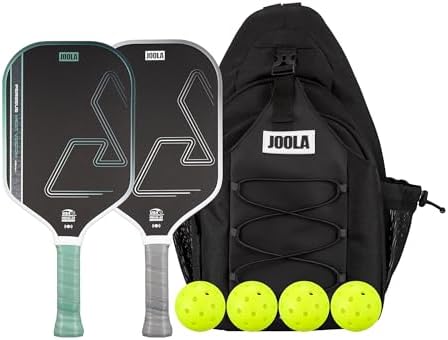
If your plan is to hit through people while you learn the rest, an elongated flagship from a major brand is the closest thing to a racquet the category offers. JOOLA builds its best known lines around exactly this profile, with the reach and the stiff, pace oriented construction that a baseline driver wants. Expect to work harder on resets in exchange.
You Hit a Two Handed Backhand
Gearbox builds long handled models as a core part of its range rather than as an occasional variant, which makes it a sensible place to start if the second hand is staying. Check the handle length figure on the manufacturer’s product page for the specific model, since it varies within a brand’s own lineup.

You Already Know the Soft Game Is Your Weak Spot
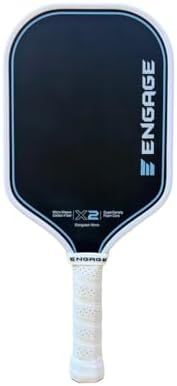
If you have played enough to notice that your drives land long and your drops sit up, buy for the weakness instead of the strength. Engage positions its range around touch and feel rather than raw output, which shortens the time it takes to build the part of your game tennis skipped. Our control paddle guide explains which kind of control you are actually short of.
Grip Size, Weight, and Sore Elbows
Two setup details catch converts more than any model choice. The first is grip circumference, which runs smaller in pickleball than the racquet handle you are used to, so the paddle can feel undersized and encourage a tight squeeze. The second is that a paddle is far lighter than a racquet, which tempts a full tennis swing that the shorter court cannot absorb.
Both feed the same complaint. Elbow soreness is common in the first months for players who bring a long swing and a tense grip to a lighter implement. Our guide to paddle choice and elbow pain covers the setup side, and persistent pain belongs with a physician or physical therapist rather than a new purchase.
Build the Grip Up if You Need To
Adding an overgrip raises circumference slightly without buying a different handle, and it is reversible in a minute. If the paddle disappears in your hand, change that first. Our grip guide covers how to check what you are holding.
Racquet Versus Paddle at a Glance
The table lines up what changes when you swap one for the other. These are category level differences rather than measurements for a specific model, and USA Pickleball publishes the current dimensional limits for paddles at usapickleball.org if you want the exact boundaries.
| Aspect | Tennis racquet | Pickleball paddle |
|---|---|---|
| Hitting surface | Strung bed with give | Solid face over a rigid core |
| Spin source | String movement and snapback | Surface texture, which wears down |
| Swing length | Long, full take back | Compact, from the shoulder or shorter |
| Handle | Long enough for two hands as standard | Two handed grips need a long handle model |
| Decisive phase | Serve and groundstrokes | Kitchen exchanges and the third shot |
Mistakes Tennis Players Make in Their First Season
The biggest one is buying the stiffest, heaviest power paddle on day one. It flatters the drive you already have, punishes the touch shots you have not built yet, and can keep a convert stuck at the same level for a year. Our power paddle guide explains what each construction lever costs you.
The second is treating the third shot as an approach shot. In tennis you hit hard and move in. In pickleball the drive frequently comes back faster than you can cover, which is why the drop exists. Our third shot drop explainer covers the shot itself.
And One Off Court Mistake
Do not assume your tennis shoes are wrong. They are the same category of court shoe, and the only real check is the outsole. Our guide to wearing tennis shoes for pickleball covers when replacing them is worth it.
Paddle Approval and Sanctioned Play
Approval is model and generation specific rather than brand specific, so a familiar name on the paddle tells you nothing about whether it is allowed in a sanctioned event. USA Pickleball publishes its current Approved Paddle List at usapickleball.org, and revises both that list and the rulebook at the start of each year. Search the exact model there rather than trusting packaging, a retailer badge, or an older write up, including this one.
Frequently Asked Questions
What pickleball paddle is best for tennis players? An elongated shape is the usual answer, because the added reach and leverage match a swing built for a racquet. Add a longer handle if you hit a two handed backhand.
Do tennis skills transfer to pickleball? Contact point, footwork, and court sense transfer directly. Swing length, touch at the kitchen, and the patience to soften a rally do not, and those are what decide most pickleball points.
Should a tennis player use a heavier pickleball paddle? A mid weight build is the safer starting point. Heavier paddles reward the drive you already have, but they are slower in hands battles and can aggravate an elbow that is adjusting to a new implement.
Is a long handle paddle necessary for a two handed backhand? It is close to necessary if you keep the second hand. On a standard handle the bottom hand ends up partly on the face, which costs you both feel and control on that side.
Why do my pickleball drives keep going long? A tennis swing supplies more racquet speed than a shorter court needs. Shortening the take back usually fixes it faster than changing paddles does.
Can I use my tennis grip in pickleball? The continental grip carries over well and is the standard recommendation for the soft game. Heavily western forehand grips tend to cause trouble on dinks and volleys.
Is pickleball harder on the elbow than tennis? Not inherently, but converts often report soreness early on because a light paddle invites a full tennis swing and a tight grip. Persistent pain is worth raising with a physician or physical therapist.
The Bottom Line
Buy elongated if you want the paddle to feel like an extension of what you already do, and add a long handle only if the two handed backhand is staying. Be honest about the trade, because the build that makes your drive land is the same build that makes your resets float, and the soft game is the half of pickleball tennis did not hand you. Our paddle buying framework is the place to start if you want the basics first.