Last updated: August 19, 2026
Honolulu Pickleball Company is one of those brands you hear about from another player rather than from a shop. Its J2NF, the paddle most people know by its Sword and Shield artwork, spent a long stretch near the top of independent reviewer lists, and the brand went from unknown to constantly mentioned without ever taking the traditional retail route.
That combination raises the usual questions. Is a brand you cannot find on a shelf a real brand, what are you actually buying, and what happens if the paddle is wrong when it arrives. We do not test paddles ourselves, so this guide is built on published construction details and on what players and independent reviewers consistently report.
Quick Answer
Are Honolulu pickleball paddles worth buying?
- Honolulu is a genuine paddle brand with a strong independent review record, best known for the foam core J2NF and its Sword and Shield artwork.
- Its reputation rests on foam core construction, which is what gives these paddles their forgiving sweet spot and their pop.
- It sells primarily direct, so returns, warranty, and grip size decisions are all handled by the brand rather than by a marketplace.
- The lineup moves in generations. Check which generation and shape a listing refers to before ordering, because reviews of an earlier version describe a different paddle.
Short version: a strong choice for intermediate and advanced players who know what shape they want, and an awkward first paddle for anyone who does not.
What Honolulu Pickleball Company Is
Honolulu Pickleball Company is a direct-to-consumer paddle brand that built its reputation on performance rather than on sponsorship or shelf presence. It sells through its own site, it iterates its models in numbered generations, and its visibility comes largely from independent reviewers and word of mouth among players who take the equipment side seriously.
The brand’s identity is tied to one product family more than most. The J2NF is the paddle people mean when they say Honolulu, and the variants around it, including longer handle versions and differently shaped siblings, are recognizable to players in a way the rest of the catalog is not.
The Sword and Shield
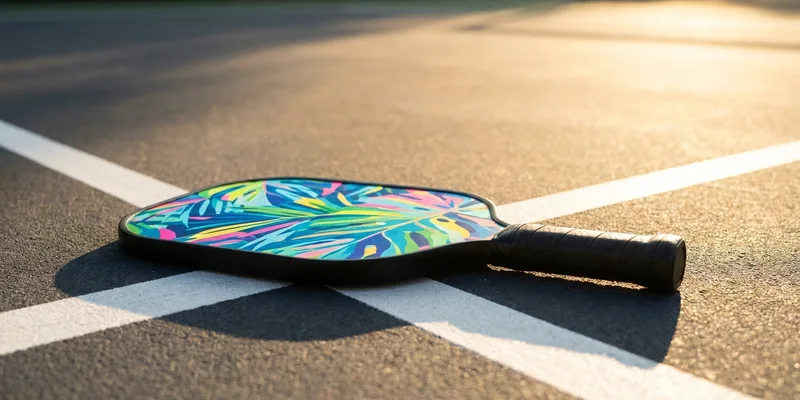
The Sword and Shield is the artwork on the J2NF, not a separate model, which trips up a lot of first-time buyers searching for it as its own paddle. If a listing offers a Sword and Shield paddle, it is offering a J2NF in a particular finish, and the generation number is the detail that actually matters.
What Foam Core Construction Changes
The reason Honolulu gets talked about is foam. Where a conventional paddle uses a polymer honeycomb core, the paddles this brand is known for build foam into the core and the perimeter, which is what produces the two qualities reviewers keep describing: a large forgiving sweet spot and a lively response off the face.
The trade-offs are real and worth knowing before you buy. Foam builds tend to feel more direct and less muted than a soft honeycomb paddle, they generally carry their weight differently through the swing, and they are a different feel to adapt to rather than a straight upgrade. Players coming off a plush control paddle usually need a few sessions.
Why Generation Numbers Matter More Than the Model Name
Paddle brands in this bracket revise their builds frequently, and Honolulu is no exception. A review written about one generation of the J2NF describes core construction, balance, and face texture that may not match the version currently shipping, so the generation on the listing is the single most important thing to check. Our guide to how long paddles last covers what changes over a paddle’s life and what does not.
How to Read Honolulu’s Model Names
The model names look like part numbers because they more or less are, and once you know the pattern the catalog stops being intimidating. Reviewers consistently describe the same convention: the number after the J signals the shape, and the letters after it signal what the face and core are made of.
| Model | Shape and build | Who it suits |
|---|---|---|
| J2NF (Sword and Shield) | Hybrid shape with the notched foam core the brand became known for | The all-round pick, and the paddle most reviews are about |
| J2CR | Hybrid shape, newer generation core construction | Players who want the current build in the forgiving shape |
| J6CR | The elongated version of the same generation | Singles players and anyone who wants reach and serve leverage |
| J2K and J2K Plus | Hybrid shape with a Kevlar weave face, an earlier generation | Players who prefer a more connected, traditional feel |
The catalog is wider than these four and it changes, so treat the table as a decoder rather than a complete list. What survives every refresh is the logic: pick the shape first, then the face and core.
J2NF, the Sword and Shield
This is the paddle that made the brand, and it is the one nearly every Honolulu review is actually about. The notched foam core in a hybrid shape is what produces the combination reviewers keep describing, a large forgiving area with more pop than a plain honeycomb paddle of the same size, in a head that still moves quickly at the net.
J2CR and J6CR
The CR models are the newer generation, and the only meaningful difference between the two is shape. If you are weighing the J2CR against the J6CR, that is the whole decision. The J2CR keeps the hybrid outline with its bigger, more stable sweet spot and quicker hands, while the J6CR stretches to an elongated head that buys reach and drive leverage at the cost of a smaller, less forgiving hitting area. Our elongated paddle guide covers whether that trade is worth it for your game.
You will also see the J2CR listed in a Crystal Blue finish, which is a colorway rather than a different paddle. As with the Sword and Shield artwork, the finish is what people search for and the shape and generation are what they are actually buying.
J2K and J2K Plus
The K models use a Kevlar weave rather than the foam-led construction of the newer paddles, and they are the ones players reach for when they want a stiffer, more connected feel with less of the trampoline effect. They represent an earlier direction for the brand rather than a budget tier.
Pick the Shape Before the Model
Every choice here collapses into two questions: do you want a hybrid or an elongated head, and do you want the livelier foam-led build or the more connected weave. Answer those and the model name follows. Our framework for how to choose a pickleball paddle works through shape, weight, and grip in the order that actually matters.
Buying Direct: What It Changes for You
Selling direct is where the value comes from, and it is also where the friction comes from. There is no marketplace return window, no third-party seller rating to fall back on, and no shop where you can hold three shapes before choosing one. The brand’s own policies are the only ones that apply to your order.
That is not a warning, it is simply the deal, and it means the fine print deserves more attention than the spec sheet. Read the return window, who pays return shipping, whether a paddle can be exchanged for a different weight or grip size, and what the warranty covers, all before you order rather than after the box arrives.
Grip Size Is the One You Cannot Undo
Grip circumference can be built up with an overgrip but cannot be reduced, so order at or below your measured size when you cannot try first. Our guide to grips and overgrips explains how much you can add and what it does to the handle.
Alternatives You Can Buy Through the Usual Channels
Honolulu sells from its own site, so the options here are the paddles most often cross-shopped against it rather than the brand itself. Each one covers a different reason somebody was looking at a Honolulu in the first place.
Foam Core Power Without the Direct-Only Purchase
Foam perimeter and foam core builds have spread across the market, and several are available through the usual retail channels with a normal return path. Our guide to paddles built for power explains what generates the pop and what it costs you in control.

Thermoformed Carbon at a Familiar Address
If what attracted you was the raw carbon face rather than the foam specifically, that construction is widely available and well understood. Our overview of carbon fiber pickleball paddles covers what the material actually changes and what it does not.

Reach for Singles and Drives
Players drawn to the elongated versions are really shopping for reach and leverage, which is a shape decision rather than a brand decision. Our elongated paddle guide is honest about the smaller sweet spot that comes with it.

Spin From the Face Texture
Much of what people credit to a premium paddle is surface texture doing its job, and that is one of the easier things to shop for on specification. Our guide to paddles for spin covers how texture is measured and why it wears down.

Approval for Sanctioned Play
USA Pickleball approves paddles per model and per version, and it publishes current results on its official list at usapickleball.org. Approval is never granted to a brand as a whole, so nothing anyone says about Honolulu in general answers the question for the specific paddle and generation you are considering.
This matters more than usual with fast-iterating foam builds, because a new generation is a new submission. If you compete, search the exact model and version on the official list before ordering, and remember that standards get revised. Our overview of what the approval label means explains how the list works.
Who Should Look Elsewhere
Three groups. Complete beginners, because a paddle aimed at players who already shape the ball is wasted on someone still learning to make contact, and because the return path is less forgiving than a marketplace purchase. Anyone who wants to demo several shapes, which the direct model cannot offer.
And anyone buying a gift, since sizing a grip and choosing a shape for another player without an easy return is an unnecessary gamble. Our beginner paddle guide covers the sensible first purchase, and our overview of how paddle brands differ lines up the alternatives.
Frequently Asked Questions
Is Honolulu Pickleball a legitimate brand? Yes. It is a direct-to-consumer paddle company with a substantial independent review record, best known for the foam core J2NF. The unfamiliarity comes from the sales channel rather than from anything about the product.
What is the Sword and Shield paddle? It is the artwork on the J2NF rather than a separate model. Searching for it as its own paddle is one of the most common points of confusion with this brand.
What is the difference between the J2CR and J6CR? Shape, and almost nothing else. Both are the newer CR generation with the same construction, so the choice is between the J2CR’s hybrid outline, which gives a bigger and more stable sweet spot with quicker hands, and the J6CR’s elongated head, which buys reach and drive leverage at the cost of a smaller hitting area.
Which is the best Honolulu pickleball paddle? For most players the J2NF, because the hybrid shape and foam core suit the widest range of games. Choose the J6CR instead if you play singles and want reach, or a J2K if you prefer a stiffer, more connected feel.
What do independent reviews of Honolulu paddles say? The recurring findings across independent reviews are a notably large forgiving area, more pop than a comparable honeycomb paddle, and durability that holds up over months of play. The recurring criticism is the direct-only buying experience rather than the paddle. Always check that a review names the same generation you are about to order.
Where do you buy a Honolulu paddle? Primarily through the brand’s own website. That is what keeps the pricing where it is, and it is also why the return and warranty terms deserve a careful read first.
Are Honolulu paddles good for beginners? They are aimed above the beginner bracket. A player still learning consistent contact gets more from a forgiving, inexpensive paddle with an easy return path.
Are Honolulu paddles approved for tournaments? Approval applies per model and per version, not per brand. Search the exact paddle and generation on the official list at usapickleball.org before entering a sanctioned event.
What does a foam core actually do? It generally produces a larger forgiving area and a livelier response than a plain honeycomb core, at the cost of a different, more direct feel that takes some adjustment.
Which generation should I buy? Whichever one is currently shipping, and read reviews that name the same generation. Construction changes between versions, so an older review may describe a paddle you cannot buy.
The Bottom Line
Honolulu earned its reputation the hard way, through independent reviews of the foam core J2NF rather than through retail presence, and the paddles deliver what that reputation describes: a forgiving sweet spot and real pop, in a feel that takes adjusting to. The considerations are the ones the direct model creates, no demo, no marketplace return, and a lineup that iterates in generations you have to check. If you would rather buy through the usual channels, start with our overview of how paddle brands differ, and if you already know you want power, our power paddle guide is the shortcut.